Top

USDT stablecoin receives full regulatory approval in Abu Dhabi

Web3 & Enterprise·December 16, 2024, 11:47 PM

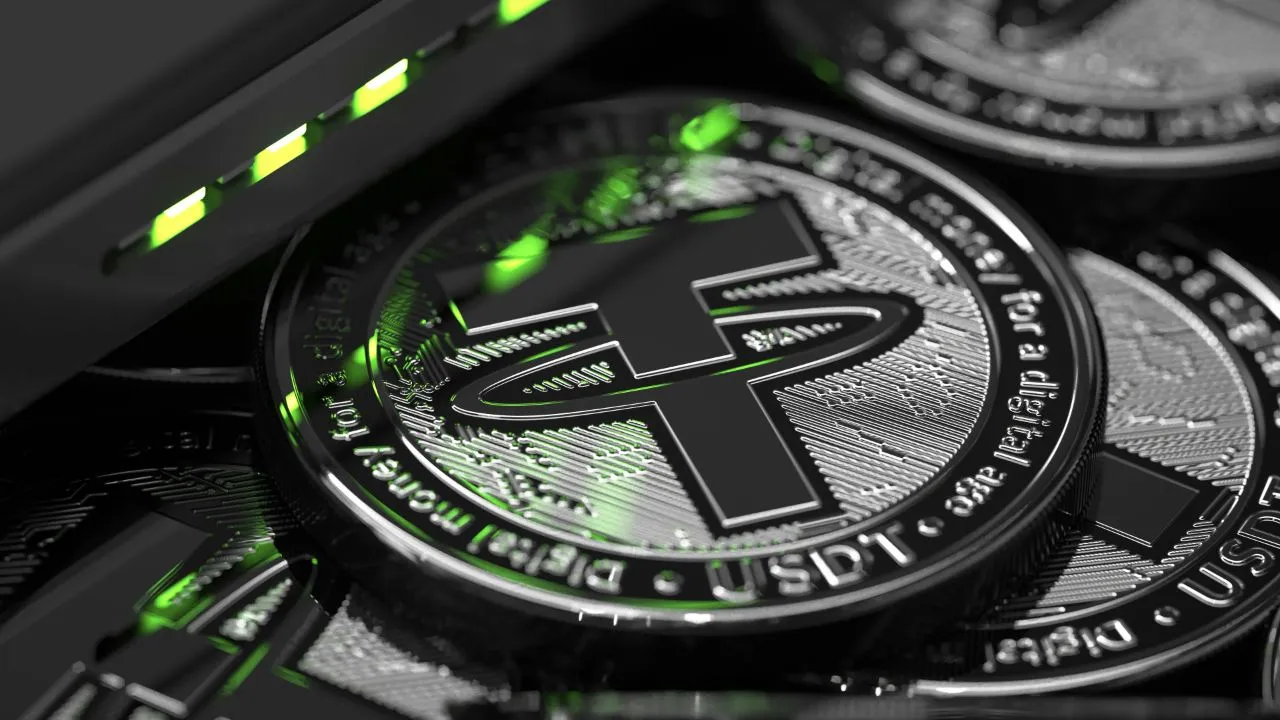
The Financial Services Regulatory Authority (FSRA), a regulatory body within the Abu Dhabi Global Market (ADGM) economic free zone and financial center in the United Arab Emirates (UAE), has fully approved USD₮, the world’s leading U.S. dollar stablecoin by market cap, as an accepted virtual asset (AVA).
https://asset.coinness.com/en/news/eaf08a1ad4bdf292be57387fe07c3323.webp
Photo by DrawKit Illustrations on Unsplash

Pre-approved USDT services

USDT issuer Tether publicized details of the approval via a statement published to its website on Dec. 10. The company outlined that the approval means that “Authorised Persons” operating and licensed by the FSRA can offer pre-approved services related to USDT.


The company stated that the approval facilitates the integration of USDT into regulated financial ecosystems in Abu Dhabi while also claiming that the move helps to advance the region’s leadership relative to digital asset innovation.


The FSRA has acknowledged acceptance of the leading stablecoin with recognition of its issuance on various blockchains including Ethereum, Solana and Avalanche.


Validating the importance of stablecoins 

With the ADGM regulator now fully accepting and recognizing the stablecoin, Tether CEO Paolo Ardoino said that the move goes beyond just “validating the importance of stablecoins as critical tools for modern finance,” as he believes it opens the door for collaboration and growth across the Middle East.


Stablecoins are increasingly playing a significant role in bridging the gap between traditional finance (TradFi) and the Web3 sector. In October, crypto asset fund manager Bitwise identified a number of key insights that point to the ongoing development and use of stablecoins. 


It outlined that the top five stablecoin projects are currently holding more U.S. Treasury bonds than some G20 countries. Tether recorded profits last year that surpassed those of BlackRock, the world’s largest asset manager. Bitwise identified that leading payments firms like Visa are adopting stablecoins and incorporating them into their platforms for the purpose of effecting transactions.


A month prior to that, Wall Street investment bank Bernstein highlighted the fact that stablecoins are playing an increasingly important role relative to the global financial system as a whole. 


It’s thought that this latest development in Abu Dhabi may act as a further driver of USDT’s market cap. At the time of writing, the stablecoin asset had a market cap in excess of $140 billion. Its inclusion as an AVA reinforces the crypto asset’s position as the most used stablecoin within the industry.


AE Coin licensing 

In a further boost for further roll-out of stablecoins in the Middle East, the Central Bank of the UAE (CBUAE) awarded the final license to fully approve AE Coin, a UAE dirham-denominated stablecoin. Commenting on the development, AE Coin General Manager Ramez Rafeek said, "AE Coin harnesses the speed and efficiency of blockchain technology, offering instant, secure, and cost-effective transactions. It simplifies transfers, making them faster and more seamless."


In an effort to bring about greater adoption of the stablecoin, the AE Coin project intends to engage in partnerships with payment gateways, financial institutions and technology providers going forward. Tether also has plans to launch a dirham-backed stablecoin, having recently partnered with UAE-based entities to bring that about.



More to Read
View All
Web3 & Enterprise·

Sep 19, 2023

KOTEC and Busan Techno Park Join Hands to Boost Technological Growth of Busan Enterprises

KOTEC and Busan Techno Park Join Hands to Boost Technological Growth of Busan EnterprisesThe Korea Technology Finance Corporation (KOTEC) announced that it signed a cooperative agreement with Busan Techno Park on Monday at Busan Techno Park’s headquarters to support the growth of enterprises and offer financing for technological development. Under the agreement, KOTEC and Busan Techno Park have established a mutually beneficial system to jointly nurture and support tech companies based in Busan that are striving to commercialize data and blockchain technologies.Photo by Christopher Lee on UnsplashFostering tech innovation in BusanKOTEC is a non-profit government-affiliated institution aimed at financing innovative small and medium-sized enterprises (SMEs) for technology development. It offers services like credit guarantees, technology appraisal, equity investments, and technology transfers. Busan Techno Park is a regional industrial innovation institution for the southern port city of Busan, which operates a cooperative system among industrial, academic, and governmental agencies for the technological advancement of local companies.The two entities have committed to sharing information about companies that require financing for technological advancement — such as technological challenges that they may face — and promote joint projects related to technology investment and financing. They also aim to gather data resources for technology transfer, evaluation, and commercialization.KOTEC has marked Busan as a regulation-free special zone for companies that reside there. The demarcation of regulation-free special zones aims to foster the innovative and strategic development of a certain region. It is also operating a system under a regulatory sandbox preferential guarantee, which aims to facilitate accelerated market entry for businesses specializing in blockchain technology, maritime mobility, ammonia energy, and more.Empowering financing for technological advancementThe regulatory sandbox is a system run by the Korean government that exempts or suspends existing regulations for a designated amount of time for companies releasing new products and services and regulates them post-mortem if there is a problem. Under the sandbox policy, preferential guarantees refer to a technology guarantee fund that provides guarantees up to KRW 2 billion (approximately $1.5 million) for loans of facility funds to companies subjected to temporary approval and decreases the guarantee rate by up to 0.5%.In March, KOTEC was designated as a data appraisal agency by the Ministry of Science and ICT. Since then, the corporation has been implementing the data value plus guarantee — a product that determines the economic value of data and provides guarantees accordingly.“We will actively contribute to the government’s national tasks, including providing prioritized support for the cutting-edge future strategy industry. We will make even greater efforts to contribute to job creation and regional economic development,” said Kim Se-hyun, Head of KOTEC’s Busan-Gyeongnam Regional Office.

news
Web3 & Enterprise·

Jun 07, 2023

Circle Makes Inroads in Singapore with License Award

Circle Makes Inroads in Singapore with License AwardCircle Internet Financial’s Singapore entity, Circle Internet Singapore, has received a full license from the Monetary Authority of Singapore (MAS) to provide digital payment token services in Singapore. This major payment institution (MPI) license will enable Circle Singapore to offer cross-border and domestic money transfer services through its Circle account.Photo by Timo Volz on PexelsMajor Payment Institution (MPI) licenseThe company announced the milestone achievement via a press release published on Monday. The MPI license enables Circle to offer institutional customers access to USDC, a leading US dollar stablecoin issued by the company. With the license approval, Circle Singapore can now fully utilize the expertise of its corporate affiliates to drive innovation, expand its offerings, and provide more value to its clients and stakeholders.The granting of the license follows the in-principle approval received by Circle Singapore in November last year and the subsequent opening of its office in May. The company recognizes the importance of Singapore in its global expansion strategy and its mission to promote global economic prosperity through seamless value exchange.Jeremy Allaire, Co-Founder and CEO of Circle, expressed the significance of Singapore in Circle’s expansion plans and the goal of facilitating frictionless value exchange. The company aims to leverage its licensed status to contribute to Singapore’s digital payment ecosystem positively.Pursuing overseas expansionWith ongoing regulatory turmoil in the United States right now in relation to the treatment of digital assets, no doubt Circle, just like many other leading US digital asset companies, sees the benefit in diversifying geographically. In turn, that feeds into the importance Allaire affixes to this Singapore expansion: “Singapore is integral to Circle’s global expansion and mission in raising global economic prosperity and through the frictionless exchange of value.”There has been a flurry of activity in terms of large crypto sector players establishing a greater foothold in Singapore in recent months. Last week, global crypto trading platform Crypto.com was granted an MPI license by MAS.Coinbase, the US-headquartered crypto exchange business that was sued earlier this week by the Securities and Exchange Commission (SEC) in the United States, took the decision to expand its product offering in the Singapore market last month. Another US-based crypto business, Gemini, has decided to expand its Singapore operation with a view towards growing its institutional and retail customer base.Tribe collaborationEarlier this year, Circle Singapore collaborated with Tribe, the first government-supported blockchain ecosystem builder in Singapore. Together, they launched a training and support program designed to nurture and upskill Web3 developer talent in the region. This initiative aligns with Singapore’s focus on promoting blockchain technology and nurturing a skilled workforce capable of driving the growth of the digital economy.With its full license, Circle Singapore is well-positioned to strengthen its presence in the Singaporean market and offer enhanced digital payment token services to institutional customers. The license also demonstrates the company’s commitment to compliance and regulation in the evolving landscape of digital finance.As Circle Singapore expands its operations and explores further innovations, it will continue to contribute to Singapore’s reputation as a leading global fintech hub. The company’s focus on promoting global economic prosperity aligns with Singapore’s vision of becoming a smart financial center and a pioneer in digital innovation.

news
Policy & Regulation·

Feb 28, 2025

First stablecoins gain DFSA approval in Dubai

The Dubai Financial Services Authority (DFSA), the financial regulatory agency of the Dubai International Financial Center (DIFC), a special economic zone, has approved two stablecoins under its crypto regulatory framework. The two stablecoins, USD Coin (USDC) and EURC, are both issued by blockchain-focused financial services firm Circle. While USDC is a U.S. dollar-backed stablecoin, EURC is a euro-backed stablecoin. In a press release published on the Circle website on Feb. 24, the company announced details regarding the approval. The stablecoins are the first to be recognized and approved by the DFSA.Photo by Christoph Schulz on UnsplashStablecoin integrationThe development means that firms based in the DIFC are now free to integrate either stablecoin into digital asset applications and products focused on areas such as payments and treasury management. A number of Circle executives took to social media to comment on the development. Circle Co-founder and CEO Jeremy Allaire outlined on X that the approval means that financial institutions in Dubai “are now able to transact in markets with USDC and EURC.” In legally recognizing the two stablecoins, Allaire pointed out that the DFSA had joined regulators in the European Union (EU) and Canada.  Last Summer, Allaire announced that Circle’s stablecoins complied with the EU’s Markets in Crypto Assets (MiCA) regulation. In December, Circle became the first stablecoin issuer to meet Canadian listing regulations. Dante Disparte, Circle’s chief strategy officer and head of global policy, pointed out that a trend is emerging requiring the pre-clearing of stablecoins prior to them entering into circulation or gaining regulatory approval. “In always-on finance, reciprocity is key,” he added.  Meanwhile, the firm’s EU Strategy & Policy Director, Patrick Hansen, underscored the significance of the approval. Hansen pointed to the fact that the DIFC is home to 6,000 registered entities, including 800 authorized financial firms. An ‘edge’ over TetherEugene Cheung, Chief Institutional Business Officer at Hong Kong-based digital asset platform OSL, said that the approval was “massive for institutional adoption,” while giving Circle an “edge” over Tether within the $157 billion stablecoin market. While Circle has always taken a regulatory-compliant approach, competitor Tether has struggled with compliance. In Europe, 10 companies have been approved to issue stablecoins under MiCA regulations, but Tether is not among them. This has led to a number of exchanges delisting Tether’s USDT in Europe. The DIFC was first established in 2004. The economic free-zone caters to firms operating within the Middle East, South Asian and African regions. The number of businesses registered within the free zone has increased by 25% since 2023. In November 2022, the DIFC recognized Bitcoin (BTC), Ethereum (ETH) and Litecoin (LTC). The following year, it added Toncoin (TON) and Ripple’s XRP, together with ZETA, the native token of the ZetaChain network. In 2024, the DFSA amended its crypto regulations to allow foreign funds to invest in recognized crypto tokens, while enabling domestic qualified investor funds to invest in unrecognized tokens.Although the regulatory approach taken by the authorities in Dubai accommodates stablecoins, algorithmic stablecoins are prohibited.

news
Loading