Live Feed
New
Today, September 26, 2026
05:17
U.S. SEC Commissioner Hester Peirce, known for her crypto-friendly stance and nicknamed 'Crypto Mom,' will step down on Oct. 2, crypto journalist Eleanor Terrett reported. After nearly nine years at the SEC, Peirce is set to join Regent University School of Law as an associate professor in November.
05:16
Morgan Stanley has withdrawn its previous weak-dollar outlook and now expects dollar strength to continue through mid-2027, BlockBeats reported.
The bank expects the U.S. Dollar Index to rise to 104 from around 101, while the euro-dollar exchange rate falls to $1.10 from about $1.14. Morgan Stanley said expectations for additional Federal Reserve rate hikes, a resilient U.S. economy and elevated energy prices would support the U.S. rate advantage. It expects 25-basis-point hikes in December and March, followed by the benchmark rate holding at 4.25%-4.5% through the end of 2027. Morgan Stanley added that high U.S. Treasury yields are weighing on global risk appetite, while Europe’s political uncertainty, including France’s 2027 presidential election, could further weaken the euro and strengthen the dollar.
05:08
U.S. spot Ethereum ETFs recorded about $86.95 million in net inflows on Sept. 25, according to SoSoValue, marking a sixth straight trading day of net inflows.
- BlackRock ETHA: +$50.37 million
- Fidelity FETH: +$4.69 million
- BlackRock Staking ETHB: +$31.88 million
05:06
U.S. spot Bitcoin ETFs recorded about $134.47 million in net inflows on Sept. 25, according to SoSoValue, marking a seventh straight trading day of net inflows.
- BlackRock IBIT: +$96.99 million
- Fidelity FBTC: +$49.32 million
- Bitwise BITB: -$11.85 million
05:03
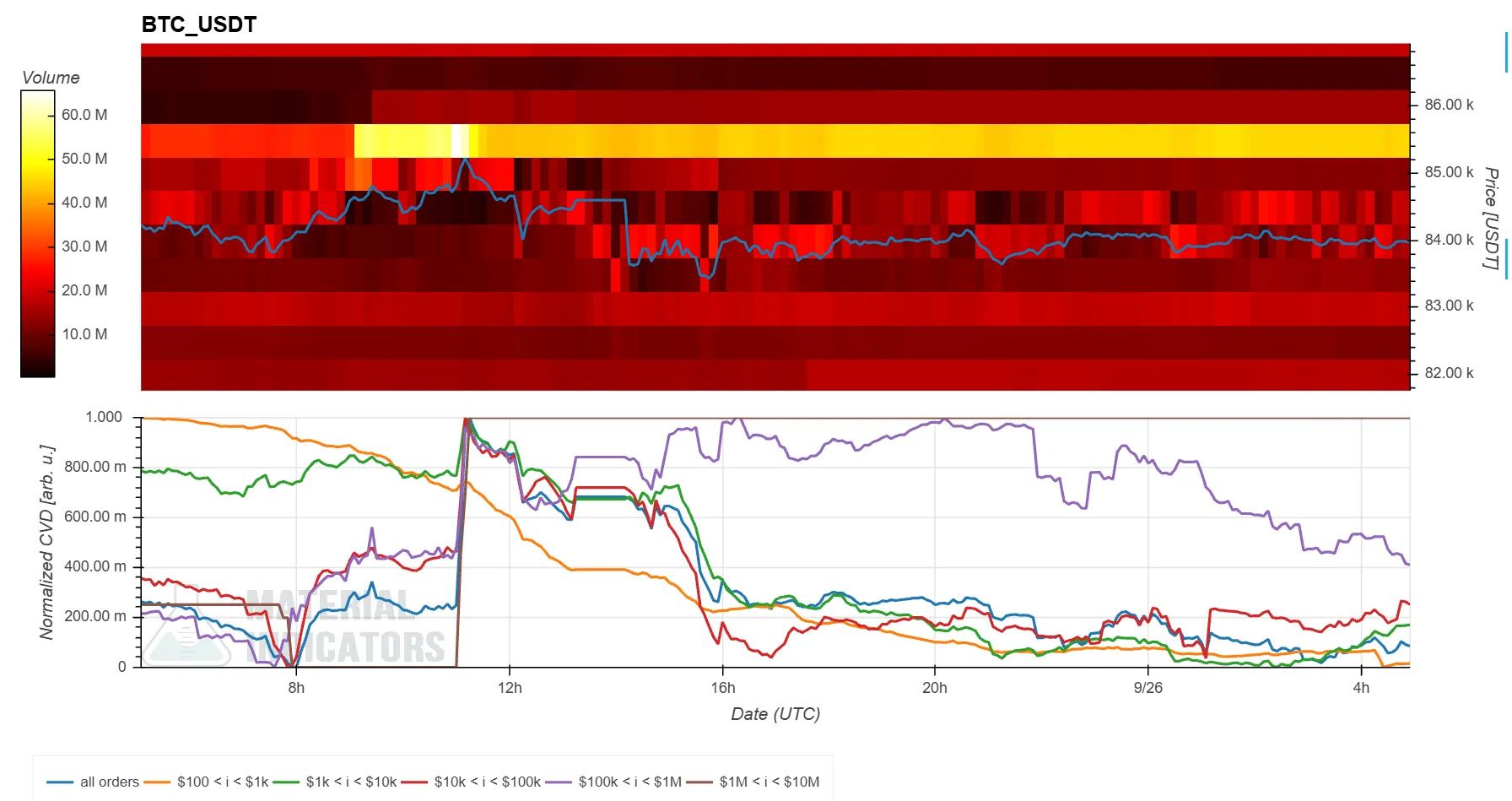
Spot CVD is an order-book analysis chart for the BTC/USDT spot trading pair. The upper panel shows a volume heatmap, while the lower panel shows cumulative volume delta, or CVD.
- The volume heatmap in the upper panel tracks trading volume at each price level. The background becomes brighter when the price stays in a specific range for an extended period or moves sharply. Brighter zones may act as support or resistance levels.
- The CVD indicator in the lower panel reflects buy and sell orders by order size. As buy orders increase, the corresponding colored line rises. The yellow line is based on orders worth $100 to $1,000, while the brown line reflects large orders worth $1 million to $10 million.
02:10
Jeremy Fox-Geen will step down as chief financial officer by the end of December 2026, Crypto Briefing reported. Fox-Geen joined the company in May 2021 and led its $1.2 billion IPO process on the New York Stock Exchange.
On the same day, co-founder and director Sean Neville also left the board for personal reasons, reducing the board's size to seven from eight.
02:02
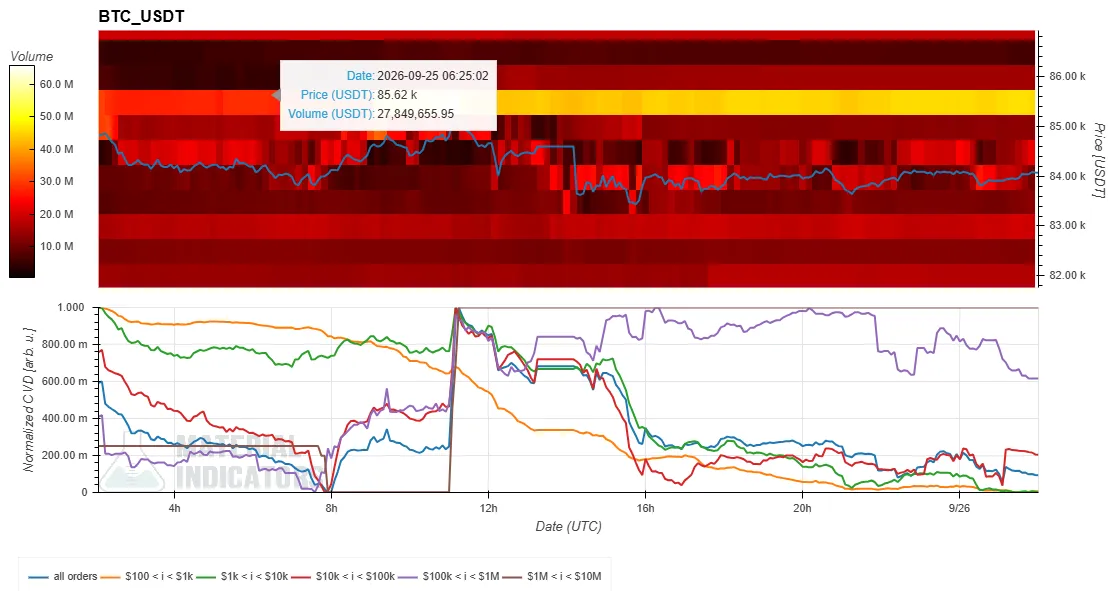
Spot CVD is an order-book analysis chart for the BTC/USDT spot trading pair. The upper panel shows the volume heatmap, while the lower panel shows cumulative volume delta, or CVD.
- The volume heatmap tracks trading volume at each price level. The background becomes brighter when the price stays in a specific range for an extended period or makes a large move. Brighter zones may act as support or resistance.
- The CVD indicator in the lower panel reflects buy and sell orders by order size. As buy orders increase, the line in the corresponding color moves higher. The yellow line is based on $100-$1,000 orders, while the brown line is based on large orders ranging from $1 million to $10 million.
01:59
Circle said on X that issuance of its wrapped Bitcoin token cirBTC has surpassed 5,000. Crypto Briefing said the figure had surged from about 40 in mid-August, indicating growing institutional demand for a regulated DeFi Bitcoin investment vehicle. Users can post cirBTC as collateral to borrow USDC without selling Bitcoin. Circle offers cirBTC on the Ethereum mainnet and its own blockchain, Arc.
Previous related news
01:53
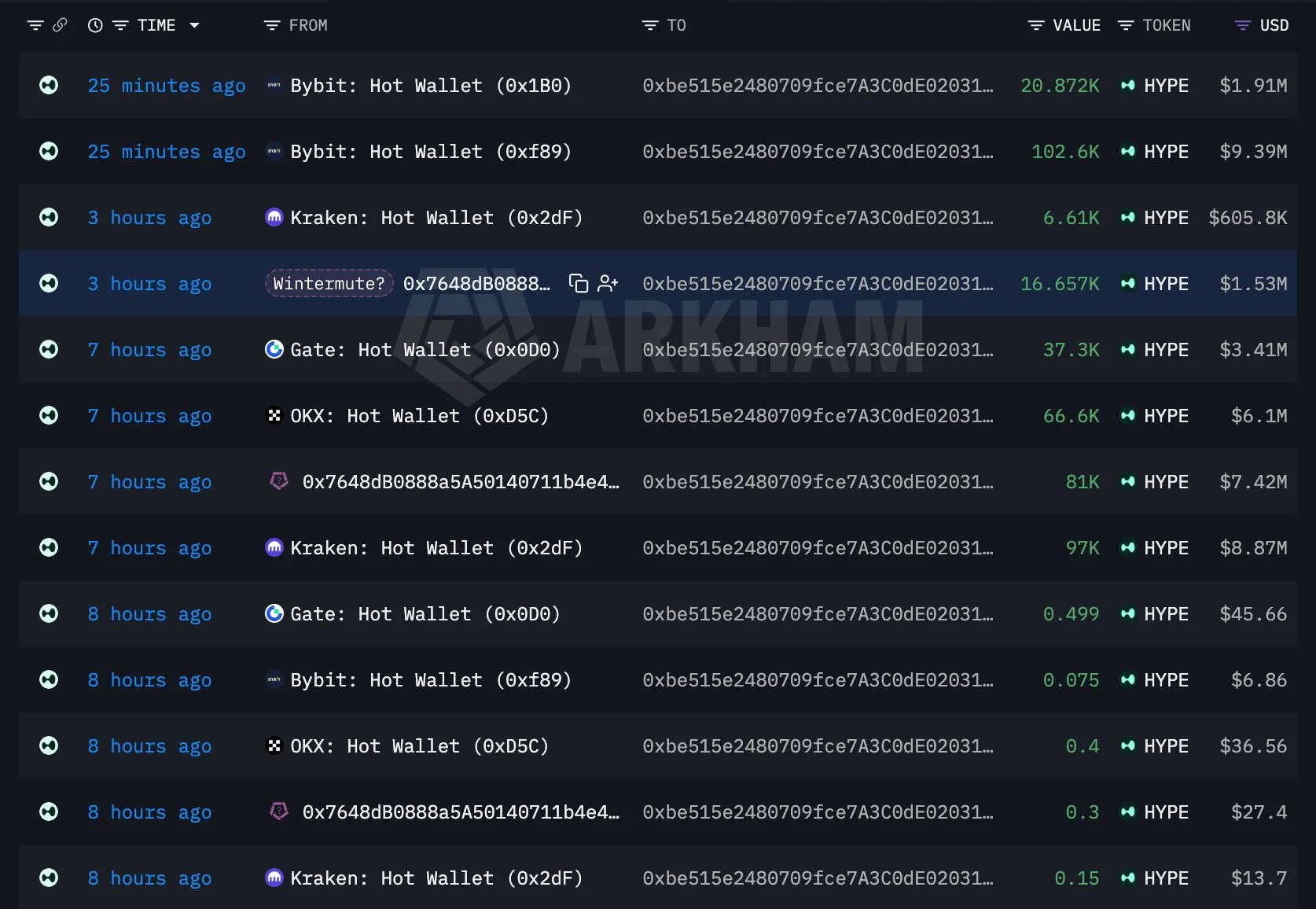
A newly created wallet starting with "0xbe51" withdrew a total of 428,640 HYPE, worth about $39.23 million, from Bybit, Kraken, Wintermute, Gate, and OKX over the past eight hours, according to Lookonchain.
01:44
BTW has fallen by 13.39% in the past five minutes on the COINNESS market. Currently, BTW is trading at $0.96.
01:44
The combined market capitalization of the top 50 companies holding BTC has fallen to $67 billion from $150 billion in July 2025, erasing more than $80 billion since mid-2025, the Financial Times reported.
Among the 50 companies, 43 saw their share prices decline after announcing plans to buy BTC, and 35 of those posted drops of more than 50%. According to the report, companies that had relied on stock and bond issuance to fund BTC purchases in hopes of lifting their share prices are now facing declines in both BTC and their stock prices, along with fundraising difficulties. Some have begun selling holdings and returning to their core businesses. The top 50 companies also turned net sellers in July and have sold about 2,500 BTC more than they bought since then.
01:40
BTW has fallen by 5.51% in the past five minutes on the COINNESS market. Currently, BTW is trading at $1.09.
01:32
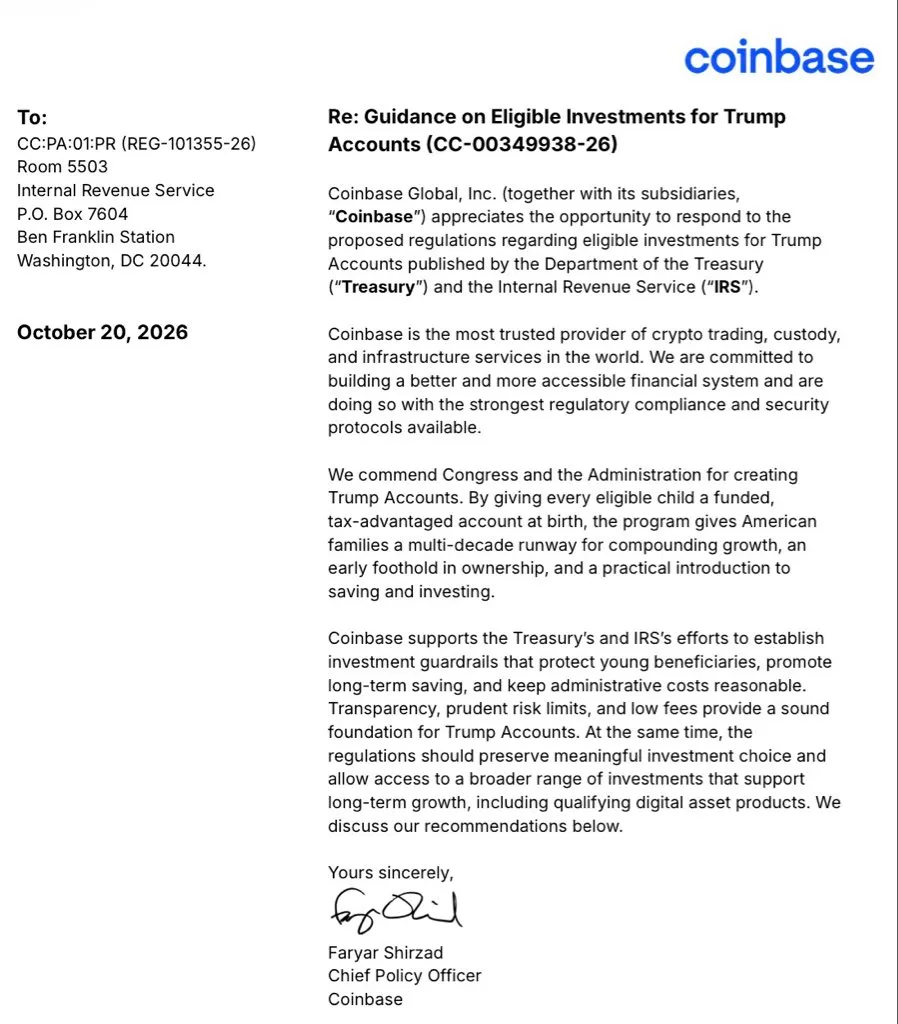
Coinbase Chief Policy Officer Faryar Shirzad said on X Coinbase had submitted a comment letter to the U.S. Internal Revenue Service on how to implement and expand Trump Accounts.
Shirzad said Coinbase asked regulators to allow account beneficiaries to invest directly in actively traded digital assets or indirectly through funds that invest in digital assets. Shirzad added the change would offer a broad range of investment options similar to traditional individual retirement accounts, or IRAs, while expanding opportunities for diversification and wealth building among younger people.
01:13
The Sui Foundation said it will support losses caused by an ALPHA oracle configuration error at AlphaFi, a Sui-based DeFi yield optimization protocol. AlphaFi plans to shut down protocol operations as a result. The foundation said it will help the protocol remain solvent, and AlphaLend borrowers can now unwind positions and withdraw assets. Separately, the Sui security team plans to formally launch the security tool used to identify the error and make it available to DeFi protocols across the Sui ecosystem.
00:57
PayPal has temporarily suspended new purchases of cryptocurrencies such as Bitcoin for users in Luxembourg since June 25, Crypto Briefing reported. According to the media outlet, the move is tied to a need to collect and verify customer tax information under the OECD’s Crypto-Asset Reporting Framework, or CARF. Existing holdings can still be managed and sold, but additional purchases are restricted. PayPal plans to restore the purchase function by the end of 2026 after completing system updates.
00:45
The U.S. Department of Justice is seeking to seize about $84 million through civil forfeiture from accounts held by Montana-based payments firm Capstone, which is tied to Tether and Bitfinex, Bitcoin.com reported.
Prosecutors claim Capstone operated an unlicensed money transmission business in at least six states and misrepresented itself to banks as an IT services provider. According to the Financial Times, Capstone helped Tether and Bitfinex open U.S. bank accounts and handle payments through EQIBank, and more than $700 million was transferred through its Wells Fargo accounts. Capstone is also accused of helping convert cash stolen through fraud schemes targeting elderly victims into stablecoins.
00:35
Ethereum co-founder Vitalik Buterin said on X that Ethereum node sync time has been reduced to under half a day through EIP-4444 and client teams’ snap sync optimization. Buterin added that disk usage can also be cut to under 0.5 TB with aggressive settings.
Buterin said the upcoming Glamsterdam upgrade is expected to further improve sync performance and that the technology will also be applied to Nimbus’ new sync protocol. EIP-4444, which was activated in July 2025, allows nodes to delete historical block data after a set period to reduce storage burdens.
00:28
According to CoinNess market monitoring, BTC has fallen below $84,000. BTC is trading at $83,983.2 on the Binance USDT market.
00:24
The U.S. Court of Appeals for the Sixth Circuit ruled for Ohio and Tennessee in a lawsuit over sports event contracts involving Kalshi, The Block reported.
The court said Kalshi did not present sufficient grounds to have its sports event contracts recognized as swaps under the Commodity Exchange Act. It also rejected Kalshi’s argument that even if the contracts qualified as swaps, federal law would preempt state gambling regulations.
The ruling allows Ohio and Tennessee to apply state gambling laws to Kalshi’s sports contracts and overturns a previous Tennessee court injunction in Kalshi’s favor.
00:03
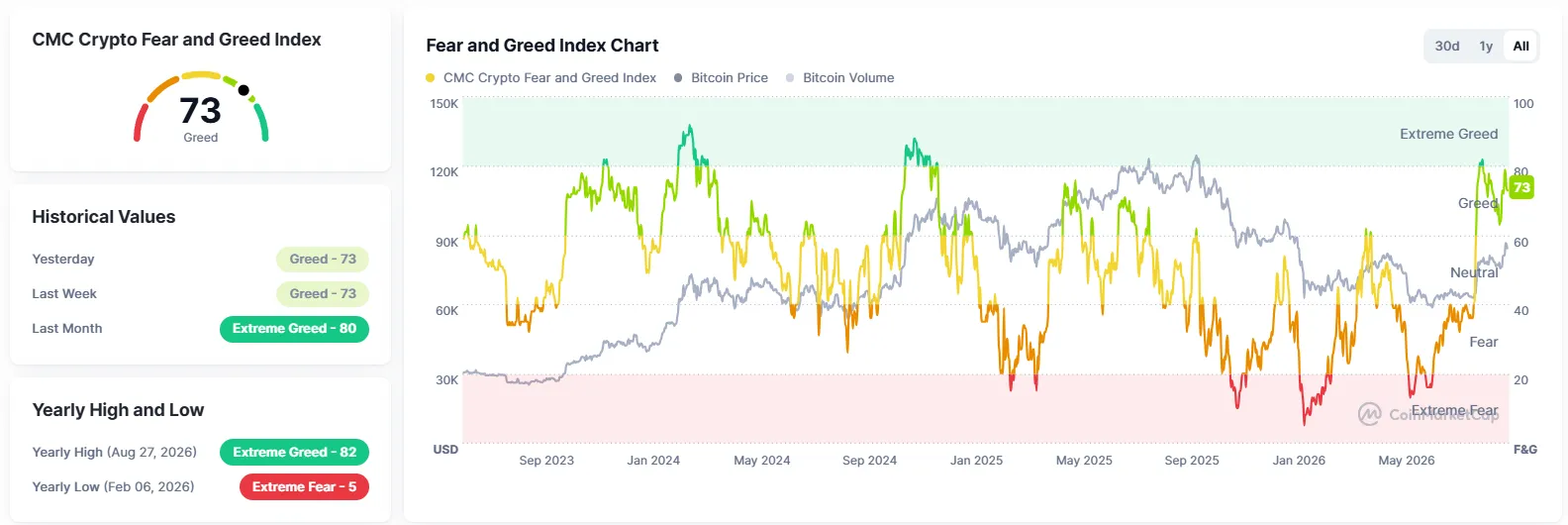
CoinMarketCap’s in-house crypto Fear and Greed Index stood at 73, unchanged from yesterday, indicating continued market greed. The index signals extreme fear as it approaches zero and extreme optimism as it nears 100.
CoinMarketCap calculates the index based on price movements among the top 10 cryptocurrencies by market capitalization, market volatility, derivatives-market indicators such as the put/call ratio, the stablecoin supply ratio (SSR), and CoinMarketCap’s own search data.
Yesterday, September 25, 2026
23:50
Summer Mersinger, CEO of the Blockchain Association, will step down on Oct. 16 and remain as an adviser through year-end, The Block reported. After that, former Blockchain Association CEO Kristin Smith, who is serving as president of the Solana Policy Institute, will return as interim CEO, according to the report. The outlet said Mersinger helped advance passage of the GENIUS Act and efforts to secure regulatory clarity from agencies including the SEC and CFTC during the tenure.
23:23
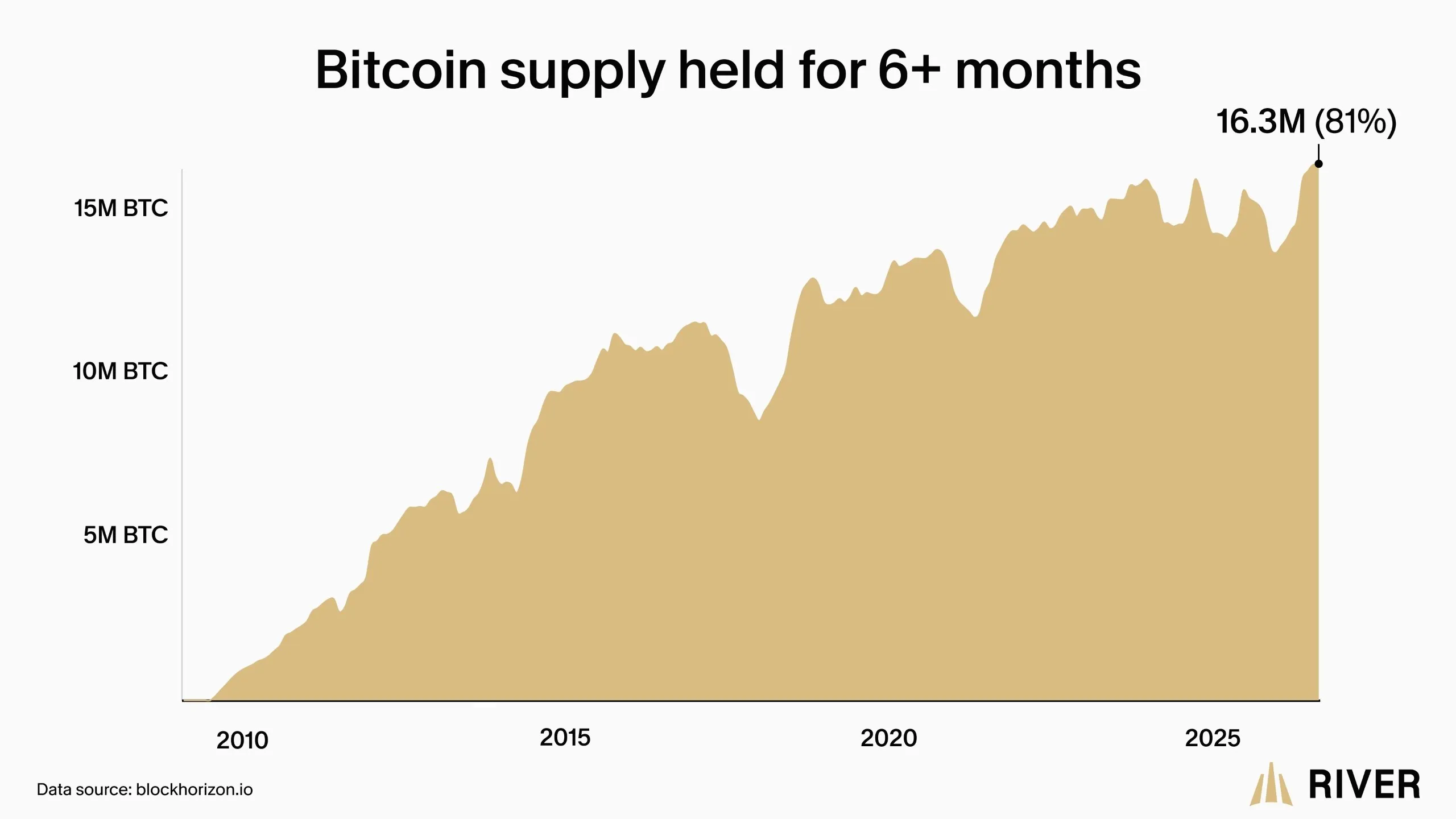
About 81% of Bitcoin’s total supply, or roughly 16.3 million BTC, has remained dormant for more than six months with no transfer activity, according to an analysis by Unfolded. The analysis found that while BTC has risen about 50% since the start of the year, trading volume has fallen by around 30%, indicating the market could face a supply shock amid tightening liquidity.
19:21
The U.S. SEC’s Division of Corporation Finance released an FAQ on Sept. 25 on how federal securities laws apply to crypto assets and related transactions, saying staff views suggest a cryptocurrency with sufficient functionality is unlikely to be treated as an investment contract solely because an issuer or related party continues to support the system’s security, maintenance, upgrades or user growth.
The FAQ also said a staking receipt token, which verifies ownership of digital assets deposited through staking, could be classified as a digital tool when the underlying asset is not an investment contract and the token’s role is to evidence ownership. If issued by a protocol-based liquid staking provider, it could also be classified as a digital commodity, according to the FAQ.
It added a buyback plan for a functional cryptocurrency also does not, in principle, amount to an investment contract. That could change, however, if the asset is not yet sufficiently functional and the buyback is promoted as a way for token holders to generate profits.
The SEC said the FAQ reflects the views of Division of Corporation Finance staff rather than an official SEC rule or regulation and does not have legal force.
Previous related news
17:16
U.S. prosecutors have charged Vietnamese national Trung Nguyen Van over alleged involvement in a $16 million cryptocurrency fraud scheme, the U.S. Department of Justice said on Sept. 25.
According to the DOJ, Van is accused of taking part in a so-called pig-butchering scam, in which fraudsters build trust with victims through online dating sites and social media before steering them to fake crypto investment platforms and misappropriating their funds. The DOJ said one victim sent about $16 million in cryptocurrency to the fake investment platform Triangle between June and August 2024, believing the funds were being invested, and about $569,000 of that amount flowed into Van’s crypto wallet. Investigators also found that the wallet received about $53.27 million in cryptocurrency tied to wire fraud targeting U.S. citizens between February 2018 and December 2024, according to the DOJ.
16:33
Hunter Biden said on X the LAPTOP team wallet has not sold a single token, rejecting allegations that the team made tens of millions of dollars by selling its allocation.
Earlier, crypto outlet Market Insider said on its official X account that the market capitalization of Hunter Biden-themed memecoin LAPTOP had fallen below $25 million and was down 99.9% since launch, while the team was estimated to have made tens of millions of dollars. In response, Hunter Biden said he questioned who made that estimate, had already said the LAPTOP launch was poor, and had stated he would disclose accounting records. Hunter Biden added that if someone had estimated profits in the tens of millions of dollars, that person should be able to identify the wallet involved.
According to CoinMarketCap, LAPTOP was trading at $0.0734, up 1.81%.
Previous related news
