Top

BSN Foundation launches in Singapore with five global members

Web3 & Enterprise·November 17, 2023, 1:58 AM

The BSN Foundation, a Singapore-based organization dedicated to building global blockchain infrastructure, on Thursday officially announced its five founding members from different regions and sectors.
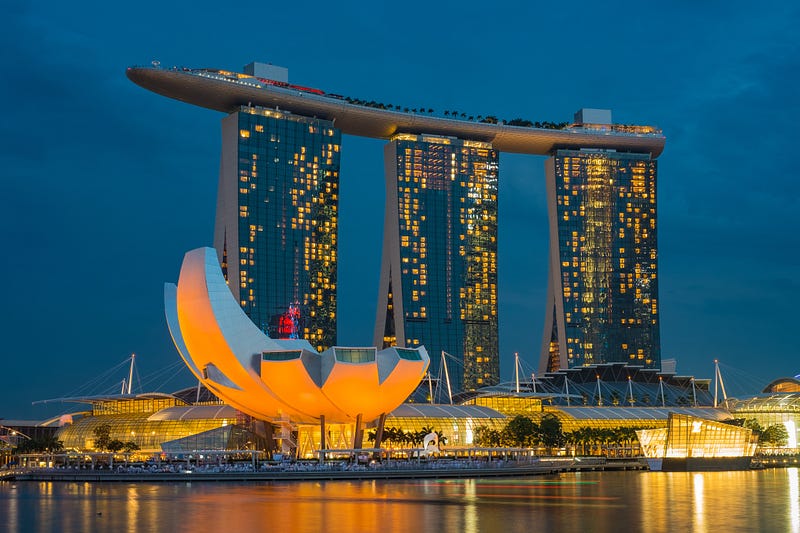
Photo by Julien de Salaberry on Unsplash


Broad representation

The founding members of the BSN Foundation include Blockdaemon, a leading institutional digital asset wallet provider; Zeeve, a Los Angeles-based blockchain infrastructure automation platform; TOKO, a Hong Kong-headquartered digital asset creation platform; GFT Technologies, a German tech firm specializing in financial services and Red Date Technology, a tech firm behind the BSN Spartan Network located in Hong Kong.

Representatives from these entities gathered at the Pan Pacific Singapore on Thursday for a launch event. The BSN Foundation will act as the governing body of the BSN Spartan Network, a public infrastructure network based on open-source virtual data centers. The launch of the foundation marks a major milestone in the BSN’s global expansion and its vision to establish a decentralized public layer of the internet.

In discussion with Cointelegraph, Tim Bailey, the Vice President of Global Business at Red Date Technology, stated:

“The BSN Foundation launch is a vital step in our global expansion, demonstrating the international recognition and support for the BSN Spartan Network’s concept and goals.” He added:

“These organizations bring expertise in areas like blockchain-as-a-service, asset tokenization, financial services, and consulting, highlighting the wide applicability and potential of the BSN Spartan Network.”

Bailey emphasized that the BSN Spartan Network is designed to change the application and governance of public chain technology. “By focusing on non-cryptocurrency public chains and a decentralized governance model, we’re not just innovating in technology but also in how global collaborations can shape the future of IT infrastructure,” Bailey stated. BSN’s strategy is focused on creating a “more stable and accessible network” for businesses around the world, distancing itself from the volatility related to traditional cryptocurrencies like Bitcoin.


Chinese origins

The BSN Spartan Network, launched in September 2022, features a non-tradable token (NTT) issued on its default chain. Each of the network’s data centers is equipped with a single registered NTT wallet for managing and holding these tokens. NTTs can be acquired using fiat currency, selected stablecoins or through various incentive programs.

The BSN Spartan Network, which originated in China as the “Blockchain-based Service Network” in early 2020, was developed with the backing of the Chinese government.

“BSN was indeed originally initiated in China. However, the BSN Spartan Network, governed by the Singapore-based BSN Foundation, is distinct from the BSN Networks in mainland China,” Bailey stated. He highlighted that the BSN Spartan Network is constructed following global standards, is entirely open source and maintains independent operations from the BSN Networks present in mainland China.


UDPN proof of concept

BSN, driven by Red Date Technology as its lead developer, had outlined plans to develop a universal digital payments network (UDPN) as early as 2021. That project continues to progress. Last month, it emerged that SC Ventures, the Singapore-based fintech investment subsidiary of British banking conglomerate Standard Chartered, had partnered with Deutsche Bank in a first proof of concept (POC) of the UDPN. That POC resulted in real-time transfers and swaps of synthetic USDC and EURS stablecoins between the two banks.


More to Read
View All
Web3 & Enterprise·

Sep 22, 2023

Korea’s Content Industry: Thriving Amidst Global Tech Advancements and Ambitious Plans

Korea’s Content Industry: Thriving Amidst Global Tech Advancements and Ambitious Plans“The global competition driven by the Internet and network platforms, artificial intelligence (AI), the metaverse, blockchain technology, and other unprecedented advancements in content technology is ushering in a new era,” Director Jo Hyun-rae of the Korea Creative Content Agency (KOCCA) said in his speech during the 10th annual South Korea Cultural Contents Forum at the Josun Palace Hotel in Seoul on Wednesday, where authorities from various agencies gathered to discuss the prospects, challenges, and hopes for the nation’s content industry.Photo by Ethan Brooke on UnsplashImportance of creative foundations and collaborative effortsJo emphasized his belief that the industry should be built on a foundation of creative talent, rich infrastructure, and financial resources, saying that the agency is actively pushing projects to provide production and financial support in the face of limited resources.“I believe that the creativity and spirit of ambition in our content industry, along with the support and efforts of our people, government, and media, including the Financial News, are shaping the status of K-content today,” he said.Growth and government initiativesAccording to the Ministry of Culture, Sports, and Tourism (MCST), the Korean content industry has seen remarkable growth over the past decade. Last year, the size of the industry exceeded KRW 148 trillion (approximately $111 billion), a growth of about 70% compared to ten years ago.Last year’s content-related exports also amounted to $13.3 billion, far surpassing the $10 billion scale of secondary battery exports and $8.1 billion in home appliance exports. “The Ministry recognizes the economic importance and potential of the content industry and is actively promoting comprehensive support measures to utilize it as an instrument of our national strategy, just like the semiconductor industry,” said Park Sung-won, Vice Minister of the MCST. He also mentioned plans to boost governmental support to encourage active investment in the industry and stimulate the creation of globally competitive works.“Even amid an overall economic downturn, the growth of K-content exports continues, which plays a significant role in our economy,” said Byun Dong-shik, President of local news outlet Financial News. “In light of this forum, I hope that the Korean cultural content industry, and our nation’s economy as a whole, can take another quantum leap forward.”

news
Web3 & Enterprise·

Sep 18, 2025

Credit Saison launches $50M blockchain fund, deepening push into emerging markets

Credit Saison, one of the largest credit card issuers in Japan, is accelerating its global venture strategy with the creation of Onigiri Capital, a new fund targeting early-stage startups building on blockchain technology. Set up in Singapore last month through Credit Saison’s corporate venture arm, Saison Capital, the vehicle is aiming for up to $50 million in commitments and will run for 10 years, with an optional two-year extension. The fund has already secured $35 million toward its target.Photo by Markus Winkler on UnsplashBuilding on a fintech track recordThe initiative is part of Credit Saison’s broader plan to expand in emerging markets and spur innovation in financial services, drawing on Saison Capital’s track record. Established in 2019, the venture arm has backed fintech startups across Asia and, since 2021, has increasingly focused on blockchain-based finance, investing in more than 40 companies. The firm said those investments laid the groundwork for Onigiri Capital, which will also enable other financial institutions to invest alongside Credit Saison in promising blockchain ventures. Onigiri Capital will concentrate on five areas: stablecoins, payments, asset tokenization, decentralized finance (DeFi), and financial infrastructure. The fund will invest primarily at the seed and early stages, with an emphasis on long-term growth. Managing the fund are Qin En Looi, a partner at Saison Capital involved in over 40 blockchain investments, and Hans de Back, a venture investor with more than two decades of experience. Cross-border stablecoin pilotThe launch comes as Japan steps up efforts in digital assets beyond investment alone. According to Electronic Times, the first phase of “Project Pax,” a cross-border stablecoin remittance pilot involving financial institutions in Japan and South Korea, concluded successfully last week. Participants were Progmat—a tokenization platform backed by a consortium of major institutions, including MUFG—along with Datachain and Shoko Chukin Bank from Japan, and Shinhan Bank, NH Nonghyup Bank, and Kbank from South Korea. Fair Square Lab and Korea Digital Asset Custody helped develop an application programming interface (API) for the trial. The pilot demonstrated the feasibility of a network that converts fiat currency into stablecoins for on-chain transfers and then back into local currency at the destination, an approach expected to reduce the time and cost of cross-border payments. The results add momentum to Japan’s bid to modernize financial infrastructure, a backdrop that Onigiri Capital aims to capitalize on as it deploys capital into the sector. 

news
Policy & Regulation·

Jan 07, 2025

Regulatory approach sees Singapore move closer to crypto hub status

Crypto licensing developments in Singapore over the course of 2024, allied with feedback from industry insiders, suggest that the city-state has furthered its development as a crypto industry hub in the Asia-Pacific (APAC) region.Photo by Mike Enerio on UnsplashDoubling up on licensing issuanceAccording to a report published by Lianhe Zaobao, a Chinese language newspaper in Singapore, the Monetary Authority of Singapore (MAS), had issued twice the number of Major Payment Institution (MPI) licenses in 2024 by comparison with the previous year. Four licenses were issued in 2023 to Crypto.com, Coinbase, Ripple and Blockchain.com. That compares with 13 licenses issued in 2024 to companies such as GSR, BitGo, Anchorage, Upbit and OKX. This uptick in licensing signals a regulatory regime that is innovation-friendly, resulting in Singapore becoming a key destination for startup companies in the crypto and Web3 space. Risk-adjusted regulatory approachAccording to William Croisettier, chief growth officer at ZKCandy, Singapore is primed to continue its development as a leading crypto hub for Web3 businesses within the APAC region. ZKCandy is a gaming-focused hyperchain within the zkSync ecosystem that has developed due to a collaboration between the Ethereum layer-2 zkSync network and Southeast Asia’s largest gaming developer, iCandy. Croisettier spoke to Cointelegraph on the matter recently, stating: “The country adopts a risk-adjusted approach to crypto regulation, focusing on the biggest digital currencies to protect investors. Singapore also makes it easy for new crypto firms to interact with local banking partners, a provision considered a luxury in other parts of the world.” Mouloukou Sanoh, co-founder and CEO of Dubai-based Mansa Finance, a DeFi platform that provides liquidity to cross-border payment companies, has also spoken positively about Singapore’s status within the crypto sector. Sanoh stated: “With its clear regulations and support for innovation, Singapore attracts top companies and talent, fostering a thriving ecosystem. This proactive approach signals a strong commitment to digital finance, contrasting with Hong Kong's more cautious stance.” Positive study findingsThese views correlate with a recent study carried out by ApeX Protocol, a multi-chain liquidity platform. The study applied a ranking to ten jurisdictions based on factors such as jobs created in the blockchain field, the number of crypto exchanges located within a jurisdiction and the number of blockchain-related patents filed. On that basis, it found that Singapore topped the rankings, ahead of Hong Kong in second place. Singapore was found to have 81 crypto exchanges located within the city-state, over 1,600 blockchain-related patents filed and 2,433 crypto-sector jobs created. A recent survey conducted by CoinDesk found that from a crypto adoption perspective, Thailand, followed by the United Arab Emirates (UAE) and India, lead the APAC region. Of the 10 countries surveyed, Singapore weighed in in seventh place with a 23% adoption rate, just one percentage point behind Hong Kong with 24%. As Hong Kong and Singapore compete to attract crypto-related business, both still have room for improvement when it comes to the crypto adoption metric in comparison with other Asian countries. 

news
Loading