Top

UBS extends crypto ETF access to clients in Hong Kong

Web3 & Enterprise·November 11, 2023, 1:08 AM

Multinational investment bank UBS Group AG has followed suit with competitors like HSBC, enabling its wealthy clients in Hong Kong to engage in the trading of select crypto-linked exchange-traded funds (ETFs).
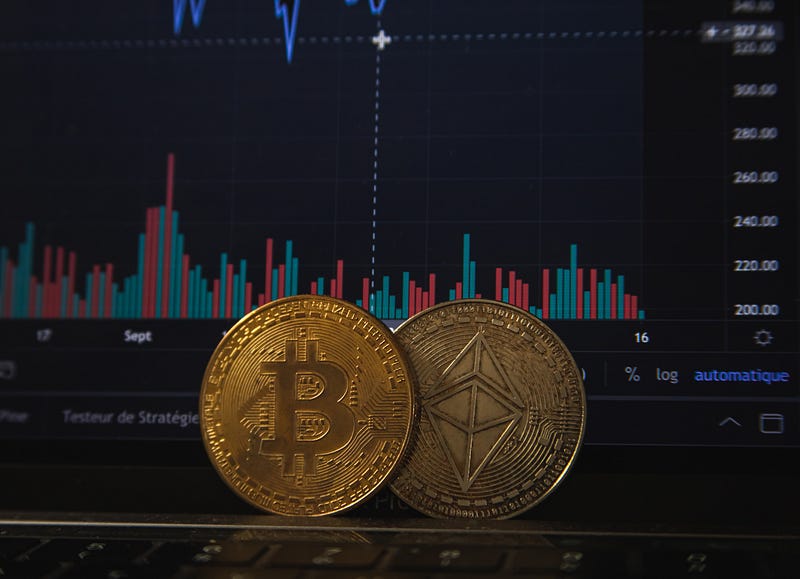
Photo by Pierre Borthiry — Peiobty on Unsplash


Regulatory approval to offer three ETFs

This move, reported by Bloomberg on Thursday, aligns with Hong Kong’s efforts to establish itself as a prominent digital asset hub. Citing an undisclosed source, Bloomberg outlined that three crypto ETFs, namely the Samsung Bitcoin Futures Active, CSOP Bitcoin Futures and CSOP Ether Futures, have received approval from the Securities and Futures Commission (SFC) and will be available on UBS’s Hong Kong platform starting this Friday.

The inclusion of these ETFs allows UBS clients to diversify their investment portfolios, offering exposure to the dynamic crypto market. Educational materials will also be accessible to clients, aiding in their understanding of associated risks. While UBS declined to comment on this development, it marks a strategic move by the Swiss bank to tap into the growing demand for crypto-related investment products.

In June, Hong Kong’s largest bank, HSBC, moved to expand its offering to include crypto ETFs. It has made available the very same crypto ETFs as UBS is about to offer.


Hong Kong’s crypto credentials

Hong Kong introduced a comprehensive digital asset regulatory regime on June 1, aiming to safeguard investors while fostering the Chinese autonomous territory’s emergence as a digital financial center. The SFC permits retail investors to trade major tokens on licensed exchanges under these regulations.

Despite these regulatory advancements, Hong Kong faced setbacks, notably with the recent issues surrounding the unlicensed JPEX exchange, which led to increased scrutiny. The establishment of a joint task force between the SFC and the police aims to monitor and prevent suspicious activities within the crypto industry.

Globally, financial institutions remain cautious about compliance risks in the crypto sector. However, signs of increased engagement are emerging. DBS, Singapore’s largest bank, has expressed its intention to seek a license to offer crypto services to Hong Kong customers. ZA Bank, the largest virtual bank in Hong Kong, plans to provide token-to-fiat currency conversions over licensed platforms. Furthermore, SEBA Bank, backed by the Julius Baer Group, has obtained a license for its unit to offer crypto services in Hong Kong.


Unlocking ETF potential

A report published by the Hong Kong Stock Exchange in April claimed that crypto ETFs possess the potential to unlock the next phase of digital asset expansion in Asia. Earlier this week, it emerged that regulators were open to the notion of allowing retail access to spot crypto ETFs in Hong Kong, provided that the necessary regulatory approvals and checks were in place.

The inclusion of the CSOP Bitcoin Futures and CSOP Ether Futures funds on UBS’s platform highlights the gradual recovery of the crypto sector from the market rout experienced in 2022. Despite the previous market challenges and collapses, the prospect of the U.S. allowing its first spot Bitcoin ETFs has contributed to a resurgence in the largest token’s price this year. The move by UBS aligns with the broader trend of financial institutions cautiously embracing the crypto economy, indicating a shifting attitude toward these digital assets in the financial mainstream.


More to Read
View All
Policy & Regulation·

Dec 09, 2023

Binance withdraws Abu Dhabi bid amid global licensing reevaluation

Binance withdraws Abu Dhabi bid amid global licensing reevaluationLeading global crypto exchange Binance has chosen to withdraw its bid for a trading license in Abu Dhabi, according to information gleaned from the Abu Dhabi Global Market (ADGM) register and a report published by Reuters on Thursday.Photo by Demid Druz on UnsplashChange of directionThe local subsidiary company responsible for the application, BV Investment Management Limited, initially submitted its licensing bid on Nov. 15, 2022. Much has changed in the crypto space and in the fortunes of Binance over the course of the past year, leading the firm to withdraw its application on Nov. 7.This proposed license would have granted Binance the authority to pool and invest funds from professional investors. The decision to retract the bid is part of Binance’s broader reevaluation of its overall strategy going forward. “When assessing our global licensing needs, we decided this application was not necessary,” a spokesperson from the company told Reuters.Adapting to new circumstancesMuch has changed for Binance in 2023. The company has been combating regulatory pushback in multiple jurisdictions worldwide, not least in the United States, where Binance founder Changpeng Zhao (CZ) recently reached a plea agreement with U.S. prosecutors and agreed to pay $4.3 billion for violations related to money laundering and sanctions laws.As part of that process, CZ stepped down as CEO, passing the leadership to Singaporean Richard Teng. Teng is a former regulatory executive who previously oversaw the exchange’s regional operations. A spokesperson for the company maintained that this recent decision relative to licensing in Abu Dhabi is entirely unrelated to the recently agreed-upon settlement in the United States.UAE tiesWhile Binance may be dropping its attempts to gain licensing in Abu Dhabi, in July the company acquired a Minimum Viable Product (MVP) license from the Virtual Assets Regulatory Authority in the United Arab Emirates’ (UAE) other major center, Dubai. The UAE is also the location where CZ has established his home.Some had speculated that the company had also established its headquarters within the UAE. However, CZ has always refused to disclose the firm’s global headquarters, instead suggesting that the firm has no global headquarters. Teng has taken a similar approach.Binance was originally founded in China in 2017. It then shifted its headquarters to Japan and later established a base in Malta to circumvent regulatory challenges in China. Similarly, it’s thought that regulatory scrutiny provides the rationale for the company’s ongoing stance in refusing to confirm the location of its corporate headquarters.Despite regulatory challenges, Binance had previously expressed a focus on expanding its operations in the Middle East, known for its crypto-friendly environment and specific regulatory frameworks. Binance holds various crypto licenses from regulators in the region. In May of last year, it acquired a Category 4 crypto-asset service provider (CASP) license from the Central Bank of Bahrain.The exchange maintains registrations and licenses across Europe, Asia and other regions. It’s had mixed fortunes in its endeavors over recent months, driven out of some markets while making in-roads in others. Earlier this week, its Binance Japan subsidiary became fully operational. Last week, regulators in the Philippines moved against the company due to regulatory irregularities.

news
Web3 & Enterprise·

Dec 06, 2023

Paxful’s Ray Youssef heads up Noones financial app startup

Paxful’s Ray Youssef heads up Noones financial app startupNoones, a financial communication app launched in 2023, has officially appointed Ray Youssef as its CEO with a visionary goal of reaching a billion daily active Bitcoin users within the next seven years.Empowering Global South financial freedomThis announcement aligns with Noones’ mission to empower financial freedom in the Global South by streamlining the movement of money, liberating users from traditional banking constraints. Youssef believes that “Africa alone has the potential to make NoOnes a trillion dollar company but when you factor in the rest of the global south the sky’s the limit.”Founded on the belief that peer-to-peer systems constitute the world’s only true free market and that Bitcoin represents the new global financial architecture, Noones seeks to uplift individuals in Africa, Latin America and Southeast Asia.Startups in the digital assets space tend to be more international in nature than in any other sector. According to the firm’s LinkedIn, Noones is headquartered in Dubai. Notwithstanding that, many of its team appear to be Estonia-based while its website’s terms of service specify Panama as being the relevant jurisdiction, making for a truly international setup.Photo by Arpit Rastogi on UnsplashMoving on from Paxful turbulenceYoussef, the former CEO of peer-to-peer crypto platform Paxful and a seasoned expert in strategic planning, product innovation, growth hacking and operations management, brings his wealth of experience to lead Noones. Youssef’s tenure at Paxful, where he played a pivotal role in the company’s success, underscores his ability to drive transformative change in the fintech industry.However, Youssef’s departure from Paxful in April, amidst a legal dispute with Co-Founder Artur Shaback, marked a turning point. Paxful unexpectedly closed its operations amid a broader trend in the industry. Youssef attributed Paxful’s closure to the legal action initiated by Shaback, alleging a pursuit of significant financial gains. Shaback countered, stating that the dispute arose from differences in business direction and governance, accusing Youssef of migrating Paxful’s assets to his new venture, Noones.Promoting prosperity through bitcoinDespite the turbulence at Paxful, Youssef remains resolute in his commitment to leveraging Bitcoin for social good. While Noones, with its focus on decentralized financial opportunities, requires a Know-Your-Customer (KYC) onboarding process, Youssef continues to champion Bitcoin as a tool for poverty eradication and empowerment in the Global South.Noones, under Youssef’s leadership, aspires to simplify financial transactions and provide decentralized, borderless opportunities to its users. Youssef envisions Bitcoin playing a crucial role in promoting prosperity in the Global South, with Noones aiming to create an interoperable pan-African clearing layer. This initiative aims to elevate intra-African trade, bringing it to levels comparable to intra-European trade.In a statement, Youssef expressed his confidence in the transformative power of Bitcoin, stating:”For the past 8 years, I have fought for financial sovereignty for the Global South. Finally, I am glad to be able to fulfil the mission I began almost a decade ago. I’m confident that Bitcoin will play a crucial role in promoting the prosperity of our continent, and I’m thrilled and privileged to contribute to the company’s ambition and growth.”

news
Policy & Regulation·

Nov 02, 2023

Turkey crafts new crypto regulations with FATF grey list removal objective

Turkey crafts new crypto regulations with FATF grey list removal objectiveIn an effort to secure removal from the Financial Action Task Force’s (FATF) “grey list,” Turkey is in the process of crafting new regulations governing crypto assets.The FATF, established by the Group of Seven (G7) advanced economies, serves as a guardian of the international financial system. It’s an international organization dedicated to combating financial crimes, which added Turkey to its “grey list” in 2021. In 2019, it cautioned Turkey about significant deficiencies in procedures for freezing assets linked to terrorism and the proliferation of weapons of mass destruction.Photo by Michael Jerrard on UnsplashCrypto compliance for FATF upgradeTurkish Finance Minister Mehmet Simsek recently discussed this matter with a parliamentary commission, according to a report published by Reuters. Simsek highlighted the FATF’s evaluation of Turkey’s adherence to 39 out of the 40 standards set by the organization. The single outstanding issue pertains to crypto assets, and Simsek revealed plans to introduce a crypto assets law in parliament to address this concern. However, he did not delve into specific legal changes.The Turkish government is taking action to align with international standards and remove the shadow of the “grey list.” The Turkish Presidential Annual Program for 2024, as published in the Official Gazette of the Republic of Turkey on October 25, outlines a commitment to establish comprehensive cryptocurrency regulations in the country by the end of 2024. Within the extensive 500-page document, Article 400.5 sets the goal of providing clear definitions for crypto assets, potentially subjecting them to taxation in the future.Additionally, the document seeks to establish legal definitions for crypto asset providers, including cryptocurrency exchanges. However, it refrains from specifying the finer details of the upcoming regulatory framework.Crypto popularityTurkey has been an outlier in terms of cryptocurrency use by comparison with many of its international peers. A report by KuCoin earlier this year validated that reality, indicating a significant increase in the number of crypto investors in Turkey over the course of the previous 18 months. In the aftermath of a devastating earthquake which hit the country on Feb. 6, crypto was reported to have been used as a means to get aid to those affected quickly and easily.However, developments in the crypto space have also included difficulties. It was reported in July that the use of crypto for the earthquake relief effort in Turkey was also being used as a cover by an affiliate of the terrorist group ISIS to launder money and receive funding. Turkish users of the Thodex crypto exchange platform were the victims of fraud in 2021, with the founders of that business having been sentenced for that fraud in September. In 2021 the country moved to ban crypto payments against a background that has seen the Turkish lira experience hyper-inflation.CBDC developmentTurkey’s central bank has been making strides in the digital currency arena, successfully conducting the initial trial of its central bank digital currency (CBDC), the digital lira, by December 2022. The central bank has expressed its intention to continue testing and exploring digital currency development throughout 2024.The move to enhance regulation and compliance in the crypto sector in Turkey aligns with global efforts to ensure transparency and accountability in financial systems.

news
Loading