Top

SK Securities introduces fractional investment service with three partners

Web3 & Enterprise·November 03, 2023, 9:02 AM

SK Securities, a major South Korean securities firm, announced on Friday (local time) that it has launched a service aimed at enabling fractional investments.

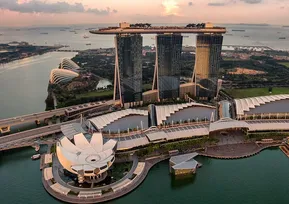
Photo by Mathieu Stern on Unsplash


Real estate, artworks and luxury goods

This service involves three fractional investment companies: real estate platform Funble, online art auction house Seoul Auction Blue and luxury goods platform Treasurer.

This offering represents the first phase of the fractional investment alliance, delivering a wide array of investment insights from these platforms. Funble presents details on housing subscriptions, special housing supplies and key real estate market indicators. Seoul Auction Blue provides analyses of the art market along with information on individual artworks. Additionally, Treasurer offers insights into an assortment of luxury collectibles, including fine wines. Customers of SK Securities can easily access this service through the company’s mobile trading system called Frequency 3.0.


Second phase in H1 2024

As part of the second phase, SK Securities is developing an API-integrated system designed to link with assets on these fractional investment platforms. This system is slated for launch in the first half of the upcoming year.

An SK Securities spokesperson explained that the firm has rolled out this novel service to guide its clients through the emerging arena of fractional investments, while also enriching their investment options. Beginning with this offering, SK Securities aims to broaden its collaborative efforts with fractional investment entities. Furthermore, the firm is committed to advancing the security token ecosystem, which will involve channeling investments into blockchain startups and participating in security token consortiums.

On a related note, SK Securities inked a memorandum of understanding (MOU) with Woori Bank and Samsung Securities in September, targeting the development of business models for security tokens within the bounds of regulatory compliance.

More to Read
View All
Policy & Regulation·

May 30, 2023

Korea Bolsters Crypto Oversight and Anti-Fraud Efforts

Korea Bolsters Crypto Oversight and Anti-Fraud EffortsThe Korean National Police Agency (KNPA) is planning to build a system that allows for the swift suspension of wallet addresses on Binance, the giant global cryptocurrency exchange, during criminal investigations, according to a report by news outlet Edaily. This move comes as Binance is in the process of acquiring Gopax, one of the five major crypto exchanges in South Korea.Photo by Pixabay on PexelsPolice and crypto exchangesThe KNPA met today with these exchanges (Upbit, Bithumb, Coinone, Korbit, and Gopax) and Binance to discuss this matter. In October last year, the KNPA signed a business agreement with the five exchanges to establish a crypto exchange compliance management system.The system serves as a tool for the police to search wallet addresses that are under investigation and determine which of the five exchanges is managing them. Operating 24 hours a day, the hotline enables them to swiftly request freezes and execute warrants. As of May of this year, the system has been utilized by 2,086 investigators.The police are currently working on expanding the system to incorporate Binance. Hence, the focus of today’s agenda is to introduce additional functionalities to the system that would allow the police to thoroughly examine wallet addresses on Binance and initiate freezes when necessary. Until now, the police have been making verbal requests via the hotline before issuing formal letters.In addition to addressing the integration of Binance into the system, the police will engage in discussions regarding enhancements to the compliance system for crypto exchanges and the management of the hotline. Looking ahead, their goal is to extend the application of the compliance system to encompass all 36 crypto exchanges operating in Korea at present.Financial authority bolsters probe unitMeanwhile, the Korean Financial Supervisory Service (FSS) held a press conference today to announce its plan for enhancing its capacity to combat the escalating prevalence of unfair trade practices. Particularly rampant in unregistered investment entities and social media chat rooms, these practices have prompted the FSS to take decisive action.To address this pressing issue, the FSS has devised a plan to bolster its investigative prowess. It intends to augment the manpower of its three investigation units, increasing the number of investigation officers from the current 70 to 95. Furthermore, the establishment of three additional teams is on the horizon, further strengthening the FSS’s investigative capabilities.The Special Investigation Team will fully dedicate its efforts to combating severe unfair trading practices that have the potential to cause substantial losses for investors. The Information Collection Team will employ a multifaceted approach to gather pertinent information. Through both in-person interactions and online activities, this team will diligently collect data essential to uncovering and addressing unfair trade practices. The Digital Investigation and Response Team will delve into the intricacies of emerging digital assets, including cryptocurrencies and security tokens. Their primary objective is to develop and refine investigative techniques specifically tailored to these novel forms of digital assets.In order to enhance its responsiveness to unfair trading practices, the FSS will introduce a new system for sharing investigative information with cryptocurrency exchanges. This collaborative effort aims to foster closer cooperation between the FSS, the prosecution, and the police, ensuring swift and effective responses to any instances of misconduct.The Korean financial authority has affirmed its commitment to working closely with relevant agencies to strengthen investor protection and promote transparency in the capital market. Additionally, it has warned investors to exercise caution and avoid falling victim to investment frauds or engaging in excessive leveraging that may result in substantial losses.

news
Web3 & Enterprise·

Jun 23, 2023

BitMEX CEO Calls for an End to Internal Market Makers

BitMEX CEO Calls for an End to Internal Market MakersIn a recent interview, Stephan Lutz, the acting CEO and group CFO of 100x Group, the parent company of Seychelles-headquartered global crypto exchange BitMEX, expressed his belief that crypto exchanges should phase out their internal market-making teams.Photo by Joe Roberts on UnsplashProp trading desks unnecessarySpeaking with The Block, Lutz argued that with the growth of institutional liquidity providers and high-frequency traders (HFTs) in the market, proprietary trading desks are becoming unnecessary.Lutz stated: “You have enough HFTs out there and prop shops that can perform that function.” He was referring to the role of liquidity providers in filling gaps in the market. He made these comments in response to the emergence of information earlier this week that raised questions about internal trading practices at Crypto.com, a Singapore-based exchange.BitMEX, once the world’s largest crypto derivatives exchange, also used to employ internal traders who acted as market makers. However, Lutz explained that BitMEX’s internal trading team, named Arrakis Capital, now functions primarily as a “treasury desk.” He sees this transition as a natural evolution for crypto exchanges in a market that has matured and attracted more institutional liquidity providers.Arrakis Capital currently performs limited functions, including converting commission fees earned in Bitcoin into fiat currency for operational purposes, hedging BitMEX’s exposure to tokens held as inventory, and making markets for BitMEX’s token $BMEX. Lutz clarified that Arrakis’s market-making activities are limited because external market makers find the token’s liquidity insufficient.Regarding profitability, Lutz stated that Arrakis earns “very minor returns” of up to $100,000 per month from holding T-Bills, but it incurred losses last year. He noted that Arrakis used to play a more significant market-making role when BitMEX dominated the crypto futures market. However, he assured that the trading desk was always segregated, despite accusations in the past.Fee structuresLutz acknowledged that exchanges with internal trading teams have faced increased scrutiny since the controversies surrounding Alameda Research and FTX. To differentiate between benign internal trading teams and hedge fund-like operations, Lutz highlighted several factors, including the separation of client funds and house funds, access to sensitive data, and the ability to move markets on their own exchange. Fee structures also play a role, with low or no transaction fees potentially signaling a market-making motive rather than serving as a counterparty.Lutz’s perspective suggests that crypto exchanges should rely on external liquidity providers and HFTs rather than maintaining internal market-making teams. He argues that the market has evolved. At this point he feels that these teams are no longer necessary, due to the presence of established players within the digital assets space.As regulatory scrutiny grows, ensuring transparency and avoiding conflicts of interest become crucial for maintaining trust within the crypto exchange ecosystem. The digital assets industry is far from arriving at a mature stage in its development. While many in the industry have found the stance taken by regulators to be unhelpful, the industry itself must also demonstrate its ability to iteratively move towards best practice, without that being a knee-jerk response to regulatory enforcement.

news
Markets·

Jul 10, 2023

Research Finds Over 90% of Korean Cryptos Prone to Pump-and-Dump Schemes

Research Finds Over 90% of Korean Cryptos Prone to Pump-and-Dump SchemesThe Korea Institute of Finance (KIF) has released a report revealing that 91.3% of South Korean-issued cryptocurrencies, known as “kimchi coins,” are prone to pump-and-dump (P&D) schemes. These schemes involve intentionally spreading false information on social media platforms to manipulate token prices. This is done with the intention of selling the tokens at artificially inflated prices.Photo by Maxim Hopman on UnsplashP&D prevalenceThese manipulative practices were frequently observed during the rapid growth of the cryptocurrency market from 2020 to 2022. Previous research papers indicate that P&D schemes commonly occur on multiple crypto exchanges and typically unfold within a time frame of 10 minutes. It has been observed that cryptocurrencies with lower liquidity and smaller market capitalization are particularly vulnerable to becoming prime targets for these schemes.Korean market and global marketThe Korean cryptocurrency market stands out with its significant number of cryptocurrencies listed on a single exchange, including kimchi coins. This distinction becomes evident when comparing it to the global market. In the Korean market, the top 10 global cryptocurrencies, ranked by their market capitalization, account for 59% of the total market share. Meanwhile, in the global market, they represent 84.9%. This contrast indicates that the Korean market has a larger proportion of alternative coins, also known as altcoins, which are more susceptible to pump-and-dump schemes and other manipulative activities.According to a survey conducted by the Financial Services Commission in the second half of 2022, there were a total of 625 listed coins (excluding duplicate listings), with 389 (62.24%) of them being listed on a single exchange. Among these single-exchange listed cryptos, 223 were kimchi coins, which is equivalent to 57%.OHLCV data analysisIn this KIF paper, research analyst Baik Yeon-ju delved into abnormal price patterns within the Korean cryptocurrency market. She analyzed the hourly Open-High-Low-Close-Volume (OHLCV) data of kimchi coins in October 2021. The study revealed that out of a total of 16,560 hourly price and volume observations, approximately 4.7% exhibited characteristics consistent with P&D schemes. Baik noted that 91.3% (21 of the 23) observed kimchi coins witnessed such movements.Legislative effortsMeanwhile, it is encouraging that the South Korean National Assembly passed the Virtual Asset User Protection Bill during its plenary session on June 30. This legislation, set to go effective in July next year, aims to provide protection for customers’ assets in the virtual asset space. The act not only establishes regulations to combat unfair trading practices but also enforces penalties for non-compliance.Call for further measuresHowever, Baik suggested that policies should be further strengthened to enhance investor protection within the crypto market. In order to achieve this, she proposed the implementation of a monitoring system for virtual asset service operators (VASPs) and the allocation of inspection and investigation personnel, as well as technical resources. It is also necessary to address potential conflicts that may arise with the Act on Real Name Financial Transactions and Confidentiality, particularly if the data required from VASPs falls under the classification of financial transaction information and personal information.Furthermore, considering the lack of transparency surrounding many altcoins regarding their projects and exchange listings, Baik suggests that the upcoming second virtual asset bill should tackle this issue by regulating the issuance and disclosure of these cryptocurrencies. Additionally, she highlighted the importance of conducting research based on empirical data to detect abnormal transactions. This approach enables the recognition of existing issues and the acquisition of concrete evidence, which serves as a credible basis for policymakers to enact relevant legislation.

news
Loading
