Top

GSR Gets on Path Towards Full Regulatory Approval in Singapore

Policy & Regulation·October 04, 2023, 1:15 AM

GSR Markets Pte. Ltd., the Singaporean subsidiary of the global crypto trading firm GSR, has reached a significant milestone in its quest to become a fully licensed entity within the city-state. On Monday, the Monetary Authority of Singapore (MAS) granted GSR in-principle approval for a Major Payment Institution (MPI) license.
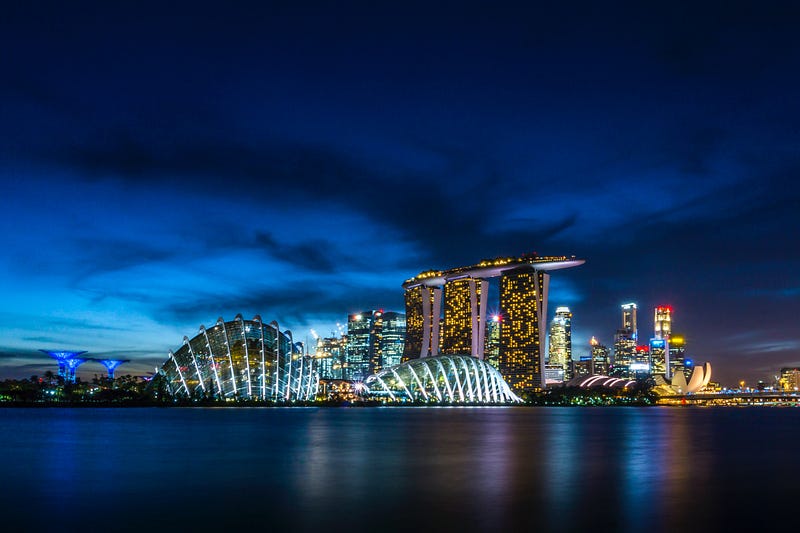
Photo by Mike Enerio on Unsplash


Trading licenses filtering through

This development mirrors similar approvals granted to other crypto firms in the region, solidifying Singapore’s status as a hub for crypto and Web3 innovations. The approval of GSR’s MPI license follows hot on the heels of Coinbase Singapore’s announcement of securing a full Major Payment Institution license from MAS.

Other companies such as Circle, Blockchain.com, and Crypto.com have also obtained MPI licenses this year. These developments underscore the competitive yet regulated landscape of the cryptocurrency market in Singapore.


In-principle approval

The in-principle approval from MAS empowers GSR to provide crypto and fiat-related services to Singaporean residents and entities. This includes the ability to conduct payment services without the limitations of single transaction thresholds (SGD 3 million) and monthly limits (SGD 6 million). GSR’s CEO, Jakob Palmstierna, expressed gratitude for MAS’s constructive oversight, which has played a pivotal role in shaping the evolving digital asset landscape in Singapore. Palmstierna stated:

“We are immensely grateful to MAS for their constructive oversight, which helps shape a growing digital asset ecosystem that we feel proud to be a substantial part of.”

Meanwhile, GSR’s COO Xin Song, emphasized the importance of this approval, stating that it enables them to “deepen our local client partnerships and continue in our critical role as a liquidity provider within the ecosystem.”

GSR’s presence in Singapore aligns with the country’s burgeoning crypto-friendly environment. Recent surveys indicate that 25% of Singaporeans view cryptocurrency as the future of finance, with 32% having some involvement in crypto ownership. Moreover, Singapore boasts over 700 Web3 companies, positioning itself as a pivotal market for the expansion of the crypto and Web3 economy.


Company ambitions

GSR, established in 2013 in New Jersey, offers a diverse range of services, including over-the-counter crypto trading, derivatives trading, market making, and venture capital investments. The firm is no stranger to regulatory compliance, holding Money Service Business licenses across several US states.

The company was founded by former Goldman Sachs Executives Rich Rosenblum and Cristian Gil. At the height of the last crypto bull run, the crypto market maker had plans “to add 100 hires every six months for the next few years.” No doubt that ambition has been scaled back since then, given the protracted bear market which has followed.

Last month, Gil became embroiled in a spat with Andrei Grachev of rival market making firm, Singapore-based DWF Labs.

GSR’s recent attainment of in-principle approval for a Major Payment Institution license from MAS reinforces Singapore’s position as a leader in the crypto space. The firm’s interest in pursuing a compliant route forward and its role as a liquidity provider bode well for both GSR and the broader crypto community in the Asia-Pacific region.

More to Read
View All
Web3 & Enterprise·

Apr 23, 2025

WazirX moves closer to trading comeback

Beleaguered Indian crypto exchange WazirX took to social media on April 21 to clarify to the company’s creditors that it is moving closer towards restarting the platform. While the company hasn’t gone into bankruptcy following a $230 million platform hack which occurred in July of last year, it is going through a restructuring process via the Singapore High Court. Posting on the X social media platform, the company addressed concerns surrounding the restarting of operations.  It said that it understood that users were keen to see the platform restart, while reminding stakeholders that from the outset of the process, it had forecasted a first distribution of user funds and a restart of the platform within the April to May 2025 timeframe. Photo by matthew6910 on UnsplashMay court hearingThe firm outlined that its parent company, Zettai PTE Limited, has accomplished all steps to date, in order to bring about the re-emergence of the platform. It has put forward a scheme of arrangement to the court to distribute assets available to it to creditors and bring the trading platform back online.  It identified a May 13 court date as being pivotal to these plans, when the Singapore High Court will hold a sanction hearing and determine whether it confirms the company’s restructuring plan. WazirX added: “While we’ve worked to stay aligned with the previously shared timelines, court proceedings operate independently, and we respect that process. After the Scheme is sanctioned, the First Distribution and restart will follow within 10 business days from the Effective Scheme Date, as outlined earlier.” 85% payoutEarlier this month, 93% of WazirX creditors, accounting for 94.6% of the overall funds owed, voted in favor of the company’s restructuring plan. As part of the plan, users would be compensated with a payout over several distributions of 85% of the overall funds they held on the platform as of July 18, 2024. The company also plans to issue creditors with a recovery token, in an effort to provide them with further value over time. This communication from the company followed the announcement of a court judgement last week by India’s Supreme Court dismissing a lawsuit filed by 54 WazirX users who have lost funds due to the 2024 hack. While the action was dismissed, one of the plaintiffs pointed out on X that the Supreme Court hadn’t indicated that their action lacked merit. He added:”Our criminal writ petition against #WazirX & Nischal Shetty & others was dismissed on jurisdictional grounds.” On that basis, it would appear that the company may still have to deal with such a complaint if brought via a different forum. Over the course of the past 12 months, the WazirX hack stands out alongside an almost $1.5 billion hack at Bybit. In both cases, fingers have been pointed at notorious North Korean hacking group, Lazarus. According to a report published by Chainalysis last December, $2.2 billion had been stolen from crypto platforms in 2024.

news
Web3 & Enterprise·

Oct 18, 2023

Standard Chartered Muscling Into Asian Crypto Space

Standard Chartered Muscling Into Asian Crypto SpaceUK banking giant Standard Chartered is making a concerted foray into the Asian crypto sector through its Singapore-based subsidiary, Standard Chartered Ventures.Photo by Kirill Petropavlov on UnsplashTargeting institutional businessThat’s according to a report by Nikkei Asia on Tuesday. It’s believed that the company is positioning itself as a trusted choice for institutional cryptocurrency clients amid the backdrop of digital token price volatility and recent upheavals in the industry. The move will pit the British bank directly against global crypto exchange Binance in key Asian markets, specifically Singapore and Japan.Rene Michau, the Global Head of Digital Assets at Standard Chartered, emphasized what he considers to be the bank’s unique advantage in the digital asset space, stating:“As regulated banks, we have a fairly deep infrastructure around risk, conduct compliance, and the activities that go along with crypto assets.”This solid infrastructure includes established risk frameworks, governance structures, and compliance tools that Standard Chartered is keen to bring into the cryptocurrency sphere, thus making it an attractive option for its clients.Zodia Custody and Zodia MarketsStandard Chartered’s substantial involvement in the cryptocurrency market is channeled through its majority ownership of Zodia Custody, responsible for safeguarding digital assets, and Zodia Markets, a crypto exchange tailored for institutional clients.Both entities have been making significant progress in bringing their offerings to market in recent months. Zodia Custody recently launched its services in Singapore, offering a secure solution for financial institutions to manage their crypto holdings. Last month it launched a crypto staking product targeted at institutional clients.In the same month, Zodia Markets achieved in-principle approval to trade as a broker-dealer in the United Arab Emirates. Zodia Custody has also been successful in the UAE, launching its crypto custodian service in Dubai in May.Japan and SingaporeThis concerted effort by Standard Chartered follows a broader trend where traditional financial institutions, such as DBS Group Holdings in Singapore, are entering the cryptocurrency market, capitalizing on the challenges faced by younger crypto players in proving their credibility.Binance rebranded its Binance Custody unit as Ceffu and expanded its offerings for corporate customers in Singapore. While Binance asserts the independence of Ceffu, the exact nature of their capital relationship remains undisclosed.A parallel competition is unfolding in Japan, where Binance Japan has entered the market and Standard Chartered’s Zodia Custody has formed a joint venture with SBI Digital Asset Holdings, targeting institutional clients.While Standard Chartered has achieved a lot through its crypto-focused subsidiaries in a short space of time, there’s always room for improvement. In June, Hong Kong’s banking regulator singled out Standard Chartered alongside HSBC, appealing to both banking groups to make greater efforts to bank crypto clients within the Chinese autonomous territory, as it looks to compete with Singapore in becoming a regional crypto hub.The cryptocurrency sector has witnessed increased scrutiny as virtual currencies like Bitcoin and Ether have gained popularity. The rise of digital token exchanges, each vying for custody of assets belonging to investors who have embraced cryptocurrencies, has sparked concerns about corporate governance and security.Giants in traditional finance, like Standard Chartered, are stepping in to offer institutional investors a safer path to engage with virtual assets while leveraging the trust associated with established brands.

news
Policy & Regulation·

Mar 13, 2024

Hong Kong regulator unveils stablecoin sandbox

Following December's release of proposed fiat-referenced stablecoin regulations, the Hong Kong Monetary Authority (HKMA) has progressed further with the introduction of a stablecoin sandbox.Photo by Nextvoyage on PexelsFormulating a regulatory regimeThe regulatory sandbox, announced through a press release published to the regulator’s website on March 12, encompasses stablecoin currencies beyond the Hong Kong dollar, although the HKMA refrained from specifying particular currencies. Eddie Yue, CEO of the HKMA, emphasized the sandbox's role as a platform for constructive dialogue between the regulatory authority and the industry. Yue stated:"The sandbox arrangement serves as an effective channel for the HKMA and the industry to exchange views on the proposed regulatory regime.”Yue further noted that such engagement is pivotal for formulating regulatory requirements conducive to the sustainable and responsible growth of the stablecoin issuance business. The stablecoin sandbox finds its digital footprint within the International Financial Centre on the HKMA's website. The documentation accompanying the sandbox outlines several key requirements for potential participants. These include demonstrating genuine interest and a feasible plan for issuing fiat-referenced stablecoins in Hong Kong, as well as a concrete strategy for engagement within the sandbox. Additionally, applicants must exhibit a reasonable prospect of compliance with the proposed regulatory framework. Minimum capital requirementsOne notable regulation proposed stipulates that issuers must be Hong Kong-based entities with a minimum capital requirement of HK$25 million ($3.2 million) or 2% of the stablecoin issuance, whichever is higher. The HKMA remains vigilant regarding public announcements by sandbox participants, ensuring that such declarations do not misconstrue endorsement or accreditation from the regulatory authority. In late January, reports suggested discussions between Harvest Global Investment, RD Technologies, Venture Smart Financial Holdings and the HKMA regarding their potential entry into the sandbox. Harvest Global Investment, boasting over $200 billion in assets under management, signifies a significant player in this evolving digital assets space.RD Technologies took to the X social media platform to publicize its approval of the HKMA’s stablecoin sandbox. It also availed of the opportunity to outline that it’s in the process of launching a Hong Kong dollar (HKD)-based stablecoin, which will be known by the short-code HKDR.Hong Kong-based fintech firm AnchorX also chimed in, stating that the sandbox is “a pivotal step forward for the industry, enabling informed dialogue and collaboration between regulators and fintech innovators.” Like RD Technologies, AnchorX is also looking to get involved in the stablecoin business, having developed the AxHKD Hong Kong dollar-based stablecoin, which it is currently beta testing, in collaboration with Conflux Network. Juan Leon, crypto analyst with Bitwise Asset Management, suggested that the move is a great initiative, while calling on the U.S. Federal Reserve Chair Jerome Powell to follow Hong Kong’s example. On the tokenization front, Hong Kong made headlines in 2023 with the issuance of the world's largest native digital bond — a green bond exceeding $750 million. Late last year, it also proposed regulations relative to tokenization of real-world assets.Guidance provided to banks on tokenization, coupled with plans for forthcoming legislation, further solidifies Hong Kong's position as a trailblazer in the realm of digital finance.  

news
Loading
