Top

Japanese Financial Giant SBI Extends Use of Ripple’s Remittance Tech

Web3 & Enterprise·September 07, 2023, 3:12 AM

SBI Remit Co., Ltd., a prominent player in the international money transfer sector and a subsidiary of Japanese financial services conglomerate SBI Group, has unveiled a significant expansion of its collaboration with Ripple in Asia.
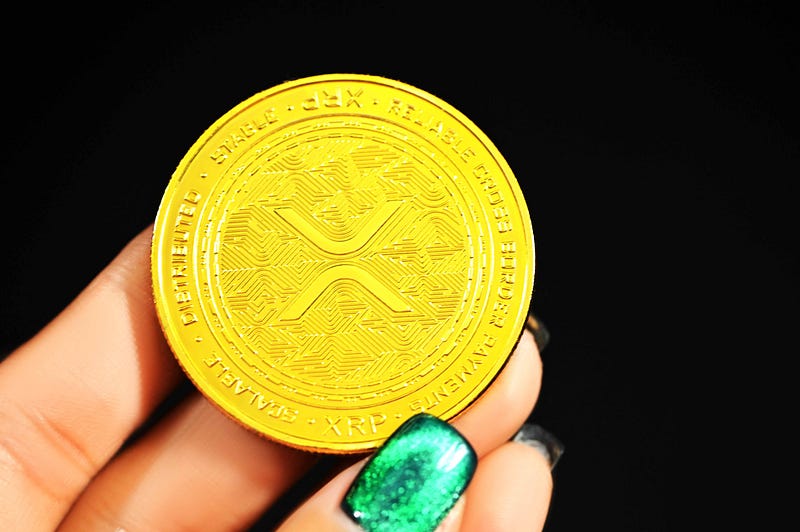
Photo by Kanchanara on Unsplash


Philippines, Vietnam, and Indonesia

The strategic alliance between the two companies will enable international remittance services utilizing Ripple’s XRP cryptocurrency as a bridge currency, connecting bank accounts in the Philippines, Vietnam, and Indonesia.

The partnership, announced via a statement published to SBI’s website on Wednesday, builds upon SBI Remit’s history of utilizing Ripple Payments for its international remittance services, which dates back to 2017. The company has been a pioneer in Japan, leading the way in offering an international remittance service that leverages XRP as a bridge currency between two sovereign currencies.

This latest move underscores SBI Remit’s interest in furthering its exploration and use of XRP-based remittances. In 2021, it introduced a service targeting digital wallets in the Philippines, marking a milestone in using XRP for international remittances in Japan.


Simplifying international remittances

The newly introduced scheme aims to simplify the international remittance process significantly. The process involves SBI Remit initiating a customer’s remittance request, followed by SBI VC Trade facilitating real-time XRP transfers in response to the request. This dynamic approach has been made feasible through a strategic partnership with Tranglo Pte. Ltd., a long-standing Ripple partner. It ensures that customers receive their remittances in their respective local sovereign currencies.

SBI emphasized the advantages of using XRP as a bridge currency, highlighting its ability to enable fast and cost-effective money transfers. XRP also boasts excellent scalability, allowing users to seamlessly send funds to Ripple’s global partners. SBI believes that this will enhance its competitiveness in the international remittance sector.


Targeting important remittance markets

The decision to target the Philippines, Vietnam, and Indonesia was not arbitrary. These countries have a substantial share of remittances channeled into bank accounts, making them ideal candidates for XRP adoption. SBI Remit anticipates that the introduction of the XRP-based remittance service will further accelerate cryptocurrency adoption in these nations.

Yoshitaka Kitao, chairman and CEO of SBI Holdings, expressed the company’s commitment to transforming international remittance services. The press release also conveyed SBI Remit’s dedication to extending its reach beyond the initial three Asian countries. At the time of publication, XRP was trading at $0.5022.

The significance of the announcement was not lost on retail investors with an ongoing interest in XRP. Taking to X (formerly Twitter) one wrote:

“Everyone who says Ripple does not utilize XRP, and that nobody uses XRP is WRONG.”

At Paris Blockchain Week earlier this year, Monica Long, President of Ripple, stated: “The past couple of years have been a real tipping point for institutional DeFi, where even the biggest of banks are embracing this technology as the future, and they have to adapt or die.” That statement is relevant when this latest expansion of the Ripple/SBI partnership is considered.

SBI Remit’s expanded partnership with Ripple marks a significant step in the evolution of international remittance services. By harnessing the power of XRP as a bridge currency, SBI Remit aims to revolutionize cross-border transactions while targeting countries with substantial remittance markets.


More to Read
View All
Policy & Regulation·

Feb 01, 2024

Terraform Labs claims bankruptcy protection will help SEC lawsuit appeal

Singapore’s Terraform Labs, the company founded by incarcerated crypto entrepreneur Do Kwon, has filed for Chapter 11 bankruptcy protection as a mechanism to shield itself from potential severe penalties in the U.S. Securities and Exchange Commission's (SEC) securities fraud lawsuit.Photo by Melinda Gimpel on UnsplashPursuing an appealThe bankruptcy filing, submitted on Tuesday in the U.S. Bankruptcy Court for the District of Delaware, aims to allow Terraform Labs to pursue an appeal against the SEC's allegations. In the filing, Terraform Labs CEO Chris Amani emphasized the critical nature of the bankruptcy protection for the company's ongoing operations, preservation of value for creditors, including the Terra community, and the pursuit of an appeal against the SEC enforcement action. Amani expressed concerns that, without Chapter 11 protection, the company could face liquidation after the trial, forfeiting its right to appeal and leading to disastrous consequences for its business. Having acted as Terraform’s chief operating officer earlier in 2023, last July Amani was appointed as the firm’s CEO. Protection afforded by Chapter 11The estimated assets and liabilities of Terraform Labs fall between $100 million and $500 million, as disclosed in the firm’s bankruptcy filing earlier this month. Amani highlighted the potential financial strain resulting from a substantial money judgment, indicating that the company might not be able to satisfy such a judgment or post the necessary supersedeas bond for an appeal, a bond that must be provided by a petitioner who attempts to have a judgment set aside, without the protection afforded by Chapter 11. The SEC charged Terraform Labs and former CEO Do Kwon with securities fraud in February 2023, accusing them of orchestrating a "multi-billion dollar crypto asset securities fraud." The Commission claimed the company raised billions from investors through unregistered transactions, offering an interconnected suite of crypto asset securities. Terraform Labs disputes the SEC's summary judgment decision, asserting that the cryptocurrency tokens in question are not securities under the Acts and that the SEC's jurisdiction is not applicable. The potential consequences of liquidation extend beyond the company itself, impacting hundreds of thousands of Luna cryptocurrency holders, the same individuals the SEC purportedly seeks to protect. Luna operates on the Terra blockchain maintained by Terraform Labs. Terraform Labs, known for the algorithmic stablecoin TerraUSD and its sister cryptocurrency Luna, filed for bankruptcy protection in the wake of the infamous collapse of both in May 2022. The SEC's case stems from that $40 billion collapse of TerraUSD and a previous version of Luna, accusing Terraform Labs and Kwon of misleading investors about the stability of TerraUSD. Kwon was arrested in March of last year in Montenegro for using false documents. He is currently detained in Montenegro, following his attempt to travel to Dubai with a fake Costa Rican passport. The Terraform founder is currently awaiting extradition to either the United States or South Korea. Both Do Kwon and Terraform Labs deny committing fraud, with the SEC trial scheduled to commence in New York in late March.   

news
Web3 & Enterprise·

Aug 04, 2023

Nomura’s Laser Ventures Invests in Singapore’s Solv Protocol

Nomura’s Laser Ventures Invests in Singapore’s Solv ProtocolSolv Protocol, a Singapore-based DeFi startup, has revealed a significant stride forward with a $6 million funding round, drawing support from Laser Digital, the digital asset subsidiary of Japanese global financial services conglomerate Nomura.The project team provided details on the funding round via a blog post published to its website earlier this week. Accompanying Laser Digital in the funding round, Singapore’s UOB Venture Management also participated, alongside investors such as Matrix Partners, Bing Ventures, Mirana Ventures, Apollo Capital, Bytetrade Labs, and others.Photo by Towfiqu barbhuiya on Unsplash$14 million cumulative fundingThis injection raises its cumulative funding to an impressive $14 million. The innovative Solv Protocol has been developed to facilitate on-chain fund management within the realm of public blockchains.Delving into the intricacies of the Solv asset management protocol, Olivier Dang, COO of Nomura Securities’ wholesale digital office, expanded on its transformative potential, stating: “Solv has built a trustless institutional DeFi platform integrating brokers, underwriters, market makers, and custodians to create the first fund infrastructure on the blockchain to bridge DeFi, CeFi, and TradFi liquidity.”$100 million in trading volumeSolv Protocol is a DeFi infrastructure project that enables users to create and trade financial NFTs. The protocol concerns itself largely with ERC-3525, an Ethereum standard for semi-fungible tokens, the characteristics of which lend themselves well for financial use cases.At the heart of Solv’s business model lies a unique mechanism. Any fund utilizing its solution inherently allocates a portion of its assets under management. Inaugurated in the second quarter of this year, Solv has already facilitated over $100 million in trading volume.Semi-fungible token innovationThe origins of Solv are rooted in the pursuit of an optimal Ethereum token standard for effective fund management. Dissatisfied with existing standards, the founders, primarily Chinese technologists, forged an innovative path. Traditional ERC-20 fungible tokens weren’t deemed suitable due to the need for a new smart contract token for every customization. Similarly, non-fungible tokens (NFTs) posed limitations, being intrinsically designed as individual units not readily divisible, which is essential for issuing shares in a fund. The security token standard, ERC-1400, didn’t quite align either.Thus, Solv birthed the semi-fungible token through the development of ERC-3525, a groundbreaking solution to its unique challenge.While larger asset managers like Franklin Templeton and Ondo Finance have adhered to fungible tokens, a growing trend is emerging in the traditional asset management sector — a movement toward blockchain integration. UK-based Abrdn recently introduced a fund on the Hedera DLT network, while industry giant Schroders is exploring blockchain tokenization under Singapore’s Project Guardian initiative.It’s been an eventful week for Nomura’s Laser Digital. Alongside news of this investment, the company also announced its recent acquisition of a license from Dubai’s Virtual Asset Regulatory Authority (VARA). This regulatory green light bolsters its presence in the global digital asset sector.Nomura’s Laser Digital is amplifying its presence within the blockchain and digital asset domain, marking its sixth such investment within this year alone. Meanwhile, projects like Solv Protocol are pushing the boundaries of innovation through the development of semi-fungible tokens, extending the use cases of blockchain technology as it does so.

news
Web3 & Enterprise·

Mar 20, 2024

Korea’s security token group KSTO signs MOU with blockchain developer Metalab

The Korea Security Token Offering (KSTO), a South Korea-based association dedicated to providing compliance guidelines for STO projects, announced on Monday that it signed a memorandum of understanding (MOU) with blockchain company Metalab for STO mainnet development. The news was reported by local media outlet Ajunews. Through the MOU, the two institutions plan to create a blockchain platform for local blockchain companies, catering to their needs for STO issuance.Photo by Kaitlyn Baker on UnsplashThe KSTO is an association aiming to provide consultation services on STO design and development and assist blockchain projects in complying with laws and regulations, contributing to building a healthy blockchain ecosystem. Meanwhile, a member of the KSTO, Metalab is a blockchain firm with expertise in developing crypto tokens and decentralized applications, or DApps. The company is reportedly participating in an STO mainnet development project led by the KSTO.  STO infrastructure catering to Korean firms and investors Mainnet refers to the primary blockchain network where actual crypto transactions take place, such as the Ethereum or Solana platform. Mainnets, which operate on their own based on their independent infrastructures, are highly valued in the crypto markets due to the complexity of developing such networks.  This blockchain mainnet project involving Metalab will offer basic infrastructures that enable large-scale STO transactions, with plans to release features for STO issuance and management in connection with crypto wallets.  An KSTO official stated that the institution aims to support companies willing to issue STOs, from both technological and legal perspectives. The person highlighted the institution’s commitment to creating an STO ecosystem tailored for Korean companies, saying that the project will create a regulation-compliant, user-friendly platform and develop it to a level where it can rival the industry’s leading players like Polymesh, a prominent security token platform.  

news
Loading