Top

HashKey’s New $100M Fund to Prioritize Altcoins

Web3 & Enterprise·September 02, 2023, 11:51 AM

HashKey Capital, the investment arm of Hong Kong-based crypto firm HashKey Group, is embarking on a new investment journey with the launch of a fund that predominantly targets major altcoins.
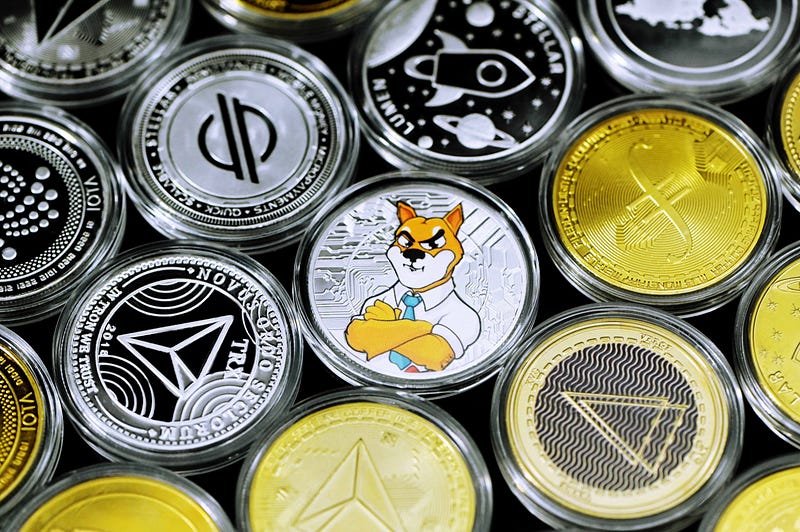
Photo by Kanchanara on Unsplash


50% altcoin allocation

In a recent interview with Reuters, Jupiter Zheng, the Portfolio Manager of the fund, revealed that less than 50% of the fund’s allocation will be directed towards Bitcoin (BTC) and Ethereum (ETH), the two largest cryptocurrencies.

The fund has already garnered attention from potential clients, primarily high-net-worth individuals and investment firms catering to affluent, high-net-worth Asian families. Zheng underscored the fund’s commitment to diversifying investment strategies, which he believes is necessary as a consequence of the Hong Kong stock market’s recent weakness.

“We see untapped demand from professional investors who wish to chase above-market returns in crypto,” Zheng noted, suggesting that the allure of crypto assets is becoming increasingly appealing to traditional investors.


$1 billion assets under management

HashKey Capital has $1 billion in assets under management, and the firm has set an ambitious target of raising $100 million for the newly launched fund within the next 12 months. This allocation strategy also includes a portion of the fund’s holdings in cash, allowing for flexibility in navigating the dynamic and volatile cryptocurrency market.

In addition to forging ahead with crypto investments, the company is actively establishing distribution channels with offshore Chinese financial institutions, expanding its reach and influence in the digital asset space.


Positive market outlook

Zheng remains optimistic about the crypto market’s future, expressing confidence that cryptocurrency prices are finding stability as industry liquidity improves. He cited several factors contributing to this stabilization, including the plateauing of US interest rates and the growing interest of large US asset managers in filing for spot Bitcoin ETFs, indicating a maturing and evolving industry sector.

Responding to news of the new fund, Ryan Selkis, CEO and Founder of crypto market intelligence firm Messari, said that he expected other funds to follow suit in 2024 given that “there’s a ton of inefficiency and mispricing in assets 50–500 by market cap.”

HashKey’s progression in the crypto investment space can be traced back to its acquisition of a Type 9 asset management license from Hong Kong’s Securities and Futures Commission last year. This license granted HashKey the ability to manage portfolios exclusively composed of virtual assets, laying the groundwork for its latest venture. It has since secured Type 1 and Type 7 licenses and recently started offering its products to retail investors in Hong Kong, being one of the first to do so.


Funding round

Earlier in the year, the company successfully closed a $500 million investment round for a fund dedicated to infrastructure, tooling, and applications that drive the widespread adoption of blockchain and crypto technologies. In April, it launched a wealth management service in response to demand from investors who were looking to gain exposure to digital assets.

Hong Kong’s welcoming stance towards cryptocurrencies and its proactive approach to addressing market demand for alternative assets have played a pivotal role in attracting digital asset firms. The city’s Securities and Futures Commission (SFC) has been granting licenses to crypto exchanges in alignment with its new licensing framework, opening up opportunities for retail investors to trade “large-cap tokens” on licensed platforms while implementing safeguards like knowledge tests, risk profiles, and reasonable exposure limits.


More to Read
View All
Markets·

Mar 04, 2024

Korea’s crypto exchanges resume charging fees, shifting market shares

Korea’s prominent crypto exchanges Bithumb and Korbit have recently resumed charging trading fees, local media outlet Edaily reported. However, these changes in fee policies are reinforcing Upbit’s dominant market position while downsizing Bithumb’s and Korbit’s market shares. Meanwhile, the local banks affiliated with crypto exchanges are benefitting from an uptick in fee revenue from the recent bitcoin boom. According to crypto data intelligence platform CoinGecko on Feb. 28, Upbit accounted for 77.4% of the local market share in crypto transactions, followed by Bithumb (20.43%), Coinone (1.73%), Korbit (0.35%) and Gopax (0.09%). Photo by Markus Winkler on UnsplashShifts in market sharesAs of March 2, the market shares of Bithumb and Korbit decreased by 8.59 percentage points and 0.21 percentage points, respectively. Conversely, Upbit’s dominance grew to 86.57%, up by over 9 percentage points. A Korbit official said it’s too early to pass judgment on Korbit’s market performance, as the exchange’s policies on trading fees could change depending on the market sentiment. The person added that CoinGecko tracks only eight types of tokens traded on Korbit and does not cover all the transactions on the exchange.  Bithumb had previously benefited from charging no fees, driving up its market share to as high as over 40% in December. Following the decision to impose a fee of 0.04% on Feb. 6, however, the exchange has been experiencing a drop in transaction volume. Korbit also reinstated trading fees last Thursday, roughly four months after eliminating them on Oct. 10 as a promotional move. However, it's worth mentioning that the newly introduced trading fee is 0.07%, which is lower than the earlier rate of 0.2%. Meanwhile, Gopax currently exempts fees for users who trade BTC, ETH, XRP and USDC.  No local regulations on fees for crypto transactions At the moment, there are no local regulations on fees for crypto transactions, leaving the task of setting such fees to individual trading platforms. It is known that crypto exchanges in other countries, such as the U.S., set their own rates as well.  

news
Policy & Regulation·

Nov 23, 2023

Mammoth Foundation signs deal with the Philippines’ AFAB for blockchain business collaboration

Mammoth Foundation signs deal with the Philippines’ AFAB for blockchain business collaborationThe Mammoth Foundation, a blockchain research and development company, announced on Thursday that it has signed a memorandum of understanding (MOU) with the Authority of the Freeport Area of Bataan (AFAB) of the Philippines to establish business partnerships in the blockchain field. Under this agreement, the Mammoth Foundation intends to bring its blockchain technology to the Philippines as a part of efforts to expand its global business.Photo by Sean Yoro on UnsplashFostering innovation in the PhilippinesAFAB is a free economic zone in the Philippines dedicated to pushing development, economic growth and sustainability through creating jobs and establishing technologically-relevant infrastructure systems. In particular, it is focusing on the adoption of cutting-edge technologies such as blockchain, artificial intelligence (AI) and fintech. As one of the oldest free economic zones in Asia, companies residing in the zone are granted preferential measures such as tax exemptions and special visas. Firms that operate innovative businesses can also receive licenses to support the development of the global IT industry — the Mammoth Foundation being one of these.Global expansion and daily engagementHeadquartered in Singapore with offices in the United Kingdom and several Asian countries, the Mammoth Foundation offers dApps in a range of fields such as healthcare, e-commerce, entertainment and gaming through its mainnet Giant Mammoth Chain (GMMT). GMMT is built on the BNB Chain Application Sidechain and is fully compatible with the Ethereum virtual machine (EVM).Participants in GMMT can acquire token rewards through Play-to-Earn (P2E) and Life-to-Earn (L2E) mechanisms by participating in everyday activities and hobbies like walking, shopping, gaming and reading comics. These tokens can then be used within the Mammoth ecosystem.“The Philippines’ market for advanced technologies such as AI and blockchain is expected to grow in the future,” said John Baek, Chairman of the Mammoth Foundation. “We will strive to expand GMMT globally.”

news
Policy & Regulation·

May 22, 2023

Cebu Meeting of FSB Highlights Crypto Risks

Cebu Meeting of FSB Highlights Crypto RisksThe Regional Consultative Group for Asia of the Financial Stability Board (FSB) has highlighted the risks implicated by crypto assets in a series of meetings held on Thursday and Friday in Cebu, the Philippines.The FSB is an international body with a mandate to monitor the global financial system, as well as make recommendations in respect of that system. The agency was established by the G20 group of countries in April 2009, replacing its forerunner, the Financial Stability Forum.Photo by John Alvin Merin on UnsplashA regulatory framework for cryptoThe two-day event focused on non-bank financial intermediation (NBFI) in Asia and the development of an effective global regulatory framework for crypto-assets. It discussed recent developments in financial markets, together with their regional impact.In opening remarks, Philippine Central Bank Governor, Felipe Medalla, stated: “Crypto, the biggest issue there is, whether we like it or not is quite a lot, especially younger people who are actually gambling. They have huge losses, our view right now. Well, you’re there, it’s your problem and the regulation becomes strict the moment crypto meets banking.”International participants highlighted the need for the development of an effective global regulatory framework for crypto-assets. Particular concern exists with regard to the potential for systemic risk in relation to crypto and a potential overflow into the traditional financial system.Earlier this year, the FSB proposed a complete regulatory framework for cryptocurrencies, with the report having been originally submitted in October of last year. Among its key components is the imposition of tighter controls. It proposed the guiding principle of “same activity, same risk, same regulation” for crypto assets, mirroring the approach taken for traditional financial assets.Global approach to taming cryptoThis approach has proven to be problematic for people working within the digital assets space. Many of the core facets of cryptocurrencies are entirely different to anything we see in traditional finance. Trying to frame crypto within an existing approach and standard has been perceived by many to be akin to trying to fit a square peg in a round hole.It’s not the FSB's role or place to affect policy directly. That responsibility lies with policymakers and regulators in each individual country. However, the organization is seeking to influence those individuals and entities in the hope that they will employ its suggested regulatory framework.Klaas Knot, Chair of the FSB and President of the Dutch Central Bank, provided this view on crypto: “We will come up with a global regulatory framework. It also only makes sense to regulate this from a global perspective. Because, nowadays you can take a server and put it anywhere in the world and start issuing these digital assets.”From Knot’s take, it’s clear that governments and central bankers are cottoning on to the fact that individual nation-state regulation is futile to an extent where decentralized innovations like cryptocurrency are concerned. Others such as European Central Bank (ECB) President Christine Lagarde and Mark Branson, President of German financial markets regulator BaFin, similarly have called for a globally enforced regulatory approach over the course of the past year.Ongoing struggleWhile regulation can be helpful, particularly when it comes to the points at which crypto meets the traditional system, there’s no doubt that this emerging innovation will disrupt the conventional system to some degree or other. That may place an incentive before central bankers and governments to try and stymie the further development of digital assets.While a truly global approach to regulating digital assets could retard development of the sector, there is rarely total consensus among world governments on a single issue. Therefore, by its very nature, crypto, and the digital assets sector will likely continue to develop regardless. It’s more a question of how long that process takes.

news
Loading
