Top

Laos Halts Crypto Miners’ Electricity Amid Drought and Debts

Policy & Regulation·August 29, 2023, 1:32 AM

Laos, a leading producer and exporter of hydroelectricity, has made the decision to suspend electricity supply to cryptocurrency mining operations within its borders.

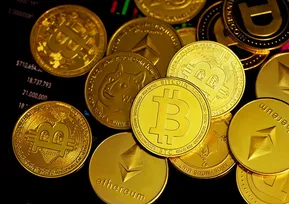
Photo by Ioana Farcas on Unsplash


Tackling a perfect storm

The decision comes as a result of a perfect storm of challenges, including a struggle to meet escalating power demands due to drought conditions, impending commitments to export electricity to Thailand, and the mounting debts of cryptocurrency mining companies.

In a calculated move in 2021, Laos initiated a public-private pilot program aimed at delving into cryptocurrency mining and trading. The context for this move was China’s sweeping crackdown on mining activities, compelling miners to scout for alternative jurisdictions for their operations.

In response, Laos granted authorization to a handful of entities, spanning construction conglomerates and a bank, to partake in the mining and trading of Bitcoin, Ethereum, and Litecoin. This led to a commitment to regulatory collaboration between government ministries, the Bank of Laos, and Electricité du Laos (EDL).


Exploiting hydropower

Laos’ abundant and affordable electricity has placed it on the short list of locations for crypto miners to settle in. With an abundance of rivers and waterfalls, hydropower stands as one of the nation’s primary energy sources, offering a renewable source of cost-effective electricity.

However, events in 2023 have disrupted that narrative. A persistent drought has hit the country during the first half of the year, which triggered an unprecedented surge in the demand for electricity from sources other than hydro.

The dependence on hydropower, constituting 95% of the nation’s energy generation, struggled to keep pace with the demand. As a direct consequence, EDL, a state-owned electricity distributor, announced the cessation of electricity supply to crypto mining operations.

The problem has compounded as Laos finds itself committed to exporting substantial quantities of electricity to the Electricity Generating Authority of Thailand (EGET), serving as a lifeline for Thailand’s power grid during the forthcoming dry season. This external commitment has, in turn, further strained the local capacity for electricity supply.

Another Asian country, Bhutan, has also gotten involved with crypto mining in an effort to exploit its hydropower resources, where 99% of electricity supply comes from hydropower within the kingdom.


Unpaid bills

Another dimension to the saga is the growing debt crisis faced by cryptocurrency mining operations. A representative of EDL cited the inability of these mining businesses to settle their accumulating electricity bills as a key factor in the decision for suspension. The Bank of Laos has further escalated matters by deciding to halt loans to cryptocurrency companies in January.

Laos has had bold objectives to transform itself into Southeast Asia’s premier exporter of clean electricity. The nation’s topography, featuring mountainous terrain covering 70% of the country, has immense potential for hydropower, with over 26,000 megawatts of installed capacity and ambitious plans to double this figure.

Hydroelectric dams like Nam Theun 2 have become conduits for substantial volumes of low-cost electricity, primarily directed towards neighboring Thailand and Vietnam. Meanwhile, projects like the Luang Prabang dam, boasting an installed capacity of 1,460 megawatts, underscore the country’s ambitions to develop hydropower further.

Revenues from power exports have become a vital component in Laos’ gross domestic product (GDP), contributing almost 15%, as per a report from October 2022.


More to Read
View All
Web3 & Enterprise·

Feb 11, 2025

Blockstream partnership & new office announced in Japanese expansion

Blockstream, a blockchain technology firm headquartered in British Columbia, Canada, has moved to expand its activities in Japan with the opening of a new office and the announcement of a partnership with local companies. The infrastructure development company has partnered with Diamond Hands and Fulgar Ventures, CoinDesk Japan reported. Diamond Hands is a Japan-based company involved in providing Bitcoin-related products. It helps companies to integrate Bitcoin and lightning payments into their services. Based in Wilmington, Delaware, Fulgur Ventures invests in early-stage startups. It is particularly focused on Bitcoin and Lightning Network-related projects.Photo by David Edelstein on UnsplashBootstrapping brand awareness Fulgur Ventures is Blockstream’s largest shareholder. The objective is to bootstrap brand awareness within Japan using these partnerships with local companies. To that end, Diamond Hands CEO Koji Higashi will become Blockstream’s brand ambassador. It’s thought that efforts will be made going forward to further expand partnerships with local Japanese companies. Blockstream announced in a press release that it aims to drive adoption of self-custody technologies and Bitcoin layer-2 innovations within the East Asian country. Furthermore, it plans to drive adoption of real-world asset (RWA) tokenization. Commenting on the development, Blockstream Founder and CEO Adam Back stated:"With increased regulatory clarity and rising institutional interest in Bitcoin now is the moment for Blockstream to establish a direct presence in Japan, one of our most important markets." Back added that the company is looking forward to “empowering Japanese enterprises and individuals to fully harness Bitcoin as the foundation for a financial future that's secure, scalable and decentralized.” Tokyo office Another aspect to the expansion involves the opening of an office in Tokyo by Blockstream.  Adam Back is a Bitcoin OG who has often been the subject of speculation in attempts to identify pseudonymous Bitcoin founder Satoshi Nakamoto. Back proposed Hashcash, a proof-of-work-based system and forerunner to Bitcoin, in 1997. The Japanese corporate world has demonstrated its interest in Bitcoin in recent months, with local company Metaplanet launching an ambitious plan to acquire 21,000 Bitcoin by 2026, having adopted the Bitcoin playbook pioneered by American business intelligence and Bitcoin development company MicroStrategy. Blockstream’s investment arm, Blockstream Capital, has also been active in the market. Last month, the company invested $75 million into crypto custodian Komainu. Komainu is a joint venture between CoinShares, Ledger and Japanese global financial services company Nomura.  The same month, the company launched two institutional-grade Bitcoin investment funds. The funds, Blockstream Income Fund and Blockstream Alpha Fund, have been devised to cater to a growing demand from institutions for transparent, regulated and secure financial products. A third fund, Blockstream Yield Fund, is due to launch later this year. It will offer Bitcoin holders consistent, low-risk returns on their holdings. Blockstream was founded in 2014. In its earlier years, the company has served as a technology provider relative to the Liquid Network. In Core Lightning, it has developed a well-recognized implementation of the Lightning Network protocol.  To facilitate Bitcoin holders in terms of self-custody of the leading crypto asset, Blockstream developed Blockstream Jade, a hardware wallet built on open-source software. The device offers air-gapped functionality, meaning that users can perform transactions without connecting the device itself directly to the internet.

news
Markets·

Jul 11, 2023

Singapore and the Philippines Lead Crypto Interest in Southeast Asia

Singapore and the Philippines Lead Crypto Interest in Southeast AsiaSingapore and the Philippines have emerged as the frontrunners in Southeast Asia’s crypto landscape in 2023, capturing the majority of regional interest.Research carried out by Malaysian cryptocurrency data aggregator CoinGecko reveals that on a per capita basis, Singapore holds a 43.5% share of crypto interest, followed closely by the Philippines with 40.3%.Photo by Kenneth Koh on UnsplashRegional crypto hubSingapore has established itself as a crypto hub not only within Southeast Asia but also in the wider Asia region. It was previously ranked as the third most crypto-curious country globally and has consistently been one of the top Web3 gaming countries for three consecutive years.Other countries in Southeast Asia, including Malaysia, Thailand, Vietnam, and Indonesia, also contribute to the region’s crypto interest, although at more modest levels. Combined, these countries represent 14.7% of the per capita crypto interest in the region so far this year.GameFi driving interestIn the Philippines, crypto interest is primarily driven by GameFi, and the country has maintained its position as the leading Web3 gaming country from 2021 to 2023. The Philippines witnessed the Axie Infinity mania, with local gaming guilds and inspiring rags-to-riches success stories. Additionally, it was among the top countries embracing meme coins earlier this year, alongside Malaysia.Vietnam shares a strong interest in GameFi, placing it among the top Web3 gaming countries for three consecutive years. Thailand and Indonesia have witnessed substantial trading volumes on their crypto exchanges, with $37.94 billion and $23.97 billion respectively in 2022.Notably, Malaysia has a significant presence in the crypto industry, despite its relatively smaller impact. The country is home to two prominent crypto data tools, CoinGecko and Etherscan, which were founded by Malaysian teams and are headquartered in the country.In contrast, smaller Southeast Asian economies such as Cambodia, Myanmar, Brunei, Laos, and Timor-Leste have a combined share of only 1.5% of regional crypto interest per capita. While these markets remain largely untapped, their low adoption rates are unlikely to improve in the near term. Except for Brunei, which is a wealthy nation, the smaller Southeast Asian economies are categorized as lower-middle income countries.Regarding the specific cryptocurrencies drawing attention in Southeast Asia in 2023, Layer 1, GameFi, meme coins, and DeFi-related crypto have emerged as the most popular categories. The top-ranking cryptocurrencies within these narratives account for 22.2% each of the region’s interest so far this year.The Philippines, as the top Web3 gaming country, showcases three GameFi cryptocurrencies — Smooth Love Potion (SLP), Ronin (RON), and Wemix (WEMIX) — among its most popular choices. Malaysian investors also show interest in DeFi projects like Maple (MPL) and BoringDAO (BORING), in addition to Bitcoin.Singapore’s popular crypto choices include The Graph (GRT), Bitcoin (BTC), and Pepe (PEPE). Vietnam demonstrates ongoing interest in Aptos (APT) and privacy tool Bob (BOB), while Thailand focuses on Gala (GALA) and Canto (CANTO). Finally, Indonesia monitors Not Financial Advice (NFAI) and AirSwap (AST).Overall, Singapore and the Philippines lead the way in crypto interest within Southeast Asia, while other countries in the region also contribute to the evolving crypto landscape.

news
Web3 & Enterprise·

Dec 18, 2023

XPLA joins hands with EDUM to bring Study-to-Earn services to learners

XPLA joins hands with EDUM to bring Study-to-Earn services to learnersSouth Korean gaming corporation Com2uS Group’s layer 1 blockchain XPLA has established its newest partnership with EDUM, a Study-to-Earn (S2E) project operated by Dream Ladders, a blockchain subsidiary of educational and career services provider Jinhak, according to an official announcement on Monday (KST). Together, they plan to bring blockchain to education, helping students benefit from a new, innovative approach to learning and proving that blockchain can be useful in any environment.Photo by JESHOOTS.COM on UnsplashOptimizing the learning experience with Web3EDUM is set to leverage Web3 technology to provide students with access to affordable, high-quality educational services for everyone, no matter their economic background. Users will be able to earn rewards in the form of EDUM or EDUMP tokens when using different functions on the EDUM mobile application. EDUM is the project’s market-based utility token that can be cashed through external exchanges or even swapped with EDUMP, which has a fixed value and can only be used within the EDUM ecosystem. EDUMP tokens can also be used for purchasing NFTs or lectures on the EDUM platform.The project will also incorporate NFT technology as a key mechanism. Learners on EDUM can record their achievements as NFTs through certification performed by a Proof of Attendance Protocol (POAP). The platform offers benefits to instructors as well, whose content such as lectures, exams and textbooks can be protected and compensated by being minted as NFTs.Going beyond gamingBy working with EDUM, XPLA aims to venture into the realm of education, which is outside of its usual gaming focus, helping the platform revolutionize S2E services and creating more real-world use cases for blockchain technology.

news
Loading