Top

Korea’s Busan City to Develop Blockchain-Based Carbon Neutrality Platform

Policy & Regulation·June 19, 2023, 7:03 AM

Busan Metropolitan City, known for being home to South Korea’s largest port, announced today that its consortium won the bid for the 2023 new local energy facilitation project offered by the Korea Energy Agency, an organization under the Ministry of Trade, Industry, and Energy (MOTIE). The consortium consists of five entities, including Busan City, tech solution provider Nuri Flex, and gas distributor Busan City Gas. As the winning bidder, Busan City and its collaborators will proceed with the development of a blockchain-based platform that promotes carbon neutrality.
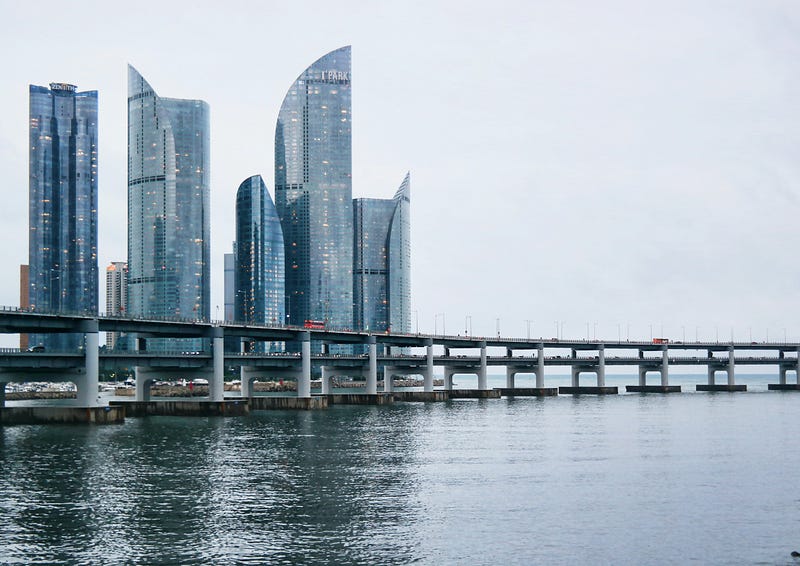
Photo by BERK OZDEMIR on Pexels


Carbon neutrality

The primary aim of this project is to create a system that leverages surplus renewable energy to achieve carbon neutrality in the city’s port and industrial infrastructure. The initiative includes providing eco-friendly renewable energy to port and industrial facilities, establishing a blockchain-based carbon credit system to support businesses in joining the global corporate renewable energy initiative RE100, and facilitating the trading of surplus electricity. These measures are intended to save energy, enhance power system stability, and create greater value.


Boosting green energy proportion

The project is set to take place from June 2023 to December 2024, with an estimated cost of 3 billion KRW ($2.3 million). The national and local governments will each finance 25% of the project, while the private sector will cover the remaining 50%. Upon completion of the project, Busan aims to increase the proportion of renewable energy within the city. Leveraging surplus energy and engaging in carbon credit trading, Busan expects to gain a competitive edge in the carbon-neutral sector.

More to Read
View All
Policy & Regulation·

Nov 28, 2023

Seoul prosecutors charge eight suspects linked to crypto price manipulation

Seoul prosecutors charge eight suspects linked to crypto price manipulationEight individuals involved in a cryptocurrency fraud, which is separate from a murder case associated with the same token, have been formally charged and referred to court by public prosecutors in South Korea.The Joint Virtual Asset Crime Investigation Unit of the Seoul Southern Prosecutors’ Office has recently disclosed the arrest of two key figures in the scandal related to a cryptocurrency called Puriever (PURE). The unit apprehended the chief executive of the PURE issuer, referred to as “A” for anonymity, and a market manipulator. Both have been charged with fraud. In addition to these arrests, the prosecution has charged six other individuals–including an executive from a cryptocurrency consulting firm, anonymously named “C,” and a broker. These additional suspects have been charged but not arrested.Photo by Adam Śmigielski on Unsplash$16 million from over 6,000 victimsThe prosecution has accused the suspects involved in the PURE case of illicitly inflating the token’s price through deceptive disclosures and market manipulation during April and May 2021. This scheme reportedly enabled them to amass illegal profits totaling KRW 21 billion (close to $16 million) from approximately 6,100 victims. In March of this year, it came to light that the PURE was at the center of a series of criminal activities, including kidnapping and theft, which ultimately led to a murder in Gangnam, Seoul.The prosecution has uncovered that “A” and “C,” key figures in the PURE scandal, transferred 55.2 million PURE to a partner company under the guise of an initiative to reduce air pollution, as falsely stated in their disclosure. The suspects reportedly employed a skilled manipulator to inflate the token’s price artificially. Once the price peaked, they sold off the tokens, capitalizing on the artificially inflated value.Circulation supply manipulationThe case reveals a collective scheme orchestrated by a token issuer, a consulting entity, a broker, and an experienced market manipulator. A key tactic in their scheme involved locking their cryptocurrency wallet to artificially limit the token’s circulation supply. Furthermore, these fraudsters employed a bot to perform wash trading, which boosted the daily trading volume of the token. This strategy created a false impression of high demand and activity in the market.A representative from the prosecution emphasized that the cryptocurrency market is more susceptible to manipulation than the stock market. This vulnerability is attributed to the lack of a monitoring and supervision system in the crypto sector, despite its speculative nature. In response to these challenges, the prosecution has expressed a firm commitment to enhancing its crypto investigation capabilities with the goal of effectively combating criminal activities. These efforts are aimed at fostering a fair and transparent trading environment, safeguarding the integrity of the cryptocurrency market.

news
Policy & Regulation·

Apr 26, 2023

Ripple Exec: Clear Regs Helped Japanese Market Withstand Crypto Winter

Ripple Exec: Clear Regs Helped Japanese Market Withstand Crypto WinterEmi Yoshikawa, the Vice President of Strategy & Operations at business-focused crypto solutions provider Ripple, has attributed the Japanese cryptocurrency market’s ability to withstand the recent crypto winter to well-defined regulations.©Pexels/WorldspectrumSecurity breach at Mt.GoxIn a recent interview with Korean blockchain media outlet Digital Asset, Yoshikawa noted that Japan implemented regulations on cryptocurrencies earlier than other countries, in part due to the 2014 security breach at the Tokyo-based Bitcoin exchange Mt.Gox that resulted in investor losses.The Mt.Gox exploit prompted revisions to the Payment Services Act, which now recognizes cryptocurrencies as a means of payment. Furthermore, the Financial Instruments and Exchange Act was revised in 2020 to give security tokens the same status as stocks. The Japanese government is also exploring the possibility of allowing the domestic circulation of foreign stablecoins.Although it took several years for companies to enter the market after the regulatory framework was established, the security token market has since expanded, with more businesses now participating.Yoshikawa credited the Japanese crypto market’s resilience during the recent global crypto winter to clear regulatory guidelines. The recognition of cryptocurrencies as financial instruments enabled the regulation of not only spot trading but also derivatives trading. Japanese exchanges are also required to hold customer funds separately in trust firms, ensuring investor protection. This regulatory environment allowed companies and investors to confidently enter the crypto industry last year.FTX JapanFTX Japan’s return of customer assets and resumption of withdrawals in February showcased the effectiveness of these clear regulatory guidelines. Among subsidiaries of the now-defunct crypto exchange FTX, FTX Japan is the only one to have returned customer assets thus far, Yoshikawa emphasized.While crypto regulations in some areas, such as taxation, remain insufficient, both the Japanese government and entrepreneurs agree that the Web3 industry should develop in a way that benefits the nation’s economy.Ripple’s projects in JapanYoshikawa said that Ripple views the Japanese market as one of its key markets. In 2016, the company formed a joint venture, SBI Ripple Asia, with Japanese financial group SBI Holdings. Through this partnership, Ripple collaborated with several Japanese financial institutions to launch RippleNet and provide liquidity to the payment service.Japan’s largest remittance technology firm, SBI Remit, has adopted RippleNet and Ripple’s own remittance system On-Demand Liquidity (ODL) to facilitate real-time payments between Japan and Southeast Asian nations. Yoshikawa underlined that Ripple is committed to supporting Southeast Asian workers in Japan who need swift and cost-effective international payments.

news
Web3 & Enterprise·

Sep 25, 2023

Crypto Titans Clash on Elon Musk’s X

Crypto Titans Clash on Elon Musk’s XA subtle panel discussion photo posted by Andrei Grachev of Singapore’s DWF Labs turned into a war of words among crypto trading titans on Elon Musk’s X (formerly Twitter).Photo by Marek Piwnicki on UnsplashDWF vs GSRGrachev, who is a Managing Partner at the market maker and Web3 investment firm, thanked his fellow panelists in the post. However, the tone quickly soured as Cristian Gil, Co-Founder of rival market-making giant GSR, took offense to Grachev’s presence on the panel and voiced his disapproval on the platform.Gil didn’t mince his words, stating: “[Andrei Grachev] had absolutely no business to be on that panel. It’s insulting to [GSR] , [OKX] and [Wintermute] to be in the same room as [DWF Labs].”DWF vs WintermuteHis remarks received a “Like” from Evgeny Gaevoy, the CEO of market maker Wintermute. In response, Grachev defended his presence, asserting that DWF was superior in technology, trading, and business development compared to its rivals, going so far as to suggest to Gil: “Yeah, if I were you — I would be also crying all the time.”The exchange continued with Grachev claiming that DWF was capturing market share from Wintermute, and Gaevoy responded with a nonchalant “lol,” challenging Grachev to invest more if he believed DWF posed a threat.DWF Labs’ rapid growthWhile the exchange consisted of mere words, it shed light on DWF Labs’ sudden rise to prominence earlier over recent months. The company has featured prominently in an array of investments in Web3 startups and blockchain networks over the course of 2023. Prominent among them have been investments in EOS, the Algorand ecosystem, and the TRON ecosystem.Recently appearing on the BlockBeats podcast, Grachev defended the company, outlining that it was not involved in market manipulation in response to recent assertions to the contrary.“We do not engage in any manipulative behavior,” Grachev stated. “Of course, we have the futures market, which is a tool for hedging positions and trading clubs. We are completely different from directional traders,” he added.Gaevoy added some humor to the mix by sharing a meme, raising questions about the maturity level of these prominent figures in the crypto industry. The spat provoked a broad array of commentary from the crypto community.Crypto immaturityThe very public clash raises concerns about how traditional Wall Street firms, currently making bold moves into the crypto space, might perceive such behavior. Notably, firms like BlackRock have been involved in Bitcoin ETF applications, signaling a growing interest in cryptocurrency among mainstream financial institutions. In response to Gaevoy and Grachev, one commentator wrote: “The institutions are never coming back.”While it would appear that there’s no love lost between DWF, GSR, and Wintermute, it also seems evident that both market makers can agree on Singapore as being an appropriate location from where to operate a crypto business. While Wintermute is London-based, it revealed recently that it was expanding its operations in Singapore. Like Wintermute, GSR is primarily based in London although it too maintains a presence in Singapore to service Asia-centric business.

news
Loading