Top

Zodia Custody and Blockdaemon Partner on Institutional Staking

Web3 & Enterprise·June 06, 2023, 11:44 PM

London-based cryptocurrency storage provider Zodia Custody, a portfolio company of Japan’s SBI Holdings, has entered into a partnership with blockchain infrastructure provider Blockdaemon relative to crypto staking.
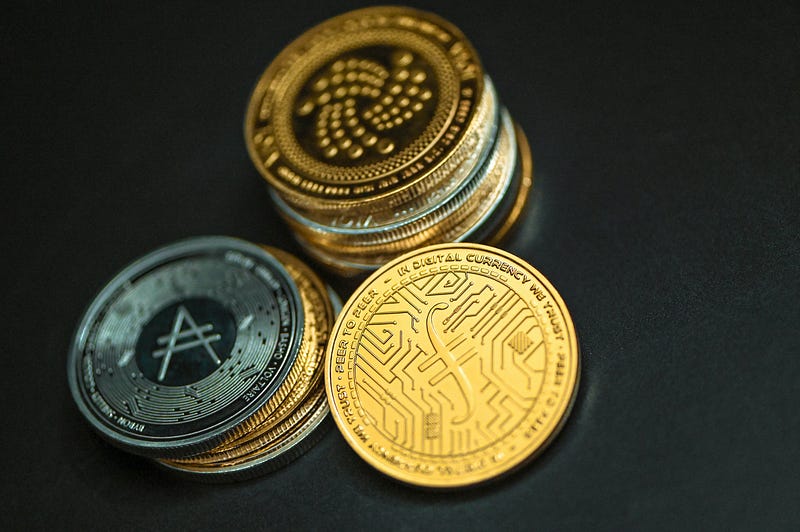
Photo by Traxer on Unsplash


Institutional interest

Blockdaemon announced the crypto staking collaboration, tailored to institutional clients, on Twitter on Tuesday. This move comes as institutional interest in staking, the process of contributing digital assets to support blockchain networks and earning rewards, continues to surge.

Following the Ethereum network’s Shapella upgrade on April 12, the amount of ether (ETH) staked increased by an impressive 4.4 million, reaching a total of 22.58 million ETH (equivalent to $42 billion) as of May 23. This remarkable growth in staked assets reflects the growing confidence in the Ethereum network and the potential for substantial returns.


First bank-owned custodian

Zodia Custody is a subsidiary of the well-known multinational bank Standard Chartered and backed by prominent institutions such as Northern Trust alongside SBI Holdings. It claims the title of being the first bank-owned custodian to provide staking services exclusively to institutional clients. This collaboration enables Zodia Custody to leverage Blockdaemon’s infrastructure to deliver secure and efficient staking solutions, catering to the specific needs of institutional investors.

Blockdaemon has been at the forefront of facilitating seamless integration between traditional financial institutions and the emerging crypto industry. Earlier this year, the company introduced a wallet service targeted at the institutions and crypto custodians. The wallet assists clients in managing their assets securely, eliminating the need for third-party storage solutions. By partnering with Zodia Custody, Blockdaemon expands its portfolio of services, capitalizing on the rising demand for staking among institutional investors.

The firm’s CEO and Founder, Konstantin Richter, stated that the partnership with Zodia “allows stronger security, automation and simplification of the process to participate in staking, truly accelerating Web3 innovation.”


LMAX collaboration

Earlier this month Zodia partnered with digital asset trade execution specialist LMAX Digital to provide a combination of institutional-grade trading infrastructure and custody services to crypto asset manager, Coinshares.

Institutional investors, traditionally cautious about entering the crypto ecosystem, are now becoming more proactive in engaging with digital assets. Staking, with its potential for consistent and predictable returns, has emerged as an appealing opportunity. By participating in staking, institutions not only contribute to the efficient functioning of blockchain networks but also enjoy the rewards associated with validating transactions and securing the network.

The partnership between Zodia Custody and Blockdaemon exemplifies the industry’s efforts to bridge the gap between traditional finance and the rapidly evolving world of cryptocurrencies. As more institutional clients seek exposure to digital assets, it becomes essential to provide them with secure and reliable solutions tailored to their specific requirements.

With demand for staking services continuing to rise, institutional players are recognizing the value of taking a more active part in the crypto ecosystem. With Zodia Custody and Blockdaemon leading the way, the opportunities for institutional clients to engage in staking and reap the rewards are set to expand, further fueling the growth of the entire crypto industry.


More to Read
View All
Web3 & Enterprise·

Aug 31, 2023

SEBA Bank Receives Conditional Approval for Crypto Services in Hong Kong

SEBA Bank Receives Conditional Approval for Crypto Services in Hong KongSwiss-based crypto-centric SEBA Bank has secured conditional approval from Hong Kong’s Securities and Futures Commission (SFC) to offer crypto services within the autonomous Chinese territory.While there are stipulations yet to be met before the license is fully granted, the development marks a significant progression when it comes to SEBA’s global business ambitions.Photo by Ruslan Bardash on UnsplashExpanding in AsiaThe “approval-in-principle” comes as part of SEBA’s strategic efforts to expand its foothold in the Asian crypto market. Once the conditions are fulfilled and the license is formalized, SEBA will be well positioned to provide Hong Kong with a range of comprehensive crypto services.This includes securities dealing encompassing crypto-related structured products, as well as consultation and management of both digital assets and traditional securities. SEBA sees potential in the offering of derivative products as it has identified demand for derivatives and structured products within the Asian crypto market.This step forward for SEBA follows earlier reports that the bank was actively growing its workforce in pursuit of digital asset licenses for both Hong Kong and Singapore. The company has grown its headcount from seven to 20 across these locations, as it looks to establish a strong presence in the Asian market.The move aligns with Hong Kong’s evolving stance on cryptocurrency and digital finance. Introduced in June, the virtual asset service provider (VASP) license was intended to regulate virtual asset services within Hong Kong’s legal framework. Currently, only two crypto exchanges have secured these licenses.Cryptocurrency exchange HashKey, alongside digital assets platform OSL, became one of the first licensed crypto exchanges in Hong Kong recently. Since then, it has expanded its offerings to retail users, allowing them to purchase Bitcoin and Ethereum using US dollars. Leading up to that licensing approval, it had also launched a wealth management service for high-net-worth individuals and institutional investors. The majority of publicly accessible VASPs remain unregulated, according to a recent statement by the SFC.Regulatory balanceThe Hong Kong Monetary Authority (HKMA) has also shown interest in fostering relationships between established financial institutions and crypto exchanges, further signaling the region’s growing engagement with the crypto space. It’s also pointing towards getting the balance right between enabling digital asset innovation and having sufficient regulation in place to protect investors. In May, its CEO, Eddie Yue, stated that Hong Kong wouldn’t be a place for light touch regulation.The licensing process in Hong Kong hasn’t been without its difficulties. The interest in obtaining crypto trading licenses caught the SFC flat footed as it found itself understaffed to work through the licensing applications that arrived at its door. The backlog prompted commentary from SEBA’s CEO for the Asia Pacific (APAC) region, Amy Yu, back in May, with Yu highlighting that the backlog had increased significantly over the course of nine months.While SEBA has broken into the market in the APAC region via its efforts in Hong Kong, it’s understood that the bank has plans to develop its business in Singapore further over the course of the coming months.

news
Markets·

Apr 19, 2023

Crypto Winter Halves Korean Bank Fee Profits

Crypto Winter Halves Korean Bank Fee ProfitsLast year, Korean banks collected only half the amount in fees from crypto exchanges compared to the previous year, according to Korean news agency News1.©Pexels/PixabayDeclining bank fee profitsFiles submitted by the Korean Financial Services Commission to Yun Chang-hyun, a member of the ruling People Power Party, revealed that the five major Korean crypto exchanges paid 20.4 billion KRW (~$15.6 million) in fees to banks last year, which is a 49.4% decrease from the previous year’s 40.3 billion KRW (~$30.7 million). These exchanges (Upbit, Bithumb, Coinone, Korbit, and Gopax) have established agreements with banks to hold real-name bank accounts, which is a legal requirement for exchanges that wish to conduct trades in Korean won.Banks that have provided real-name accounts to crypto exchanges saw an increase in fee profits from 2019 to 2021. However, due to a decline in market sentiment last year, trade volume decreased, resulting in a reduction of bank fees. Last year’s crypto winter is attributable to various factors, including uncertainties in the global economy and collapses of crypto enterprises such as Terraform Labs and FTX.Fees by exchangesIn terms of fees paid to banks by exchanges last year, the largest exchange, Upbit, paid 13.9 billion KRW (~$10.6 million) in fees to Kbank, a mobile banking service provider. Bithumb and Coinone paid 4.9 billion KRW (~$3.7 million) and 989 million KRW (~$750,000) in fees to NH Bank, respectively. It is worth noting that Coinone switched its bank from NH Bank to Kakao Bank last November, paying 72 million KRW (~$55,000) to Kakao Bank in the fourth quarter. Korbit paid 486 million KRW (~$370,000) and 19 million KRW (~$14,500) to Shinhan Bank and Jeonbuk Bank, respectively. Gopax partnered with Jeonbuk Bank to obtain its real-name accounts in April last year.Lawmaker Yun said it was apparent that partnerships were being forged between only a handful of banks and crypto enterprises. Current regulations have to be reviewed to encourage more banks to participate in various blockchain businesses, he added.

news
Web3 & Enterprise·

Jun 12, 2025

Bullish files for IPO in the U.S.

Digital asset exchange business Bullish has filed confidentially for an initial public offering (IPO) in the United States. The Financial Times reported on June 11 that the IPO had been filed with the Securities and Exchange Commission (SEC) in recent weeks. Choosing to file the IPO confidentially will have enabled the firm to delay public disclosure, allowing it to progress with its preparation for the IPO and reveal financials closer to the point at which it goes public. Back in February, Bloomberg reported that the company was looking at the possibility of executing an IPO, with investment banking and financial services firm Jefferies understood to have been advising the firm. This latest report confirms that Jefferies will work as the lead underwriter in relation to the IPO deal.Photo by Markus Winkler on PexelsHong Kong tiesBullish is a subsidiary company of Block.one, a blockchain software company founded by Brendan Blumer and Dan Larimer, best known for having established the EOS.IO blockchain network. Both companies have strong ties with Hong Kong.  The Bullish exchange is licensed by the Hong Kong Securities and Futures Commission (SFC). It has also obtained licensing from the Gibraltar Financial Services Commission (GFSC) and the German Federal Financial Supervisory Authority (BaFin).  The exchange business is jointly operated by corporate entities registered in Hong Kong and Gibraltar. The company maintains offices in Hong Kong, Gibraltar, Singapore, New York, London, Frankfurt and the Cayman Islands.  The business is also being backed by Hong Kong billionaire Richard Li and American entrepreneur Peter Thiel, co-founder of PayPal, Palantir Technologies and Founders Fund. Blumer, who is based in Hong Kong, founded Bullish in 2021 and currently serves as Bullish chairman. The company is understood to have in the region of 275 employees with Tom Farley leading it as CEO. Farley previously fulfilled the role of president at Intercontinental Exchange’s NYSE group. Positive climate for crypto IPOsAmid a more positive crypto climate in the United States, crypto-related IPOs appear to be back in favor. Leading stablecoin issuer Circle executed an IPO earlier this month with the offering being 25x oversubscribed. Following the success of the Circle IPO, BitMEX co-founder Arthur Hayes asserted on X that it would lead to a plethora of crypto-related IPOs over the next few years. He likened that anticipated wave of IPOs to the flurry of initial coin offerings (ICOs) that occurred back in 2017. Earlier this month American crypto exchange platform Gemini confidentially filed for an IPO in the U.S. A Bloomberg report published in March suggested that rival exchange business Kraken is planning an IPO for Q1 2026.  There has been some speculation that Ripple, the American technology company that developed and supports XRP and the XRP Ledger (XRPL), may be a prime candidate for an IPO. Taking to the X social media platform, “Pentoshi,” a pseudonymous crypto market analyst with over 860,000 followers on X, said that a Ripple IPO “feels only logical.” The analyst added that if the company executed an IPO, it would likely weigh in at “some insanely stupid valuation.” 

news
Loading