Top

RBI Official Encourages Indian Banks to Adopt Blockchain

Policy & Regulation·June 01, 2023, 12:00 AM

In a recent conference organized by the Reserve Bank of India (RBI), Deputy Governor Mahesh Kumar Jain highlighted the importance of adopting innovative technologies like artificial intelligence (AI) and blockchain to ensure sustainable growth and stability in the country’s banking sector.

Speaking at the RBI-hosted event for directors of Indian banks last week, Jain emphasized the need for effective corporate governance, governance structure, and risk management strategies to tackle future challenges arising from technological disruptions, evolving customer expectations, and cybersecurity threats.
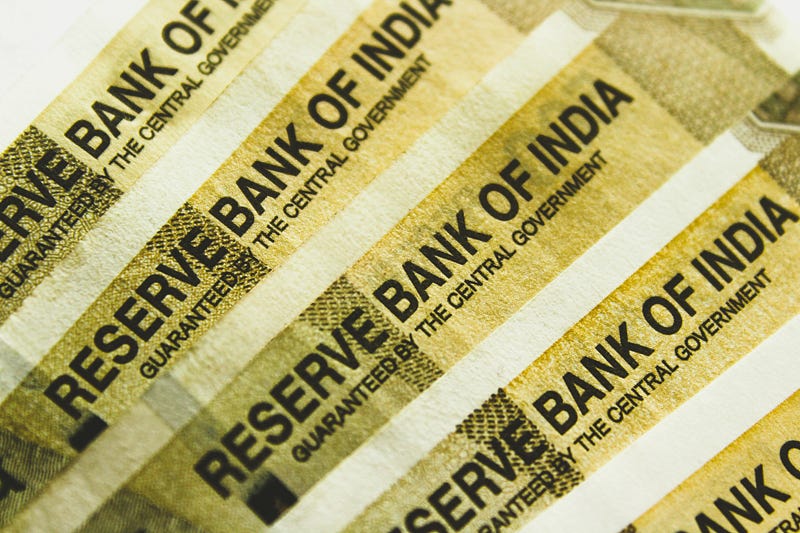
Photo by rupixen.com on Unsplash


Leveraging AI and blockchain

The recommendation to leverage AI and blockchain technologies aligns with India’s digital transformation goals and the desire to enhance customer experiences while investing in cybersecurity measures. Jain advised Indian banks to prepare for the future by focusing on digital transformation, exploring innovative technologies like AI and blockchain, and seeking collaborative opportunities with other industry players. He also emphasized the importance of upskilling the workforce to meet the demands of the digital era.


Inconsistent approach

This proposal comes at a time when the Indian government’s stance on cryptocurrencies remains ambiguous. While India has been exploring the introduction of a central bank digital currency (CBDC), the Cryptocurrency and Regulation of Official Digital Currency Bill, 2021, which aimed to establish regulations for digital currencies, has not been legislated.

According to the RBI’s annual report, which was published on Tuesday, the central bank is progressing with its retail central bank digital currency (CBDC) pilot program, with plans to expand the number of banks involved, the use cases, and the number of locations. It had expanded the scope of the project to involve one million citizens, but it’s looking to broaden that user base also. In contrast, the country’s approach to decentralized cryptocurrency has been contradictory, sometimes banning it and at other times, allowing it.

It is noteworthy that India’s neighbor, Pakistan, has also recently announced plans to train one million IT graduates in AI by 2027, with potential applications in weather prediction, agriculture supply chain optimization, and health services transformation.

The RBI’s recommendation to adopt AI and blockchain technologies reflects the growing recognition of their potential benefits for the banking sector.


Embracing tech innovation in banking

By embracing these technologies, Indian banks can enhance efficiency, automate processes, and strengthen security measures. The adoption of AI and blockchain has the potential to transform various aspects of banking, including risk management, fraud detection, customer service, and transaction processing.

While India continues to navigate the regulatory landscape surrounding cryptocurrencies, the central bank’s focus on AI and blockchain signals its commitment to embracing technological advancements and preparing the banking sector for the future. As India’s financial ecosystem evolves, the adoption of these technologies can empower banks to offer innovative services, streamline operations, and provide secure and efficient financial solutions to customers.

The RBI’s emphasis on digital transformation, AI, and blockchain paves the way for Indian banks to explore new avenues for growth and resilience. As the country progresses on its digital journey, the adoption of emerging technologies will play a pivotal role in shaping the future of the banking sector and contributing to India’s overall economic development.

More to Read
View All
Policy & Regulation·

Dec 05, 2023

Terraform Labs fails to halt class action lawsuit

Terraform Labs fails to halt class action lawsuitThe High Court in Singapore has dismissed an appeal filed by Terraform Labs and its co-founders, marking a significant step forward for the plaintiffs behind a class action initiated against the company.That’s according to a report published by Singaporean publication, the Business Times, on Thursday. The legal development follows the collapse of TerraUSD (UST) tokens in May of 2022, resulting in the loss of billions of dollars in market value. The collapse, in turn, has led to several lawsuits against Terraform, its founders and affiliated entities, with those court actions playing out in courtrooms in Singapore, South Korea, Montenegro and the United States.Photo by Wesley Tingey on UnsplashFraudulent misrepresentation allegedThe class-action suit, initiated in September 2022 by Julian Moreno Beltran and Douglas Gan on behalf of 375 others, alleges fraudulent misrepresentation by Terraform, Co-Founders Do Kwon and Nikolaos Alexandros Platias and the Luna Foundation Guard (LFG). The claimants argue that these misrepresentations induced them to purchase UST, stake the tokens and retain them as their value plummeted.UST had been designed to be pegged to the U.S. dollar with a 1:1 ratio. However, flaws in the tokenomics behind that digital asset meant that it faced a loss of confidence in May 2022, trading at around $0.05 when the court’s decision was released. The claimants collectively suffered losses of nearly $57 million.Terms of use cited in attempt to dismissTerraform attempted to have the lawsuit dismissed by invoking an arbitration clause in its website’s terms of use, asserting that users had waived their rights to a jury trial or participation in a class action. However, the Assistant Registrar (AR) rejected this application, stating that the defendants failed to establish an arbitration agreement.The AR highlighted that the terms of use were inconspicuous on the website, and there was insufficient effort to draw users’ attention to those clauses. Terraform, Kwon and associated entities appealed this decision, which was heard by Justice Hri Kumar Nair on Sept. 25.Despite establishing a prima facie case for an arbitration agreement, the court ruled that Terraform’s participation in the legal proceedings, including filing a defense and counterclaim, meant it could no longer seek a stay in favor of arbitration.Multiple actionsIt’s a busy time for all stakeholders relative to the Terraform collapse. Playing out within the same timeframe is a lawsuit in the United States taken by the Securities and Exchange Commission (SEC) against Terraform and Do Kwon, where the SEC claims that crypto asset securities fraud has been carried out.The latest installments in that saga in recent weeks have seen both parties file to seek summary judgment. Last week, a court in New York approved the confidential treatment of specific documentation which had been produced by Jump Crypto, a division of proprietary trading firm Jump Trading.There are also criminal actions underway. In a South Korean court in October, Terraform Labs Co-Founder Daniel Shin denied wrongdoing in the Terra/Luna collapse. Meanwhile, a court in Montenegro has approved the extradition of Do Kwon, with a final decision to be made shortly as regards whether he should be extradited to the United States or South Korea.

news
Policy & Regulation·

May 24, 2023

Hong Kong Moves to Enable Retail Crypto Trade

Hong Kong Moves to Enable Retail Crypto TradeHong Kong’s Securities and Futures Commission (SFC) has moved to enable retail participation in crypto trading within the Chinese autonomous territory.The SFC has arrived at that determination, according to a report it published on Tuesday. The report, titled “Consultation Conclusions on the Proposed Regulatory Requirements for Virtual Asset Trading Platform Operators Licensed by the SFC (Note 1),” provides an overview of the nature of feedback the Commission received as part of its consultation process relative to virtual asset trading.Photo by Ben Cheung on PexelsRetail investor protectionIn the press release which accompanied the report, the Commission outlined that “a significant majority of respondents agreed to our proposal to allow licensed trading platform operators to serve retail investors.” On that basis, the SFC is moving forward in enabling retail trading of crypto assets through licensed virtual asset trading platforms effective June 1, and it’s setting out to do so while implementing a number of measures to protect retail investors.That will include ensuring that operators provide an appropriate on-boarding process. In the case of crypto asset projects, the SFC is determined to see to it that good governance is implemented, alongside enhanced token due diligence, admission criteria, and disclosures.In the statement, the SFC’s CEO Julia Leung, said that “providing clear regulatory expectations is the key to fostering responsible development.” She added that “Hong Kong’s comprehensive virtual assets regulatory framework follows the principle of ‘same business, same risks, same rules’ and aims to provide robust investor protection and manage key risks. This will enable the industry to develop sustainably and support innovation.”Specific conditionsOne item that the SFC’s new rule-book on virtual asset trading for retail investors outlines is a ban on crypto “gifts.” Effectively any promotions or incentives that lead with free gifts, and this will likely include token airdrops, will be prohibited.In terms of capital liquidity, virtual asset exchanges will be required to maintain a minimum of 5,000,000 Hong Kong dollars ($638,000) at all times as a minimum paid-up share capital. A Platform Operator must at all times maintain liquid capital which is not less than its required liquid capital,” the document outlines.Token due diligenceThe SFC acknowledged that it can be difficult for virtual asset exchanges to carry out due diligence on new tokens. With that in mind, it has incorporated a requirement for any new token to have a twelve-month track record before it can be considered to be listed to provide an indication of such things as supply, demand, maturity, and liquidity. In that way, exchanges have some data to work with in carrying out token due diligence.Smart contracts have been a point of weakness in recent years, with considerable sums lost through hacks that have exploited smart contract code vulnerabilities. To that end, the SFC insists that as part of token due diligence, new assets will have to undergo smart contract audits performed by independent assessors.Given that the spate of recent crypto platform failures implicated loss of customer deposits, the rule-book considers the need for segregation of client funds. Exchanges will need to segregate funds and can either hold them separately from the assets of the exchange itself or have them held in escrow.

news
Web3 & Enterprise·

Jun 19, 2023

Korean Investment Firm Partners with Open Asset to Build Security Token System

Korean Investment Firm Partners with Open Asset to Build Security Token SystemKorea Investment and Securities (KITC), one of the major securities firms in the nation, announced today that it signed a memorandum of understanding (MOU) last week with Seoul-based blockchain developer Open Asset to construct a distributed ledger system for a security token alliance led by KITC. That’s according to a report by local news outlet Dailian.Photo by Growtika on UnsplashSecurity token groupIn March, KITC initiated a security token group called “Korea Investment ST Friends” in collaboration with online banks Kakao Bank and Toss Bank, as well as Kakao Enterprise, an artificial intelligence (AI) solution provider. The primary objective of this alliance is to establish the necessary infrastructure for issuing products suitable for security tokens.Tech expertiseOpen Asset, led by its CEO Kim Kyung-up, boasts a team of tech talents. The company played a key role in the Bank of Korea’s central bank digital currency (CBDC) project and participated in the development of Kakao-backed initiatives such as the blockchain platform Klaytn and the digital wallet Klip.Future system integrationThe partnership with Open Asset aims to integrate the forthcoming distributed ledger system into KITC’s existing securities trading platform, creating synergies for its business. Additionally, the two entities are exploring the possibility of connecting the new platform with the systems of other participants in the group in the future.Choi Seo-ryong, the head of the platform division at KITC, emphasized the investment firm’s objective of establishing market standards for security tokens that offer numerous possibilities. He added that KITC will work with Open Asset to develop an innovative and efficient system.

news
Loading