Top

Intella X Teams Up with Web3 Comm Protocol to Boost Game Experience

Web3 & Enterprise·May 23, 2023, 2:34 AM

South Korean gaming company Neowiz announced on Tuesday that its blockchain gaming platform, Intella X, has forged a partnership with DMTP, a developer of Web3 communication protocols.

The partnership aims to bolster the capabilities of Intella X services and nurture a robust ecosystem around the platform.

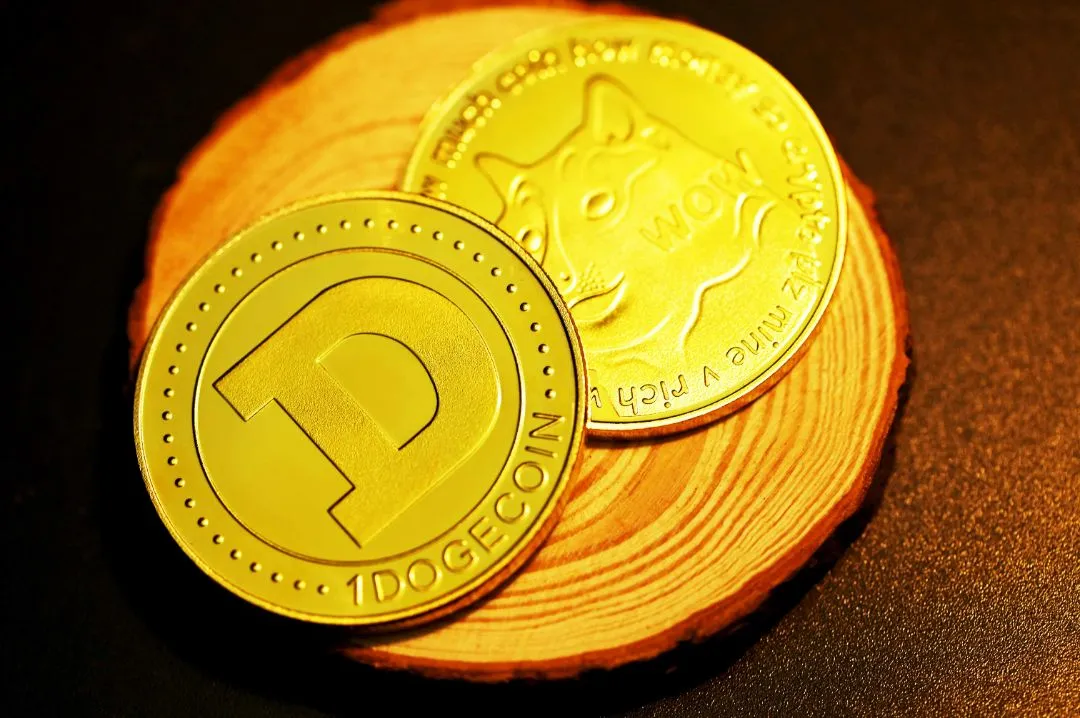
Photo by Andrey Metelev on Unsplash


On Polygon network

Intella X, currently under development by Neowiz, will operate on the Polygon network. The platform is designed to be user-centric, offering a range of services beyond gaming. These include its own decentralized exchange (DEX), an NFT launchpad, and an NFT exchange.


Messages between wallet addresses

DMTP has developed a communication tool named after itself, which enables message exchange between Web3 wallet addresses. Encrypted user messages are securely stored on the blockchain and managed in a decentralized, distributed manner. This ensures data preservation in case of unforeseen circumstances, such as service termination.

The two companies will discuss introducing DMTP to the Intella X Wallet. Having recently soft launched the Android and web versions of Intella X Wallet, Neowiz plans to coordinate with DMTP to expedite technological development and marketing efforts to enrich user experience.

More to Read
View All
Policy & Regulation·

Dec 14, 2025

Terraform Labs co-founder Do Kwon sentenced to 15 years for ‘generational’ fraud

Do Kwon, a South Korean national and the central figure in the 2022 collapse of the Terra blockchain ecosystem, was sentenced to 15 years in prison on Dec. 11, capping a federal case that exposed a multibillion-dollar scheme built on false promises and secret market manipulation. According to a U.S. Department of Justice press release, District Judge Paul A. Engelmayer handed down the sentence in Manhattan federal court, finding that the 34-year-old orchestrated a scheme that inflicted substantial losses on both retail and institutional investors.Photo by Tingey Injury Law Firm on Unsplash"This was a fraud on an epic, generational scale. In the history of federal prosecutions, there are few frauds that have caused as much harm as you have, Mr. Kwon," Engelmayer said, according to Reuters. Kwon, who was extradited to the U.S. in December 2024 following his arrest in Montenegro, pleaded guilty in August. Addressing the court, he acknowledged the devastation caused by the collapse. "All of their stories were harrowing and reminded me again of the great losses that I’ve caused. I want to tell these victims that I am sorry," Kwon said. A house of cardsAccording to court filings, Kwon’s deception ran from 2018 through 2022, misleading investors regarding the stability of the algorithmic stablecoin TerraUSD (UST), the LUNA token, and the independence of the Luna Foundation Guard. Prosecutors outlined a pattern of fabrication across Terraform’s products. When UST lost its $1 peg in May 2021, Kwon claimed an automated "Terra Protocol" restored balance. In reality, investigators found the company secretly utilized a high-frequency trading firm to prop up the price, creating a "false impression" of the system’s resilience. The fraud extended to Terraform’s partnerships and applications. Investigators said Kwon lied about the South Korean payments platform Chai, claiming its transactions were settled on the Terra blockchain. Instead, Chai used traditional payment networks, with Terraform simply copying data to the blockchain to feign integration. Similarly, Kwon allegedly manipulated the Mirror Protocol, a platform for synthetic stock trading. While touting it as decentralized, prosecutors said he used bots, funded by stablecoins he created, to inflate volume and manipulate asset prices. The collapse and captureBy spring 2022, the ecosystem’s value exceeded $50 billion. However, when UST broke its peg again in May 2022, Terraform could not artificially restore it. The resulting crash erased at least $40 billion in value and triggered a contagion across digital-asset markets. While Kwon publicly claimed cooperation with authorities during the fallout, prosecutors introduced recordings suggesting he privately explored seeking political protection to avoid accountability. He was eventually arrested in Montenegro in March 2023 for traveling on a fraudulent passport. In addition to the prison term, Judge Engelmayer ordered Kwon to forfeit over $19 million, including interests in Terraform and its digital assets. The case was investigated by the Federal Bureau of Investigation (FBI) with assistance from Montenegrin and South Korean authorities. The Securities and Exchange Commission (SEC) has filed a separate civil action. Global crackdown widensWhile the U.S. concludes the Kwon case, scrutiny of the crypto sector is intensifying abroad. DL News, citing the Belarusian outlet Onliner, reported that Belarusian authorities have blocked access to digital asset trading platforms Bybit, Bitget, and OKX. The Ministry of Information cited the Mass Media Act for the decision, though KuCoin and Binance remain accessible. The step contrasts with President Alexander Lukashenko’s earlier support for developing a national crypto reserve and mining sector. Meanwhile, the Belarusian arm of Russia’s Sputnik reported that State Control Committee chairman Vasily Gerasimov recently put in place a record system identifying wallets authorities suspect are used for criminal money laundering. 

news
Policy & Regulation·

May 03, 2023

Korean Gov’t Encourages Discussions on Tax Imposition within the Metaverse

Korean Gov’t Encourages Discussions on Tax Imposition within the MetaverseThe South Korean government is planning to hold an open forum in August, encouraging citizens to discuss the possibility of imposing taxes within the metaverse, according to News1.New social frameworkOn Tuesday, Korea’s Ministry of Science and ICT (MSIT) announced the government’s plan to develop a new social framework in the digital age. To achieve this, the government will set up an open digital forum and draft a digital bill of rights.Topics to be covered in the forum include generative artificial intelligence, the metaverse, and self-driving cars.Regulation-free metaversesThe idea of imposing taxes within the metaverse has piqued the interest of cryptocurrency users. The government has reportedly decided to exempt community-based metaverses from regulations to encourage growth. This policy will enable metaverse users to provide gaming content and engage in economic activities such as trading items and distributing giveaways. However, the potential surge in economic activities in the metaverse has brought up the issue of whether tax implementation is necessary in this virtual world.Though community-based metaverses are still premature, the government acknowledges the importance of discussing potential tax imposition.While the current agenda is focused on metaverses, it remains unclear whether discussions will extend to loosening regulations for blockchain-based games.Strict gaming restrictionsCurrently, Korean law prohibits trading game items for cash to deter gambling behavior, prompting Korean game developers to publish their titles overseas first. In fact, Netmarble launched blockchain-based mobile board game Meta World: My City in regions other than Korea last month. This has led to concerns that Korea is falling behind in the global gaming industry due to strict regulations.Digital bill of rightsFollowing the open forum in August, MSIT will collaborate with other relevant government agencies, including the Culture Ministry and the Land Ministry, to draft a digital bill of rights in September.MSIT Minister Lee Jong-ho said that the government will conduct regular surveys to identify areas for improvement, assess the societal impact of technological advancements, monitor each ministry’s measures, and review public opinions.© Pexels/Nataliya Vaitkevich

news
Policy & Regulation·

Jun 21, 2023

Korean Financial Watchdog: Investor Protection Boosts Crypto Market

Korean Financial Watchdog: Investor Protection Boosts Crypto MarketLee Bok-hyun, Governor of the South Korean Financial Supervisory Service (FSS), addressed the issue of investor protection measures in the cryptocurrency market during his speech at the fourth Blockchain Leaders’ Club in Seoul. According to a report by local news agency News1, Governor Lee emphasized that these measures would not hinder the market but instead establish a positive cycle by increasing market confidence and driving industry growth.Photo by Joshua Miranda on PexelsCrypto user protectionTo underscore the importance of safeguarding users in the crypto industry, Governor Lee referred to recent incidents such as the collapse of stablecoin Terra and the failures of Silvergate and Silicon Valley Bank. He highlighted how these examples demonstrate the need for protective measures as the influence of the crypto market extends beyond the financial sector and impacts the real economy.Governor Lee further emphasized the FSS’s commitment to maintaining ongoing communication with the crypto industry and adapting the regulatory system to accommodate the changing landscape. He stated that the FSS would assist the industry in establishing its own self-regulatory system, which includes monitoring suspicious transactions and transparent procedures for virtual asset listing. Additionally, the FSS plans to collaborate with industry insiders to prevent misunderstandings when formulating relevant rules and regulations.Governor Lee also touched on the Virtual Asset User Protection Bill, stating that he expects to see the final draft this summer as it is currently undergoing a legislative process in the National Assembly. He highlighted the government’s commitment to improving market order and minimizing investor losses before the law’s implementation. The government is taking a “same risks, same regulation” approach to prevent regulatory arbitrage and establish effective monitoring systems for virtual asset transactions and on-chain data.Unfamiliar but importantMeanwhile, Lee Yong-woo, a member of the opposition Democratic Party of Korea (DPK), echoed the importance of establishing and improving a regulatory framework for the cryptocurrency industry. He drew parallels between the current situation and the dot-com bubble era, emphasizing the significance of not disregarding the potential of the crypto market due to unfamiliarity.Communication channelLawmaker Lee expressed hope that the Blockchain Leaders’ Club would contribute to shaping a stable crypto market by providing opportunities to listen to the opinions of market participants, which can then be reflected in managing and revising laws and regulations.Today’s event, hosted by News1, saw the gathering of lawmakers, government officials, crypto industry leaders, and academics. Among the participants were People Power Party Lawmaker Yun Chang-hyun, the top executives of the five major Korean crypto exchanges (Upbit, Bithumb, Coinone, Korbit, and Gopax), and the CEO of blockchain gaming company Wemade.

news
Loading