Top

Korean Drama Studio Unveils Web3-Based Project Featuring BTS Universe

Web3 & Enterprise·May 15, 2023, 3:41 AM

Chorokbaem (CRB) Media, a renowned South Korean drama production studio, has revealed an innovative content distribution project based on Web3 technology, featuring the popular BTS universe, as reported by the Maeil Business Newspaper.

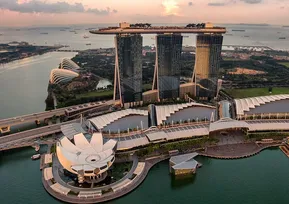
Photo by Shubham’s Web3 on Unsplash


BTS Universe-based drama

CRB Media announced on Monday its participation in Paris Expo Porte de Versailles, where it showcased a minute-long teaser of “YOUTH,” a drama that centers around the universe of K-pop sensation BTS. This new initiative by the Korean production studio aims to transcend the limitations of existing online streaming platforms.


The Most Beautiful Moment in Life

The production of “YOUTH” has been in the works since 2020 and revolves around the story that goes back to BTS’s 2015 album, “The Most Beautiful Moment in Life.” The BTS Universe has already seen successful adaptations across various entertainment platforms, including novels, webtoons, and short films.


Web3 fan engagement

An official from CRB Media said that Web3 technology allows network participants to be both content consumers and providers, enabling fans who were previously passive consumers to monetize their engagement and foster an even more vibrant independent fandom culture.


24 episodes starting in 2H

The drama series “YOUTH” comprises a total of 24 episodes, with one or two episodes set to be released weekly starting in the second half of this year.

The series is directed by Kim Jae-hong, known for his work on “Beloved Eun-dong” and “Steal Heart,” and written by Kim Soo-jin, the talented screenwriter behind notable productions such as “Dazzling,” “Weightlifting Fairy Kim Bok-joo,” and “Songgot: The Piercer,” among others.


CRB Media’s legal issues

Meanwhile, it’s been reported that the Seoul Southern District Prosecutors’ Office’s Financial Investigation Division 2 executed a search and seizure operation on CRB Media last week. The raid was conducted after the prosecution obtained circumstantial evidence indicating the studio’s potential role in an embezzlement scandal. The case involves Kang Jong-hyun, who stands accused of misappropriating a colossal sum of 62.8 billion KRW ($46.9 million) from affiliates of Bithumb, a major Korean cryptocurrency exchange. Kang is currently under suspicion as the clandestine owner of the exchange.

More to Read
View All
Web3 & Enterprise·

Feb 03, 2024

3AC-founded OPNX Exchange announces closure

In a recent announcement OPNX, the Seychelles-incorporated cryptocurrency bankruptcy claims platform co-founded by the creators of the now-defunct hedge fund Three Arrows Capital (3AC), has revealed its decision to cease all operations.Photo by Kelly Sikkema on UnsplashFebruary 14 shutdownIn a message to its users, subsequently shared on social media on Thursday, the OPNX team expressed its commitment to ensuring an orderly closure, urging users to settle all positions by Feb. 7 and withdraw their funds from the platform before Feb. 14, as all withdrawal functionality will be disabled thereafter. The team expressed gratitude to the OPNX community, acknowledging their dedication and trust throughout the platform's existence. Short for "Open Exchange," OPNX served as both a hybrid bankruptcy claims platform and a crypto exchange, enabling users to trade creditor claims of bankrupt crypto companies. The origin of OPNX can be linked to two defunct crypto entities — Coinflex and 3AC. Seychelles-based Coinflex was a crypto yield platform that was forced to suspend withdrawals in June 2022. It subsequently entered into a bankruptcy process. Coinflex co-founder Mark Lamb joined forces with 3AC’s Kyle Davies and Su Zhu to found OPNX. In October, Coinflex creditors sued Lamb, alleging that he had appropriated Coinflex's intellectual property, customer base, employees and technology to establish OPNX. Mired in problemsWithin its short existence, OPNX has been mired in problems. From the very outset, there was little goodwill for the new venture, given that many crypto sector participants took a dim view of Zhu and Davies due to the turmoil the collapse of 3AC caused within the industry. In April of last year, OPNX claimed to have significant venture capital backing, only for many of the VC entities mentioned to quickly deny such claims subsequently. The following month, the local regulator in Dubai, the Virtual Assets Regulatory Authority, formally reprimanded the OPNX founders for promoting an unregulated business within the Emirate of Dubai. In August, it emerged that VARA had hit OPNX and its founders with a hefty fine. Following the closure announcement, the native OX token of OPNX experienced a significant price decline. Over the course of the past 24 hours, the token unit price has fallen 13.6% to $0.007981. The failure of 3AC led to Teneo, the firm responsible for liquidating 3AC's assets, subpoenaing Zhu and Davies for concealing details of their physical whereabouts through messages on social media platform X. The closure of OPNX adds to the challenges faced by Zhu and Davies, as Teneo is actively seeking to recover $1.3 billion directly from the co-founders. The claim asserts that Zhu and Davies engaged in substantial leverage with investor funds after the insolvency of their hedge fund. In September 2023, Singapore's central bank issued nine-year prohibition orders against Davies and Zhu, citing alleged violations of the country's securities laws at Three Arrows Capital. All the while, crypto community sentiment remains negative where OPNX and its founders are concerned. Taking to social media, Ikigai Asset Management’s Travis Kling didn’t mince his words, stating:”I mean it from the bottom of my heart when I say **** these criminals.” As OPNX concludes its operations, the unfolding events surrounding its co-founders and their association with the failed hedge fund continue to draw attention to the need for the industry to raise its standards.  

news
Policy & Regulation·

Apr 07, 2023

Korean Crypto Exchange Group Installs Separate Division to Prevent Money Laundering

Korean Crypto Exchange Group Installs Separate Division to Prevent Money LaunderingThe Digital Asset Exchange Alliance (DAXA), a group of five major Korean crypto exchanges, announced yesterday that it has installed a division to prevent money laundering.©Pexels/Anna TarazevichAML division’s roleThe anti-money laundering (AML) division will devise suspicious transaction report types, create guidelines to assess risks at virtual asset service providers, and hold various seminars.With the new AML division installed, DAXA now has five divisions, the other four of which are responsible for trading support, market monitoring, compliance monitoring, and education.Improving listing and delisting guidelinesDAXA also plans to improve listing and delisting guidelines that exchanges can share.DAXA vice chairman Kim Jae-jin said long-term efforts are required to build a healthy virtual asset ecosystem, calling for exchanges’ stronger voluntary compliance.

news
Policy & Regulation·

Jul 04, 2023

Singapore Looks to Prohibit Crypto Lending and Staking

Singapore Looks to Prohibit Crypto Lending and StakingIn a move to bolster investor protection and maintain financial stability, the Monetary Authority of Singapore (MAS) is introducing new guidelines for cryptocurrency platforms operating in the country.Details of the measures were published by MAS on Monday. According to its statement, the measures “will mitigate the risk of loss or misuse of customers’ assets, and facilitate the recovery of customers’ assets in the event of a DPT [Digital Payment Token] service provider’s insolvency.”The proposed guidelines outline several key measures. One such measure is the daily reconciliation of customer assets, which will help prevent discrepancies and safeguard against potential losses.Photo by Hu Chen on UnsplashHolding assets in trustAdditionally, the custody function, responsible for holding and safeguarding client assets, will be operationally separated from other business divisions to minimize the risk of mismanagement or unauthorized use. By the end of this year, it’s understood that crypto platforms will be required to store client assets in trust accounts, ensuring enhanced security and accountability.DisclosuresFurthermore, licensed cryptocurrency service providers will be mandated to provide explicit disclosures to customers, clearly outlining the risks associated with holding and trading digital payment tokens (DPTs). Recognizing the speculative nature of digital token trading, the MAS acknowledges that regulations alone cannot fully protect consumers from potential losses.To further protect retail investors, the MAS intends to prohibit cryptocurrency service providers from facilitating lending or staking activities. Lending and staking, where digital tokens are loaned or pledged to earn profits, are considered unsuitable for the general public due to their complex and high-risk nature.These measures come as part of Singapore’s efforts to strengthen its regulatory environment for digital assets. The consultation process began last year, following the collapse of FTX, a cryptocurrency exchange.Singaporeans suffered disproportionately with the collapse of FTX as previously, MAS had banned global crypto exchange Binance from operating within the city-state. That led to Singapore having more FTX customers than many other world regions. To compound matters, state-owned global investment firm Temasek, was an investor in the fraudulent crypto exchange.MAS had called for feedback and proposals, with a focus on enhancing investor safeguards and promoting responsible trading practices. While the regulations aim to provide a safer environment for investors, the MAS also emphasizes the importance of individuals exercising caution when engaging in digital token trading.Contrasting approachesWhile Singapore is taking steps to tighten regulations, other cities like Hong Kong are adopting a more inclusive approach to the crypto industry. Hong Kong Legislative Council member Johnny Ng has voiced support for the local crypto business and has encouraged prominent exchanges like Coinbase to establish operations in the territory, aiming to foster greater engagement and growth within the sector.As the crypto industry continues to evolve, regulatory frameworks play a crucial role in ensuring investor protection and maintaining market integrity. Singapore’s proactive approach to strengthening its regulatory environment reflects its commitment to striking a balance between fostering innovation and safeguarding the interests of investors.

news
Loading