Top

Hong Kong Says No to Light Touch Regulation

Policy & Regulation·May 10, 2023, 11:25 PM

The CEO of the Hong Kong Monetary Authority (HKMA) has said that while the autonomous territory will allow innovation to develop in the crypto space, that will not mean light touch regulation.
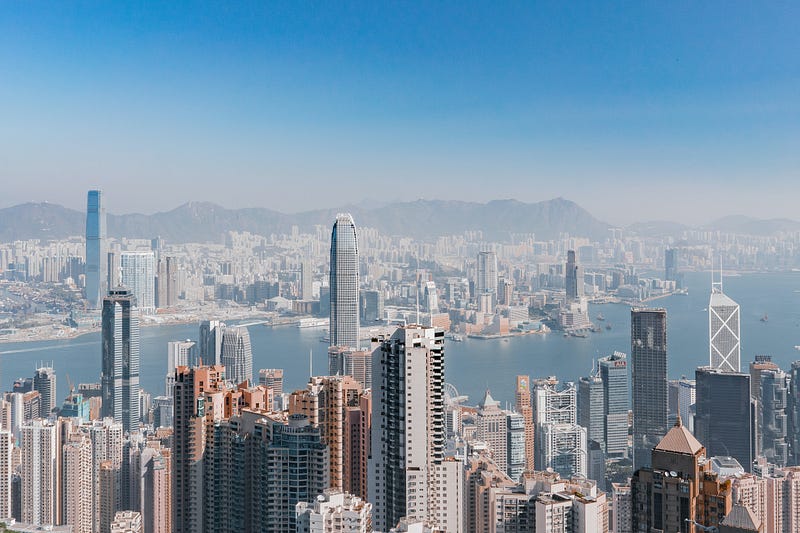
Photo by Ruslan Bardash on Unsplash


Lowering guard rails

After a three year hiatus, the Bloomberg Wealth Asia Summit returned to Hong Kong on Tuesday. Speaking at the conference, Eddie Yue, the CEO of the HKMA, Hong Kong’s regulatory body, outlined that the territory intends to enable innovation relative to crypto businesses that establish themselves in Hong Kong.

“We will let the industry develop and innovate, we will let them create an ecosystem here,” he said. However, he added the following caveat: “But that doesn’t mean light touch regulation. If any participant thinks that the regulation is too tight, they’re welcome to go elsewhere.”

Yue outlined that over the course of the past three years, guardrails relative to the operation of crypto-related activities were excessively high. Yue alluded to a new approach that sees those guard rails dropped to a level whereby innovation will be enabled in the digital assets space. However, he followed up by underlining the fact that the Authority has no intention of following a light touch regulatory approach.


No safeguards not an option

Although acknowledging that Hong Kong may have been excessively crypto unfriendly relative to digital asset regulation in the recent past, he believes that Hong Kong has now got it right. “Our guardrails are lower, to a reasonable and sustainable level,” Yue said.

The HKMA regulator flagged jurisdictions that provide little or no guardrails at all as the ones that will run into difficulties. “If you look elsewhere, there are no guardrails in some places, the guardrails are very low and there you see problems”, Yue clarified.

He cited FTX as a stand out example of a basic lack of internal controls. FTX International was based in the Bahamas. While customers of FTX International find themselves in a difficult position, those of subsidiary companies FTX Japan and FTX Europe are having their funds returned as a direct consequence of much better regulatory safeguards in those regions.

“All those wrongdoings by the platforms that we saw in the last one or two years will not happen in Hong Kong,” Yue claimed.


A continuing trend

While many commentators and critics from the conventional world have described bitcoin and crypto as a ponzi or a passing fad, Yue pointed out that digital assets are not going anywhere and that the trend towards digital assets will continue. Expanding further, he articulated that the overarching digital assets sector encompasses much more than just crypto: “Virtual assets or crypto is actually a very broad term. It’s not really about crypto, you’re talking about stablecoins or tokenized assets in the future.”

A mere $0.3 trillion of illiquid real world assets have been tokenized thus far. It’s anticipated that this level of tokenization will climb to $16 trillion by 2030.

More to Read
View All
Policy & Regulation·

May 17, 2023

Banking Difficulties Remain in Hong Kong for Crypto Start-Ups

Banking Difficulties Remain in Hong Kong for Crypto Start-UpsWhile Hong Kong has demonstrated a very clear crypto-friendly stance over the course of the past six months, crypto start-ups are still struggling with banking in the Chinese autonomous territory.Photo by Manson Yim on UnsplashLicensing backlogAll the signs are that Hong Kong is striving to develop itself as a regional hub for crypto and blockchain related business. Encouraged by that stance, against a background of the United States becoming openly hostile to crypto over that very same time frame, applications are streaming in from international firms to be licensed to operate their businesses in the city.In discussion with crypto start-up applicants, CoinDesk has established that the issue extends to firms that have already obtained a license to operate. To compound matters, the Hong Kong regulator, the Securities and Futures Commission (SFC), has a shortage of manpower, with just eight officials currently working on the applications of eighty crypto firms.Speaking to that backlog, Amy Yu, APAC CEO for Swiss crypto financial services company, SEBA Bank, stated: “This probably would have been a different story six or nine months ago.”A known problemIt appears that both the SFC and its regulatory peer, the Hong Kong Monetary Authority (HKMA) were aware of the issue and tried to get out ahead of it. Late last month, both regulators convened a meeting with bank officials and virtual asset service providers (VASPs).The objective was to try to forge a path forward such that banks could amend their approach, enabling greater facilitation and acceptance of crypto businesses such that the banks would be more inclined to approve bank account applications from those fledgling businesses.Arthur Yuen, Deputy CEO of the HKMA addressed the matter in a blog post published to the regulator’s website on April 27. Yuen was clear in calling on the banks to enable banking for VASPs:“With the implementation of the regulatory regime for VA [virtual assets] activities in Hong Kong and the strengthening of supervisory regimes in different jurisdictions according to the international standards, and as the banking industry develops a better understanding of the VA industry over time, we expect that regulated virtual asset service providers (VASPs) will be able to successfully apply for a bank account through a reasonable process.”Banker resistanceElaborating on the matter further, it’s clear that Yuen and his colleagues understand the importance of banking in enabling this nascent business sector such that the broader strategy of a pro-crypto business environment is affected in Hong Kong. “To attract businesses from new markets, it is crucial to have high quality financial services, while enhancing corporate access to bank accounts would be one of the key priorities,”he stated.An attendee at that regulator-organized round-table last month said that “It was more like a wish list from the regulator,” and that “whether the banks fully embrace it is another matter.” The issue remains as a major impediment to the ability of crypto start-up companies to operate, Some are being forced to try and work around the stumbling block, relying instead on overseas banking partners.

news
Web3 & Enterprise·

Nov 12, 2024

QCP Trading takes significant step towards full licensing in Singapore

QCP Trading, the trading arm of Singaporean crypto market maker and broker dealer QCP Group, has taken a significant step towards full licensing in Singapore, having been awarded in-principle approval (IPA) for a Major Payment Institution (MPI) license by local regulator, the Monetary Authority of Singapore (MAS). Regulated spot tradingIn a press release published by PR Newswire on behalf of QCP Trading Pte. Ltd. on Nov. 11, the company outlined further details on the receipt of the preliminary license. The company confirmed that the IPA represents an “essential step towards full licensing,” enabling it to prepare to offer regulated spot trading service facilities relative to digital payment tokens. QCP Trading is geared towards facilitating a broad range of crypto spot trading, including the trading of stablecoins and major digital asset tokens. The company offers on/off ramps into and out of cryptocurrency positions via multiple fiat currencies. Photo by Guo Xin Goh on UnsplashOperational expansionDarius Sit, founder of QCP Trading, commented on the development, stating that as the firm continues its pursuit of a full trading license, the focus remains on supporting Singapore’s reputation as a leader in digital asset regulation. Sit added that the company is proud of its “ability to remain agile and responsive to both global and local market conditions,” suggesting that this approach is the key to success in the rapidly evolving crypto sector. QCP Trading intends to continue to build a local team in Singapore and with that it is hiring in order to enable operational expansion. Melvin Deng, the company’s CEO, said that the firm is aiming “to champion robust governance frameworks,” and that its “early recognition of the critical role of regulation has proven to be a strategic foresight." Global expansionThe QCP Group appears to be pursuing a global expansion strategy as back in May, group company QCP Capital received IPA for regulated digital asset trading activities from the Financial Services Regulatory Authority (FSRA), the regulator within the Abu Dhabi Global Markets economic zone in the United Arab Emirates (UAE). In doing so, it became the first Singapore-headquartered crypto broker and market maker to receive preliminary approval within the Middle East region. At that point, QCP had 70 employees, with plans to relocate some of them to Abu Dhabi. In the lead-up to that IPA licensing award in Abu Dhabi, QCP had partnered with Further Ventures as part of its efforts in expanding into the Middle Eastern market. On Nov. 11, QCP Capital put out a warning via its Telegram channel, informing market participants that given the rise in the unit price of Bitcoin in recent days, it is necessary to be mindful of the risk of pullbacks, which will be required in order to account for the use of leverage within the market. In recent weeks, Fly Wing Technologies, a subsidiary of cryptocurrency service provider Matrixport, and the Singaporean subsidiary of American crypto exchange Gemini have received IPA approval with respect to MPI licensing in Singapore. At the beginning of September, crypto exchange OKX received full MPI approval. 

news
Web3 & Enterprise·

Oct 11, 2023

Incheon Partners with Daehong to Implement Web3-Driven Urban Marketing Strategy

Incheon Partners with Daehong to Implement Web3-Driven Urban Marketing StrategyIncheon Metropolitan City, renowned for its international airport in South Korea, has partnered with Daehong Communications, a marketing solutions subsidiary of the country’s retail giant Lotte Group, to leverage Web3 technology for the purpose of promoting the city.Daehong has established an extensive global network within the blockchain industry. Among its notable partners are layer 1 blockchain Aptos, Metaverse company Animoca Brands, and decentralized social protocol CyberConnect. One of Daehong’s primary initiatives is the NFT project associated with Bellygom, a pink bear character of Lotte Homeshopping, a media commerce affiliate of Lotte Group.Photo by Daesun Kim on UnsplashHarnessing blockchain for city promotionThrough this collaborative effort, Incheon aims to harness blockchain technology to explore innovative ways of promoting the city and building stronger connections with its residents.Incheon has recently been very dedicated to Web3 initiatives in promoting the city. Last month, it worked with The Sandbox, the virtual gaming platform of Animoca Brands, to create a metaverse representation of the Incheon Landing Operation to commemorate the 70th anniversary of the Korean War Armistice Agreement. More recently, the city unveiled its NFT membership program named “Incheon Heroes,” demonstrating its commitment to pioneering its unique path in the era of Web3.Daehong’s role in Web3 adoptionIn the private sector, Daehong has been working towards the widespread adoption of Web3. The marketing firm introduced business models that integrate NFTs into areas that have significant public engagement, such as ticketing, memberships, and brand characters. Daehong has been actively working to facilitate many brands’ entry into the Web3 space.Lee Se-woong, Brand Manager of Incheon City, anticipates that the collaboration with Daehong will serve as a fresh catalyst for Incheon, expressing excitement about the potential synergies between Incheon’s public infrastructure and Daehong’s industrial expertise.Incheon is set to initiate a range of projects by leveraging the Incheon Heroes NFT membership program and the Incheon Universe, a virtual space that allows visitors to immerse themselves in various facets of the city. Furthermore, the city is in the process of establishing collaborations with enterprises, brands, and artists who share a common interest in promoting the sustainability of both the planet Earth and the city itself.

news
Loading