Top

Korean Cafe Attracts Customers with NFTs

Web3 & Enterprise·April 24, 2023, 9:05 AM

A South Korean cafe owner has employed non-fungible tokens (NFTs) as an ingenious marketing strategy to attract customers.

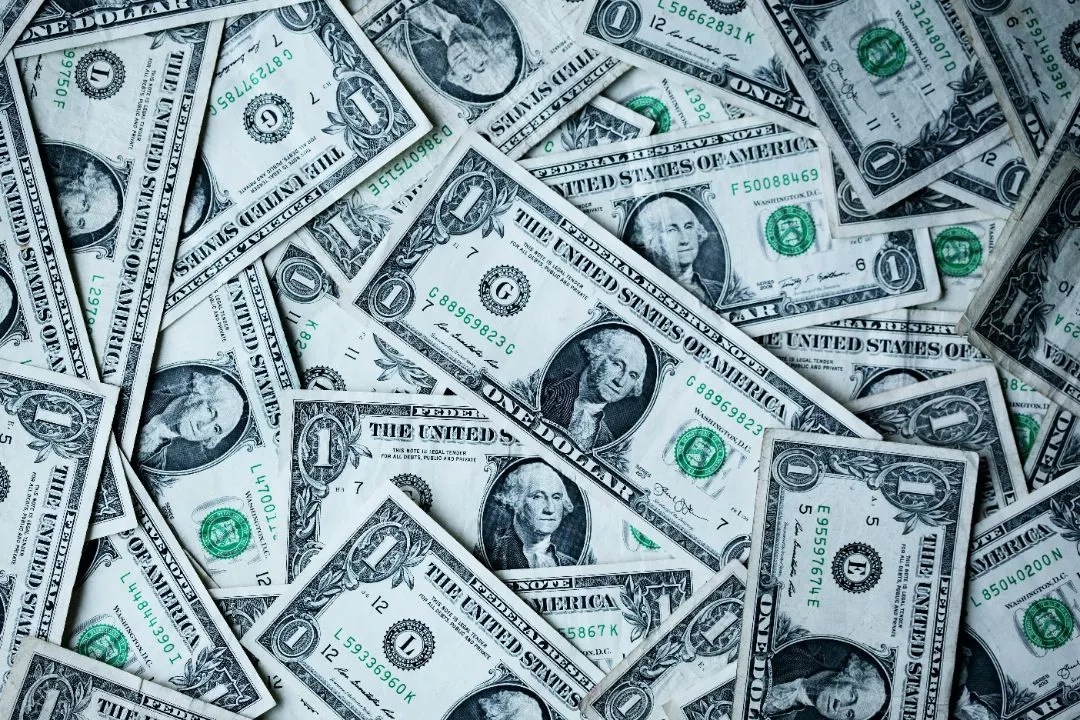
pink coupon tickets background
©Pexels/Leeloo Thefirst


NFT holder benefits

In an interview with Korean crypto news outlet Digital Asset, Yoo Hyun, the entrepreneurial business owner, explained that he was seeking a strong marketing tool to capture the attention of the NFT market. Yoo was interested in seeing if his cafe could remain profitable while also offering substantial benefits to its customers.

Since April 2022, Yoo has released a total of 50 Ethereum-based NFTs related to his cafe, Hide Me, Please (HMP), in two separate batches of 25 each. The first set of NFTs grants holders a free cup of coffee or drink daily for life, while the second set offers an extra drink or dessert with each drink purchased.


Increased revenue

This unique NFT initiative has led to increased revenue for the cafe. Kim Dae-sung, the CFO of HMP, explained that the cafe’s monthly revenue increased by 15% compared to the same period last year.

HMP is currently selling 500 NFTs as a third set and plans to release more depending on demand. Yoo highlighted the importance of an appealing interior design and tempting desserts, as NFT holders visiting for a free coffee may be enticed to purchase a dessert as well.


Regular customers

Yoo asserts that the food and beverage industry hinges on retaining regular customers and believes NFTs can help achieve that objective. HMP aspires to become a community-based platform, and according to Kim, many digital artists are interested in the space that the cafe provides because it enables them to connect with clients. Collaborations often take place, and while the cafe charges for food and drinks, it does not charge for space rental. This approach fosters a positive impression and contributes to a strong brand image.


High-quality cafe

At present, about 5% of HMP’s customers hold NFT memberships. Yoo and Kim plan to increase this number to 10% but no higher, as excessive reliance on NFT members could jeopardize the business. They underlined the significance of remaining a high-quality cafe, staying true to the core foundation of their enterprise. As they anticipate the growth of the Web 3.0 ecosystem, Yoo and Kim believe that with continued efforts, HMP will gain even greater value.

More to Read
View All
Web3 & Enterprise·

Jun 12, 2025

Bullish files for IPO in the U.S.

Digital asset exchange business Bullish has filed confidentially for an initial public offering (IPO) in the United States. The Financial Times reported on June 11 that the IPO had been filed with the Securities and Exchange Commission (SEC) in recent weeks. Choosing to file the IPO confidentially will have enabled the firm to delay public disclosure, allowing it to progress with its preparation for the IPO and reveal financials closer to the point at which it goes public. Back in February, Bloomberg reported that the company was looking at the possibility of executing an IPO, with investment banking and financial services firm Jefferies understood to have been advising the firm. This latest report confirms that Jefferies will work as the lead underwriter in relation to the IPO deal.Photo by Markus Winkler on PexelsHong Kong tiesBullish is a subsidiary company of Block.one, a blockchain software company founded by Brendan Blumer and Dan Larimer, best known for having established the EOS.IO blockchain network. Both companies have strong ties with Hong Kong.  The Bullish exchange is licensed by the Hong Kong Securities and Futures Commission (SFC). It has also obtained licensing from the Gibraltar Financial Services Commission (GFSC) and the German Federal Financial Supervisory Authority (BaFin).  The exchange business is jointly operated by corporate entities registered in Hong Kong and Gibraltar. The company maintains offices in Hong Kong, Gibraltar, Singapore, New York, London, Frankfurt and the Cayman Islands.  The business is also being backed by Hong Kong billionaire Richard Li and American entrepreneur Peter Thiel, co-founder of PayPal, Palantir Technologies and Founders Fund. Blumer, who is based in Hong Kong, founded Bullish in 2021 and currently serves as Bullish chairman. The company is understood to have in the region of 275 employees with Tom Farley leading it as CEO. Farley previously fulfilled the role of president at Intercontinental Exchange’s NYSE group. Positive climate for crypto IPOsAmid a more positive crypto climate in the United States, crypto-related IPOs appear to be back in favor. Leading stablecoin issuer Circle executed an IPO earlier this month with the offering being 25x oversubscribed. Following the success of the Circle IPO, BitMEX co-founder Arthur Hayes asserted on X that it would lead to a plethora of crypto-related IPOs over the next few years. He likened that anticipated wave of IPOs to the flurry of initial coin offerings (ICOs) that occurred back in 2017. Earlier this month American crypto exchange platform Gemini confidentially filed for an IPO in the U.S. A Bloomberg report published in March suggested that rival exchange business Kraken is planning an IPO for Q1 2026.  There has been some speculation that Ripple, the American technology company that developed and supports XRP and the XRP Ledger (XRPL), may be a prime candidate for an IPO. Taking to the X social media platform, “Pentoshi,” a pseudonymous crypto market analyst with over 860,000 followers on X, said that a Ripple IPO “feels only logical.” The analyst added that if the company executed an IPO, it would likely weigh in at “some insanely stupid valuation.” 

news
Markets·

Oct 25, 2023

Korean Crypto Market Outpaces Stock Exchange Amid Bitcoin ETF Optimism

Korean Crypto Market Outpaces Stock Exchange Amid Bitcoin ETF OptimismThe anticipation is building around the potential approval of BlackRock’s Bitcoin exchange-traded fund (ETF) in the United States. As the world’s largest asset manager is anticipated to obtain a green light, Bitcoin’s price has surged by more than 17% just this week, capturing the keen interest of investors.Photo by Kanchanara on UnsplashCrypto surpassing stocks in daily trading volumeIt’s worth highlighting the surge in the Korean cryptocurrency market, where the daily trading volume has recently eclipsed that of the Korean Composite Stock Price Index (KOSPI).According to local news outlet Maeil Business Newspaper, on October 24, KOSPI recorded a trading volume of KRW 7.83 trillion ($5.8 billion). Yet, in a 24-hour span from 9 a.m. (KST) on October 23 to 9 a.m. on October 24, the combined trading volume of the top five Korean cryptocurrency exchanges reached KRW 8.44 trillion.Breaking it down by exchange, Upbit had a 24-hour trading volume of KRW 6.97 trillion, followed by Bithumb with KRW 1.36 trillion, Coinone with KRW 87.6 billion, Korbit with KRW 18.8 billion, and Gopax with KRW 2.2 billion.Retail investors leaving the stock marketThe surge in the Korean crypto market is largely due to retail investors shifting their focus away from the Korean stock market. This move comes in response to challenges the stock market has been grappling with, such as monetary tightening in the US and increased volatility stemming from the Israel-Hamas war.

news
Policy & Regulation·

Mar 05, 2024

Korean crypto exchanges to face new crypto accounting standards

As the Virtual Asset User Protection Act is set to take effect in July, South Korean virtual asset services providers (VASPs) are preparing themselves for new crypto accounting standards. This development is pushing crypto businesses to take consultation services from accounting firms, local media outlet Yonhap Infomax today reported.  Pronounced last year, the new crypto accounting guideline is scheduled to be applied to VASPs starting this July. Rather than providing clear and explicit standards, the guideline requires crypto businesses to interpret it on their own based on “reasonable grounds.” One accountant in the crypto industry said that individual crypto exchanges are wrapping their heads around the new crypto accounting standards, pondering over numerous issues such as whether to manage customer assets in a single record-keeping system. Photo by Volkan Olmez on UnsplashThe most significant concern among VASPs is that the new standard will highly likely recognize crypto assets entrusted by customers as either assets or liabilities. So far, local crypto exchanges haven’t recognized custodial tokens as assets; instead, they have been including these tokens in the footnotes. Only the money users deposited in Korean won has been acknowledged as “customer deposit liabilities.” Dunamu, the operator of crypto exchange Upbit, stated in the footnotes of its previous quarterly report that virtual assets entrusted by customers do not meet the accounting definition of an asset, leading the exchange to exclude its users’ custodial tokens from the asset category.  Varying interpretation of ‘control over custodial assets’ A lot is at stake depending on how individual crypto exchanges interpret the new guideline. If crypto exchanges are deemed to have control over custodial assets, they must meticulously document the details of the assets in custody on their financial statements, including the total amount of custodial assets and how they are managed under what policies.  These details would serve as decisive factors in determining who bears the liabilities in the event of future incidents.  Crypto businesses’ accounting dilemmaThe Korean financial regulators have explained that the new guideline is not the ultimate golden rule, implying that there could be a leeway for crypto businesses if they have reasonable grounds for not following the new accounting standard. However, regulators said they will conduct thorough examinations on the financial statements following their publishment, to ensure that custodial assets are not left out in the documents. This is where VASPs face a difficult choice between two different options; they can either classify custodial tokens as something other than an asset and undergo thorough examinations, or they can recognize them as an asset and risk being included in the “mutual investment-restricted group.” This is a group consisting of large local firms with over nearly KRW 10 trillion ($7.5 billion) in total assets. The companies listed in the group are subject to strict government regulations.  Previous recognition of Dunamu as ‘big firm’ raises concerns among VASPsThe local regulatory authority previously classified Dunamu as part of the mutual investment-restricted group in 2022.  At the time, Korean won deposits made by Upbit users, categorized under the customer deposit liabilities, were recognized as part of its assets by the Korea Fair Trade Commission (KFTC). The KFTC determined that Dunamu had controlling power over the customers’ deposits. This judgment by the KFTC led the company to fall under the mutual investment-restricted group. Once the new accounting standard takes effect in July, the likelihood is that the exchange’s custodial tokens, currently valued at KRW 20.2 trillion, will also be recognized as assets. Meanwhile, another prominent crypto exchange Bithumb is reported to have KRW 4.5 trillion in total assets.   Another accountant in the crypto industry expressed concerns, saying that VASPs will have to deal with more regulations if incorporated into the mutual investment-restricted group. The person added that recognizing custodial tokens as assets could further heighten the management risks for crypto businesses. 

news
Loading