Top

Dubai Increases Monitoring of Crypto License Holders

Policy & Regulation·April 11, 2023, 1:59 AM

Dubai is scrutinizing crypto license holders and license seekers more closely as a direct consequence of the collapse of Bahamas-based cryptocurrency exchange FTX, last year.

On Wednesday Bloomberg cited people familiar with the matter who told it that Dubai’s Virtual Assets Regulatory Authority (VARA) has recently requested more information on the ownership structure, governance, and auditing procedures of applicants like global crypto exchange, Binance.
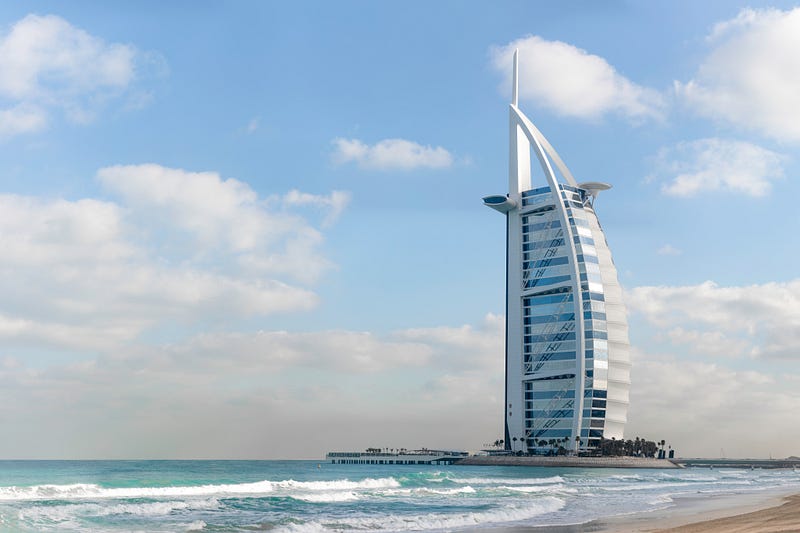
a view on Burj Al Arab
©Pexels/Aleksandar Pasaric


Closer scrutiny

All international companies seeking permits are being asked for similar information. This stricter approach is a potential problem for Binance CEO Changpeng Zhao (CZ), who lives in Dubai and has made it a central point of expansion in the Middle East. The Emirate is attempting to balance fostering innovation with proper oversight of an industry that has been the subject of high-profile scandals in the past year.

According to Sam Blatteis, CEO of The MENA Catalysts, which provides government-relations advice to fintech multinationals expanding in the Persian Gulf, “VARA wants to turn Dubai into a capital for the digital-assets economy while safeguarding its business ties with Western jurisdictions like Europe that are adopting more muscular crypto regulations.”


CFTC lawsuit

In March, the US Commodity Futures Trading Commission sued Binance and CZ for allegedly violating derivatives regulations, claiming the firm had inadequate compliance procedures. Binance expressed disappointment with the lawsuit.

The company claimed at the time that it had provided all necessary information to VARA regarding its ownership structure and external auditor, as well as answering any other queries on a proactive basis. VARA officials are also seeking information on the ownership, auditing, and board procedures at the global group level of Binance.


Steering clear of FATF

Due to its size and complexity, addressing these queries is taking longer. Binance’s complicated corporate structure includes several holding companies, three of which are named in the CFTC lawsuit, and multiple local entities. In February, a senior executive said Binance was attempting to hire an auditor for its entire balance sheet.

Dubai is trying to get off the “gray list” of global money laundering and terrorist financing watchdog the Financial Action Task Force (FATF). To that end, it has cracked down on unlicensed over-the-counter (OTC) crypto exchanges, according to anonymous sources. Dubai belongs within the United Arab Emirates (UAE), with the foreign ministry of the UAE declining to provide any comment on the matter to Bloomberg. Komainu, Hex Trust, GC Exchange and Crypto.com are the four companies, in addition to Binance, that are licensed in the UAE, with the former three having only Preparatory Minimum Viable Product (PMVP) permits.

Hex Trust said that providing additional information on ownership, auditing and board procedures didn’t prolong the application process for its Operational MVP license. Laurent Girouille, the head of Komainu’s regional office in Dubai, said the regulatory requirements were stringent. Meanwhile, Binance is awaiting the launch of Binance FZE, which is audited by Mazars and has a board of directors, while it upgrades to an Operational MVP license before applying for a Full Market Product permit.


More to Read
View All
Policy & Regulation·

Oct 04, 2023

Research Center Highlights Overvaluation in Overseas Crypto Holdings Reported to Korean Tax Agency

Research Center Highlights Overvaluation in Overseas Crypto Holdings Reported to Korean Tax AgencyThe Korbit Research Center, affiliated with one of South Korea’s leading cryptocurrency exchanges, Korbit, has raised questions about the size of overseas cryptocurrency holdings reported by Korean individuals and businesses to the National Tax Service.Photo by REDioACTIVE on PixabayThe issue of market-making activitiesThe center noted that following the 2017 initial coin offering (ICO) boom, many enterprises that issued cryptocurrencies through offshore entities might still be holding onto their native tokens. This would have resulted from their inability to distribute these tokens to the market after the speculative bubble burst. The center believes these reported values could have been influenced by the issuers’ market-making activities, possibly inflating their worth.According to the National Tax Service, Korean individuals and corporations hold a total of KRW 130.8 trillion (around $98 billion) in overseas crypto accounts. Notably, 73% (KRW 120 trillion) of this sum is held by 73 corporate entities.Highlighting a critical aspect of cryptocurrency valuation, the Korbit Research Center pointed out that when tokens are priced based on market-making activities, they may be overvalued. They further underscored that even if the true value of overseas holdings by these entities is only a tenth of the reported sum, a figure like KRW 12 trillion is still substantial.Retail investors seeking overseas optionsFurthermore, the center touched on retail investors, noting that the KRW 10 trillion in their offshore accounts indicates a gap in services offered by Korean crypto enterprises. It suggests that individual investors might be exploring foreign markets due to domestic limitations like the absence of derivatives and lending options.Given the borderless nature of the crypto industry, Korean individuals readily turn to overseas services that cater to their needs. The Korbit Research Center estimates a KRW 10 trillion unmet demand in the domestic crypto sector, suggesting that stringent local regulations might be driving capital outflows.

news
Policy & Regulation·

May 11, 2023

OSL Prepares for Fund Launch Following License Approval

OSL Prepares for Fund Launch Following License ApprovalIn a press release published on Tuesday, Hong Kong-based digital asset platform OSL announced that its asset management business, OSL Asset Management (OSLAM), has been granted a license to trade by the autonomous territory’s securities regulator.Photo by Eliobed Suarez on UnsplashType 1,4 & 9 approvalHong Kong’s Securities and Futures Commission (SFC) has issued the firm with a license which permits it to carry out trading activities encompassing Type 1 (dealing in securities), Type 4 (advising on securities) and Type 9 activities. The latter category enables OSLAM to carry on a business involved in asset management.Upcoming fund launchWith licensing secured, OSLAM is now building up to its first fund launch which it envisages will happen within the next few months. According to the statement the company released, “OSLASM’s inaugural product offering will concentrate on unlocking new opportunities in the rapidly growing sectors of blockchain solutions, artificial intelligence (AI), and Web 3.0 technologies.”The firm claims that it has access to unique deal flow, together with the experience to operate in the asset management arena relative to the digital asset sector. OSL thinks that it is well placed in this regard as it is one of only two companies in Hong Kong who are currently licensed to facilitate security token offerings, trading and dealing.”OSL is an offshoot of the BC Technology Group, a company that provides staffing services to clients in the telecommunications sector. Ken Lo, the Deputy Chairman of BC Technology Group said that this milestone would empower the company “to explore new frontiers in blockchain and AI, creating value for our clients and shaping the future of the industry.” He added that the firm “can unlock unprecedented opportunities for growth, collaboration, and value creation” relative to these sectors.Licensing going live in JuneHong Kong has been pulling out all the stops to enable crypto business in recent months. It recently called on the banks to make an additional effort in catering to the needs of crypto businesses. It has been working on a regulatory framework culminating in this licensing regime. Licensing goes live on June 1.Speaking at the Bloomberg Wealth Asia Summit on Tuesday, Eddie Yue, the CEO of Hong Kong’s other regulatory body, the Hong Kong Monetary Authority (HKMA), said that the autonomous territory had very high guardrails over the past number of years that impeded the development of digital asset-related business. Yue believes that Hong Kong now has the right level of regulation and investor protection in place to enable the development of the sector.According to Yue, Hong Kong sees a greater opportunity in the overarching digital assets space as it develops. “Virtual assets or crypto is actually a very broad term. It’s not really about crypto, you’re talking about stablecoins or tokenized assets in the future.,” he stated.Many commentators have suggested that all illiquid real world assets will ultimately be tokenized in the future. As it stands today, a mere $0.3 trillion of illiquid real world assets have been tokenized. Some researchers anticipate that this level of real world asset tokenization will climb to $16 trillion by 2030.

news
Policy & Regulation·

Aug 02, 2023

Nomura’s Crypto Subsidiary Secures Dubai VARA License

Nomura’s Crypto Subsidiary Secures Dubai VARA LicenseLaser Digital Middle East FZE, the digital asset subsidiary of Japanese global financial services group Nomura, has successfully obtained an operating license from Dubai’s Virtual Asset Regulatory Authority (VARA).This significant development, announced via a statement published to Laser Digital’s website on Tuesday, comes as part of Nomura’s strategic efforts to make a strong presence in the digital asset space.Photo by Paul MARSAN on UnsplashOpportunity to expand servicesThe newly acquired Virtual Asset Service Provider (VASP) license empowers Laser Digital to offer broker-dealer services and provide virtual asset management and investment solutions within the emirate. Additionally, the license will enable the company to carry out trading and asset management operations in the near future. This could potentially include the provision of over-the-counter (OTC) services, together with a diverse range of digital asset investment products.Jez Mohideen, the CEO of Laser Digital, expressed his confidence in VARA’s meticulous and collaborative process, which assures institutional investors looking to get involved in this emerging asset class. “We are very grateful to VARA for approving our Operating License. VARA’s thorough and consultative process provides institutional investors with the assurance they require to engage in this asset class. With the license now in place, we are looking forward to Laser’s growth over the coming years,” he stated.Established in September 2022 under the guidance of Nomura, Laser Digital was the brainchild of Steven Ashley, the former head of Nomura’s wholesale division, alongside Mohideen, who served as the firm’s former Chief Digital Officer and Co-Head of Global Markets for Europe, Middle East, and Africa (MENA). The company is headquartered in Switzerland, with sub-offices located in Dubai and London.Dubai’s rapidly growing crypto ecosystem has garnered global attention, especially after the establishment of its own virtual asset rules and the formation of VARA in March 2022. In February, the regulatory body issued the “Full Market Product Regulations,” comprising four compulsory rulebooks and activity-specific guidelines that delineate the framework for Virtual Asset Service Providers (VASPs).Following in Binance’s footstepsLaser Digital’s recent achievement coincides with Binance’s continuous efforts to solidify its presence in the United Arab Emirates. Its license award comes hot on the heels of Binance having achieved the same milestone. On Monday, Binance’s Dubai subsidiary, Binance FZE, received an operational Minimum Viable Product (MVP) from VARA, granting it permission to operate cryptocurrency exchange and virtual asset broker-dealer services locally.Apart from Binance, only two other entities, digital asset custodians Komainu MEA and Hex Trust MENA FZE, currently hold operational MVP permits in the region. Notably, crypto exchange BitOasis also secured a conditional license but it has faced a suspension from VARA for non-compliance with mandated conditions.Laser Digital’s successful licensing and entry into Dubai’s crypto landscape further enrich the diversity of players in the region’s digital asset market. The involvement of reputable financial institutions like Nomura contributes to the establishment of a robust and well-regulated ecosystem in the United Arab Emirates. The license paves the way for Laser Digital to serve institutional investors and individual clients alike, offering innovative digital asset solutions while complying with the region’s regulatory standards.

news
Loading