Top

Korean regulator monitors non-listed token amidst peer-to-peer trading surge

Policy & Regulation·December 21, 2023, 4:01 AM

The South Korean financial regulator is closely monitoring BTCMobick, a non-listed token issued by crypto influencer Oh Tae-min, who is known for authoring books like “The Great Bitcoin” and “Bitcoin and the Geopolitics of the Dollar.” The Financial Services Commission (FSC) is cautioning local crypto exchanges regarding the potential for price manipulation should the token be listed.

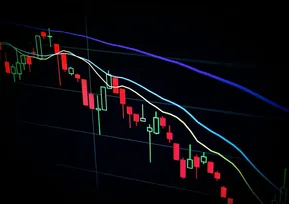
Photo by Daniel Bernard on Unsplash


BTCMobick Token

The BTCMobick token is reportedly being traded peer-to-peer at around KRW 300,000, which is approximately equivalent to $230, in chat rooms of messaging apps like KakaoTalk outside of cryptocurrency exchanges. The token has gained enough traction to spur the emergence of dedicated apps that facilitate these peer-to-peer trades, charging fees for their services. Based on the size of the chat rooms and apps involved, it is estimated that approximately 3,000 participants are trading the token, according to a report by local news website Etoday.

As per another coverage by the same outlet, the Virtual Asset Inspection Division of the Financial Intelligence Unit (FIU), which operates under the FSC, has inquired with local crypto exchanges on two occasions — once in September and again this week — about whether they have listed or are planning to list the BTCMobick token. It’s rare for the financial authority to specifically target a particular token when making inquiries with crypto trading platforms.


Potential price manipulation

An FIU official explained the rationale behind the agency’s inquiry into crypto exchanges. The official stated that the probe aimed to caution the exchanges about potential price manipulation of the BTCMobick token. The concern is that many crypto users might suffer losses if such a token, which has been experiencing a continual rise in price outside of trading platforms, were to be listed. Currently, legal penalties for cryptocurrency price manipulation fall under the Virtual Asset User Protection Act, which will not be enforced until July 2024. This indicates a regulatory gap in the immediate term.

Hwang Suk-jin, a professor at Dongguk University’s Graduate School of International Affairs and Information Security, pointed out that while giving out privately generated tokens to friends or acquaintances doesn’t raise any legal issues, the situation changes once these tokens are listed for trading on exchanges and distributed more broadly in the market. In such scenarios, these tokens can become a source of legal disputes, he explained.

Amidst these developments, there are circulating rumors suggesting that BTCMobick is on the verge of being listed on exchanges. An industry insider has mentioned that there are brokers actively spreading these rumors, indicating that the token might soon become publicly tradable.


Oh Tae-min’s denial of rumors

Meanwhile, Oh Tae-min, the creator of BTCMobick who has been distributing his token for free, states that the token is part of an experiment intended to mimic the early stages of Bitcoin. However, critics are concerned that the personally issued token has no practical utility. Addressing the circulating rumors about the token’s potential listing on exchanges, Oh asserts that these rumors are baseless and false. He further warns that any brokers spreading such rumors are likely engaging in fraudulent activities.
More to Read
View All
Web3 & Enterprise·

Sep 08, 2023

dYdX Foundation CEO Shares the Importance of Korean Developers of the Cosmos Network

dYdX Foundation CEO Shares the Importance of Korean Developers of the Cosmos NetworkDecentralized crypto derivatives exchange dYdX is in the midst of a significant transition, as it prepares to move away from its current Ethereum-based layer-2 protocol to Cosmos, a decentralized network of independent blockchains. Meanwhile, senior members of the dYdX Foundation, a Swiss-based not-for-profit entity behind the derivatives exchange, paid a visit to South Korea on the occasion of Korea Blockchain Week: KBW2023, which is an annual event that spans from September 4 to 10 this year.Photo by Mariia Shalabaieva on UnsplashBusy Q4Regarding the upcoming v4 update on a Cosmos-based blockchain, Charles d’Haussy, the CEO of the dYdX Foundation, shared his thoughts in an interview with CoinNess. He expressed anticipation for a bustling fourth quarter this year but also acknowledged that the exact timeline remains uncertain, as it hinges on the voting processes, including one for bridging tokens to Cosmos, within the dYdX community.Utility token on v4As part of dYdX’s migration to Cosmos, its governance token will undergo a transformation into a utility token. The forthcoming dYdX v4 will be fully decentralized, with 100% of the fees collected from the exchange distributed to stakers and validators. Following the completion of this migration, the current dYdX protocol on Ethereum will eventually become deprecated.Exclusive focus on crypto derivativesIn a significant milestone, dYdX achieved over $1 trillion in total trading volume on its Layer 2 platform on July 14 of this year. d’Haussy expressed pride in this achievement and highlighted that dYdX’s competitive edge lies in its exclusive focus on crypto derivatives.DeFi mullet memeAlthough DeFi derivatives trading currently represents just 1% of the overall crypto derivatives volume, d’Haussy is optimistic about its future growth, predicting an acceleration. In a parallel to how traditional banks offer an array of products that originate from external entities such as brokerages and insurance companies, Charles d’Haussy envisions that centralized exchanges will provide a diverse range of offerings sourced from decentralized platforms. He expressed his strong belief in the idea encapsulated by the DeFi mullet meme, which features the phrase “Fintech In The Front, DeFi In The Back.”Top-tier Cosmos builders in KoreaWhen asked about his visit to Korea, d’Haussy emphasized the presence of top-tier Cosmos builders in the country. He underscored South Korea’s importance within the Cosmos ecosystem, highlighting that 10% of dYdX’s testnet participants are Korean companies.

news
Web3 & Enterprise·

Sep 25, 2023

Crypto Titans Clash on Elon Musk’s X

Crypto Titans Clash on Elon Musk’s XA subtle panel discussion photo posted by Andrei Grachev of Singapore’s DWF Labs turned into a war of words among crypto trading titans on Elon Musk’s X (formerly Twitter).Photo by Marek Piwnicki on UnsplashDWF vs GSRGrachev, who is a Managing Partner at the market maker and Web3 investment firm, thanked his fellow panelists in the post. However, the tone quickly soured as Cristian Gil, Co-Founder of rival market-making giant GSR, took offense to Grachev’s presence on the panel and voiced his disapproval on the platform.Gil didn’t mince his words, stating: “[Andrei Grachev] had absolutely no business to be on that panel. It’s insulting to [GSR] , [OKX] and [Wintermute] to be in the same room as [DWF Labs].”DWF vs WintermuteHis remarks received a “Like” from Evgeny Gaevoy, the CEO of market maker Wintermute. In response, Grachev defended his presence, asserting that DWF was superior in technology, trading, and business development compared to its rivals, going so far as to suggest to Gil: “Yeah, if I were you — I would be also crying all the time.”The exchange continued with Grachev claiming that DWF was capturing market share from Wintermute, and Gaevoy responded with a nonchalant “lol,” challenging Grachev to invest more if he believed DWF posed a threat.DWF Labs’ rapid growthWhile the exchange consisted of mere words, it shed light on DWF Labs’ sudden rise to prominence earlier over recent months. The company has featured prominently in an array of investments in Web3 startups and blockchain networks over the course of 2023. Prominent among them have been investments in EOS, the Algorand ecosystem, and the TRON ecosystem.Recently appearing on the BlockBeats podcast, Grachev defended the company, outlining that it was not involved in market manipulation in response to recent assertions to the contrary.“We do not engage in any manipulative behavior,” Grachev stated. “Of course, we have the futures market, which is a tool for hedging positions and trading clubs. We are completely different from directional traders,” he added.Gaevoy added some humor to the mix by sharing a meme, raising questions about the maturity level of these prominent figures in the crypto industry. The spat provoked a broad array of commentary from the crypto community.Crypto immaturityThe very public clash raises concerns about how traditional Wall Street firms, currently making bold moves into the crypto space, might perceive such behavior. Notably, firms like BlackRock have been involved in Bitcoin ETF applications, signaling a growing interest in cryptocurrency among mainstream financial institutions. In response to Gaevoy and Grachev, one commentator wrote: “The institutions are never coming back.”While it would appear that there’s no love lost between DWF, GSR, and Wintermute, it also seems evident that both market makers can agree on Singapore as being an appropriate location from where to operate a crypto business. While Wintermute is London-based, it revealed recently that it was expanding its operations in Singapore. Like Wintermute, GSR is primarily based in London although it too maintains a presence in Singapore to service Asia-centric business.

news
Web3 & Enterprise·

Feb 24, 2024

Swoo Pay partners with Mastercard to target Southeast Asian market

Netherlands-based mobile wallet Swoo Pay has joined forces with global financial giant Mastercard to target the Southeast Asian market, offering crypto cashback on everyday purchases. Crypto loyalty tokensThe partnership was announced via a press release published on Cointelegraph earlier this week. Through Swoo's platform, users stand to gain crypto rewards, specifically Swoo Loyalty Tokens, for each contactless payment made via the app using digitized Mastercard cards. The partnership marks yet another step forward in the convergence of traditional financial systems with the burgeoning world of cryptocurrency. It reflects a broader trend among major financial institutions and retailers, who increasingly view cryptocurrency integration as a means to revitalize loyalty programs. Once users accrue “Tokenback” in the form of Swoo Loyalty Tokens, they have the flexibility to either exchange their rewards for popular cryptocurrencies like USDT or BTC within the Swoo app or convert them into fiat currency through partnering services. As Swoo continues to refine its crypto rewards platform, it will incorporate more Web3 features, further enhancing the utility and value of loyalty tokens within its ecosystem.Photo by Markus Winkler on UnsplashTargeting emerging marketsSwoo Pay is targeting emerging markets. Alongside Southeast Asia, that also brings the Middle East region and Africa within the scope of its marketing efforts for this product offering. Emerging markets have long been seen as ideal markets within which to bring about crypto adoption more generally. The significance of this announcement wasn’t lost on Nicki Sanders, chief technology officer (CTO) with tokenized real estate enterprise, Realio. Taking to social media, Sanders cited crypto adoption as one of three main reasons as to why this partnership could be a game-changer.   Sanders feels that the nature of the offering will result in crypto adoption as daily crypto use will be boosted. In turn, that will bring digital currencies into the realm of mainstream acceptability.She also feels that the product offering will be significant in terms of financial inclusion as it’s very accessible to underserved communities. Additionally, Sanders identifies the inherent innovation as being likely to result in mass adoption. “Focusing on Android and Huawei users, Swoo Pay navigates around Google service sanctions, offering a fresh pathway to digital payments,” she claims.This partnership builds upon the success of a previous trial campaign dubbed “Super Tokenback with Mastercard.” During the three-week initiative, users enjoyed 5% Tokenback (crypto cashback) on all Mastercard purchases made through Swoo Pay. The results were positive, with over 17,000 participants conducting upwards of 128,000 transactions. Not only did this drive increase card spend, but it also introduced a wave of new consumers to the concept of crypto-backed rewards. Representatives from Swoo emphasize the seamless integration of crypto into mainstream markets, ensuring compliance with local regulations and simplifying the launch and scalability of marketing campaigns to attract new users. Conversely, officials from Mastercard underscore the company's commitment to expanding the possibilities of digital payment instruments, prioritizing convenience, technological advancement and security. They highlight the role of Swoo Pay in addressing issues with tokenized payments for Android device users, thereby broadening accessibility to these innovative financial solutions.

news
Loading