Top

Bitcoin layer-2 project Elastos sees ELA token surge

Markets·December 21, 2023, 1:37 AM

Singaporean blockchain developer Elastos has unveiled its BeL2 layer-2 network set to run on top of the Bitcoin blockchain, eventually prompting a token price surge.


50% increase

The project aims to address challenges such as transaction volume limitations and the complexity of programmable contracts within the Bitcoin ecosystem. Despite the initial muted response from the crypto community after the late November announcement, Elastos’ native token, ELA, has experienced an extraordinary surge on Wednesday. Over the course of the past 24 hours, the token’s unit price has jumped from $2.06 to $3.09. That represents a 50% increase.
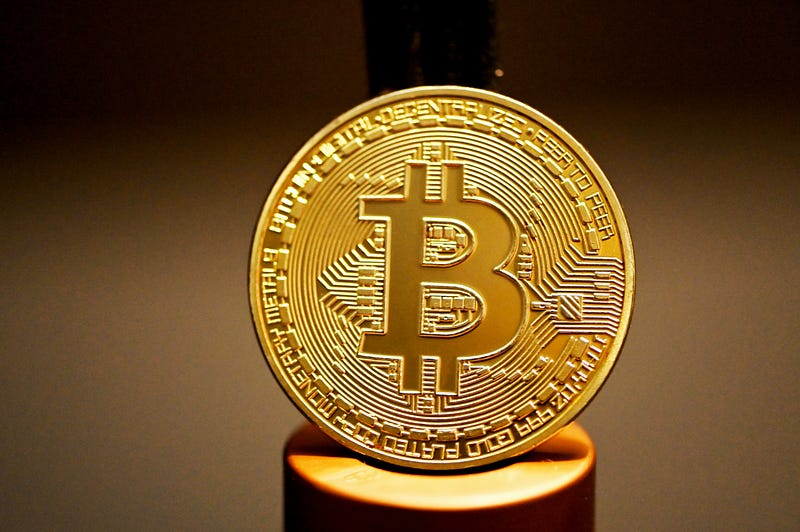
Photo by Kanchanara on Unsplash


Bringing smart contracts to Bitcoin

On Dec. 2, the project released its BeL2 whitepaper, describing it as “a transformative approach to enhancing Bitcoin’s functionality.” BeL2 has the potential to bring about significant advancements by leveraging SmartWeb technology to introduce staking solutions and incorporate zero-knowledge proof technology.

A zk proof is a cryptographic method through which one party can prove to another party that a particular statement is true, all the while avoiding the leakage of any additional information aside from confirming the statement is true. Up until now, zk proofs have been largely the preserve of Ethereum-centric projects.

Alongside zk proofs, BeL2 will utilize Bitcoin-powered Ethereum Virtual Machine (EVM) smart contracts. This approach is expected to expedite transactions within the network and introduce governance through a decentralized model.


BeL2 roadmap

The roadmap for BeL2 includes a three-month development phase for a proof-of-concept, followed by an additional three months dedicated to the decentralization of relayers. These relayers, acting as third-party services facilitating communication and data transactions between different blockchain networks, play a crucial role in the overall implementation of BeL2.

Elastos envisions BeL2 as a Layer 2 network built on Bitcoin, introducing sophisticated BTC transactions on its blockchain. Beyond staking, the network aims to provide direct yield and affordable transactions on native decentralized applications. The move marks a significant shift, allowing Bitcoin holders to stake their assets directly, unlocking potential value exceeding $700 billion.

Looking ahead, Elastos plans to chart the decentralized finance (DeFi) course on BTC by enabling smart contract deployment and irreversible digital agreements between participants.

As interest in Bitcoin continues to rise, driven by innovations like inscriptions and spot ETF discussions in the United States, Elastos’ BeL2 initiative is garnering greater attention, relative to the potential to usher in a new era of possibilities for the world’s most popular digital currency.

The project was founded in 2017 by Rong Chen, a former senior software engineer at Microsoft. Taking to the X social media platform earlier this month, Chen wrote:

“I don’t see any other paths to the final #Web3 destination except:

(1) A #BTC merge mining blockchain, plus smart-contract sidechains as needed;

(2) A #SmartWeb operating system (OS) to facilitate personal node to own data, plus personal-node to personal-node direct communication links;

(3) Personal Cloud Compute (#PC2) Runtime sandbox, so individuals are on the same footing as big brothers;

(4) Digital goods software-development-kits (embedded OS #SDKs), entrusting your data to nobody else but yourself, i.e., your own code to check access tickets/tokens before loading and rendering data.”

The Elastos ecosystem employs three-layer consensus mechanisms: auxiliary proof-of-work, proof-of-integrity and bonded proof-of-stake. It’s hoped that the project can improve upon the original layer-2 solution for Bitcoin, the Lightning Network, which has had issues in terms of scalability and centralization risk.


More to Read
View All
Policy & Regulation·

Jul 25, 2025

Hong Kong criminalizing promotion of unlicensed stablecoins

The CEO of Hong Kong’s central banking institution, the Hong Kong Monetary Authority (HKMA), has outlined that the introduction of the Chinese autonomous territory’s Stablecoins Ordinance on Aug. 1 will criminalize the unlicensed promotion of stablecoins. In an article published on the HKMA website on July 23, CEO Eddie Yue stated:”According to the Ordinance, starting from the commencement date, it will be illegal for any person to offer any unlicensed fiat-referenced stablecoin (FRS) to a retail investor, or actively market the issue of unlicensed FRS to the public of Hong Kong.”Photo by Manson Yim on UnsplashSubject to fine & imprisonmentIf an individual is found to have promoted an unlicensed stablecoin, they will be subject to a fine of HK$50,000 ($6,400) and imprisonment of up to six months. Yue warned the public to remain vigilant and to exercise caution if they come across marketing material related to an unlicensed stablecoin offering. The HKMA CEO is conscious of the fact that stablecoins are an emerging payment instrument that is being gradually integrated into the mainstream financial system. However, he feels that some discussion on stablecoins has been overly idealistic. Yue outlined that interactions with the few dozen institutions that have reached out to the HKMA with regard to stablecoin licensing have led him to believe that “many proposals remain conceptual.” He claimed that many of the institutions putting forward these proposals “fail to put together viable and concrete plans as well as implementation roadmaps, let alone demonstrate their awareness of risks and competence in managing them.” Limited license issuanceYue believes that in many instances, these institutions would be better served to collaborate with stablecoin issuers rather than becoming stablecoin issuers themselves. It’s on that basis that the HKMA will only grant a handful of stablecoin issuer licenses. Bloomberg reported that in the region of 50 companies have been seeking to apply for stablecoin licensing in the city, with the HKMA likely to approve around 10 licenses. It referenced particular interest from Chinese brokerages and a related move recently by asset management firm ChinaAMC in launching a yuan-denominated tokenized money market fund that facilitates subscriptions via stablecoins.  Significant Chinese businesses such as JD.com and Ant Group have been preparing to acquire stablecoin licensing in Hong Kong. Chinese stablecoin urgencyIn its Asia Morning Briefing, CoinDesk pointed out that in 2021, the Chinese authorities had been critical of the development of global stablecoins, preferring instead to concentrate on their own central bank digital currency (CBDC), the digital yuan. However, it asserts that “Beijing’s caution on stablecoins is giving way to a sense of urgency.” Animoca Group President Evan Ayuang told the publication that China’s interest in stablecoins is on the rise. Ayuang asserted that actions taken by the Trump administration in the U.S. related to stablecoin policy are “pressuring China to act a lot faster.” Developments in Hong Kong are relevant in the context of China’s newfound interest in stablecoins. Lily King, chief operating officer (COO) at crypto custodian Cobo, stated recently that Hong Kong continues to be a testing ground for mainland China.  In keeping with that outlook, analysts at Morgan Stanley recently asserted that yuan-denominated stablecoin projects launched in Hong Kong would potentially serve as a developmental stablecoin sandbox for mainland China.

news
Web3 & Enterprise·

Nov 20, 2023

Coinone adds asset analysis service and fiat currency deposit feature

Coinone adds asset analysis service and fiat currency deposit featureSouth Korean cryptocurrency exchange Coinone has added a new asset analysis service, which allows users to easily track their profits and losses, as well as asset trends over time. The latest feature is designed to provide investors with comprehensive insights into their investment performance, including detailed information on their asset history. It is accessible through the “Assets” category on the Coinone website and mobile app.Photo by Markus Winkler on Unsplash“Coinone has been dedicated to enhancing user convenience, conducting over ten service updates this year alone. Moving forward, we will prioritize user needs by conducting in-house analysis and receiving customer feedback in order to provide the best crypto trading services,” said the exchange’s CEO Cha Myung-hun.Charting profit pathsUsers can analyze the trends of their profits and losses over certain periods ranging from weeks to years, the exchange explained, which are displayed on various charts and tables. They can choose to view either daily or cumulative figures along with other relevant information. The “Asset Trends” category also offers a detailed overview of the fluctuation in the total value of a user’s assets. This includes easily accessible data on how the values of the fiat currency (Korean won) and virtual assets that they hold have changed over time.Seamless transactionsCoinone has also added another feature where users can make fiat deposits directly during transactions. In the case that a user does not have enough fiat currency deposited into their account when purchasing virtual assets, a pop-up window appears, leading to a screen that displays the necessary amount that must be deposited and a function that allows them to do so. Upon completing the deposit, users can continue with their purchase. They can also navigate to the fiat deposit screen by selecting the plus symbol icon next to the available purchase amount.

news
Policy & Regulation·

Jul 24, 2023

Shanghai Embraces Blockchain, AI, and Digital Yuan with New Guidelines

Shanghai Embraces Blockchain, AI, and Digital Yuan with New GuidelinesIn a bid to stay at the forefront of technological advancements, the government of China’s largest and most populous city, Shanghai, has issued a set of guidelines aimed at promoting the widespread adoption of blockchain, the metaverse, and the digital yuan.Photo by Edward He on UnsplashIntegrating blockchain technologyThe objective of the measure is to further the use of these technologies across various industries within the city. Leading enterprises across a range of industry sectors, such as automotive, commodity trading, and e-commerce, are now required to look to incorporate these technologies into their operations.The guidelines, which were published last Tuesday, outline the government’s commitment to providing support for platforms that seek to enhance digitalization in production, operations, and management processes. Additionally, they emphasize the development of information technology services centered around big data, blockchain, the Internet of Things, artificial intelligence, and the mobile Internet.Bolstering commodity tradingA key focus for the government is the establishment of a robust internet system to bolster its local commodity trading service. This move is driven by a reliance on “the national financial factor market,” which aims to upgrade the over-the-counter derivatives platform for bulk commodities and strengthen the linkages between futures and cash.Furthermore, the guidelines pave the way for expanding e-commerce service platforms for industrial products, setting up a digital transformation service platform, and fostering the development and application of data resources.Shanghai’s status as China’s financial hub makes it an ideal testing ground for innovative technologies like blockchain and AI. However, China’s approach to cryptocurrency is more complex. It involves support for blockchain technology while at the same time applying strict measures against crypto trading and mining.Aligning with central government policyThe Chinese government’s support for blockchain technology stems from its recognition of blockchain as the underlying foundation of cryptocurrencies. Judging by the blockchain initiatives forwarded by the central government and regional Chinese administrations in recent months, it’s clear that China is keen to develop leadership in the use of blockchain across various sectors. It takes a different view, however, when it comes to projects related to decentralized cryptocurrencies and crypto trading.In recent years, China has cracked down on cryptocurrency activities. In 2013, the government banned initial coin offerings (ICOs), a fundraising method used for cryptocurrency projects. Subsequently, cryptocurrency exchanges were banned in 2017, followed by a prohibition on cryptocurrency mining in 2021.Several factors contribute to the Chinese government’s cautious approach to cryptocurrency. One major concern is financial stability, as crypto can be exploited for illicit activities like money laundering. According to a recent report, Chinese authorities are redoubling their efforts in pushing back against the use of crypto as they’re finding that it is being used to exploit capital control loopholes.These recent guidelines from Shanghai’s administrators aim to capitalize on the transformative potential of emerging technologies while ensuring prudent regulation and control over cryptocurrency-related activities in line with current central government policy emanating from Beijing.

news
Loading