Top

Foblgate teams up with GLEN Studio to introduce NFT game to investors

Web3 & Enterprise·December 07, 2023, 6:23 AM

South Korean cryptocurrency exchange Foblgate has partnered with GLEN Studio, the operator of the NFT game Random Crypture Defense, to bring the game to users of Foblgate, according to an article published by local news outlet ET News on Thursday (local time). The two firms aim to jointly create and share content for the blockchain and NFT community to engage in.
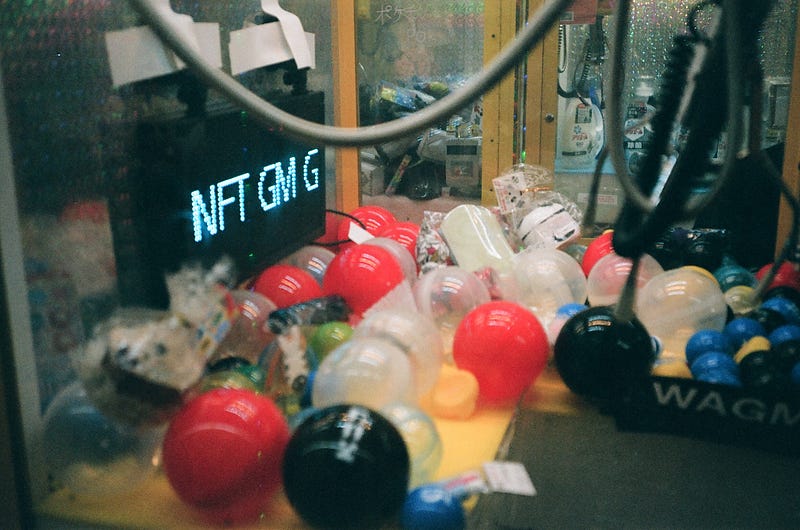
Photo by Arstin Chen on Unsplash

“This collaboration will play a crucial role in enhancing Foblgate’s capabilities in discovering and developing diverse content. In the rapidly evolving blockchain market, we aim to provide users with content that aligns with the latest trends,” Foblgate CEO Ahn Hyun-jun said.


User-centric, rewards-based gameplay

Random Crypture Defense is a Play-to-Earn (P2E) tower defense game built on the Solana blockchain that is centered around unique and colorful NFT characters. These characters are available for purchase on NFT marketplaces like Magic Eden and SolSea.

Players can also play and earn $GLEN, an in-game governance token that gives players voting rights in decisions regarding community wallet usage, sequel game genre planning and project direction, putting players at the forefront of game development and improvement. According to the developer, $GLEN will be listed on decentralized exchanges and will be able to be exchanged with Solana or fiat currencies.

Those who wish to participate in a demo play of Random Crypture Defense can do so through Foblgate’s official website. The demo play period is set to last about a month, after which the two companies plan to hold special events for Foblgate users.


Foblgate’s expansion

Foblgate has recently undertaken various projects in an attempt to grow not only as an exchange but also as a hub for public-oriented, blockchain-related content. Last month, the platform began working with crypto newsletter Conut to display crypto-related news and information on its website that appeals to younger users through trendy vernacular and internet meme references.
More to Read
View All
Policy & Regulation·

May 27, 2023

Study Places Hong Kong as Leader in Crypto Readiness

Study Places Hong Kong as Leader in Crypto ReadinessHong Kong, according to a recent study conducted by Forex Suggest, has emerged as the leading jurisdiction worldwide in terms of its readiness for cryptocurrencies. The study evaluated various factors such as the number of blockchain startups per 100,000 people and the density of crypto ATMs in relation to the population.Photo by Traxer on UnsplashZero capital gains taxThe attractiveness of Hong Kong for investors in the crypto space stems from its advantageous tax policies. The study noted that Hong Kong does not levy capital gains taxes on cryptocurrency, making it an appealing destination for crypto enthusiasts. The United States and Switzerland secured the second and third positions, respectively, in the rankings of the most crypto-ready countries.In recent times, Hong Kong has actively embraced investments from digital asset companies and is poised to implement new regulations for the industry. Effective from June 1, the city’s new rules aim to establish Hong Kong as a global hub for digital assets. These regulations permit licensed cryptocurrency trading platforms to offer services to retail investors while incorporating measures to safeguard individual traders.Global crypto firms are gearing up for that new licensing approach, carving out separate corporate entities in order to meet the regulatory requirements which the Hong Kong regulator, the Securities Futures Commission (SFC), has set. Another Hong Kong regulator, the Hong Kong Monetary Authority (HKMA), is also opening up to embrace digital asset innovation through a pilot project implicating the tokenization of real world assets.Regarding the number of blockchain startups, Hong Kong boasts three startups per 100,000 individuals, securing the second position globally. Topping the list is Switzerland, with an impressive count of 12.9 blockchain startups per 100,000 residents, amounting to a total of 1,128.The study also highlighted that countries such as Hong Kong, Switzerland, Panama, Portugal, Germany, Malaysia, and Turkey impose the lowest taxes on cryptocurrencies. These nations exempt individuals from capital gains taxes on profits derived from cryptocurrency trading.Crypto ATM proliferationWhen considering the prevalence of crypto ATMs, Hong Kong ranks third globally, with two ATMs per 100,000 people, totaling 149 ATMs. The United States takes the top spot with nearly 34,000 crypto ATMs, but when normalized to the population, it has 10.1 ATMs per 100,000 individuals.Regressive measures in USIn contrast to Hong Kong’s favorable environment, regulators in the United States have intensified their efforts to tighten regulations on cryptocurrency exchanges, leading many within the industry to advocate for clearer guidelines. Consequently, several exchanges are exploring jurisdictions that offer more favorable conditions.Forex Suggest emphasized that the report’s findings were based on extensive data analysis, taking into account factors such as tax regulations, legislation, the presence of blockchain startups, and the level of interest in cryptocurrencies. Each jurisdiction received a normalized score out of 10 for each factor, and the overall rankings were determined by averaging these scores.Hong Kong’s position as the most crypto-ready jurisdiction in the world showcases its commitment to fostering innovation and becoming a global leader in the digital asset space. With its advantageous tax policies, growing number of blockchain startups, and forthcoming regulations, the autonomous Chinese territory is solidifying its position as an attractive destination for businesses and investors in the cryptocurrency space.

news
Markets·

Feb 07, 2025

HAQQ Network co-founder points to Indonesia’s crypto hub potential

Mohammed AlKaff AlHashmi, co-founder of the HAQQ Network, has expressed the view that Indonesia has considerable potential to establish itself as Asia’s largest crypto hub. AlHashmi made the comments in a discussion with Crypto.news. HAQQ Network claims to be a scalable proof-of-stake-based blockchain, capable of high throughput. The network is fully compatible and interoperable with Ethereum. The project also focuses on the development of a Sharia-compliant Web3.  While the project is headquartered in Niqa Al Dheeb in the United Arab Emirates (UAE), Indonesia is also a significant market for the company, given that it has just received regulatory approval for the HAQQ Network’s native token from the Indonesia Financial Services Authority (OJK). Islamic Coin (ISLM) is the network’s native token. It is being offered as a Sharia compliant digital currency, with Sharia law being the Islamic legal system that governs the lives of millions of Muslims throughout the world.Photo by Nick Agus Arya on UnsplashGateway marketOffering his thoughts on the Indonesian crypto market, AlHashmi stated: “When we look at Indonesia as a market, I would say it is incomparable. It can be number one to be honest. Because I have seen statistics of growth happening in a very big volume. The volume of trade, transactions and users, I think Indonesia can be very soon one of the top 3 countries in the world.” Indonesia takes on added importance for the HAQQ Network project. The project’s co-founder sees the Southeast Asian nation as a gateway into a broader market given that it has the largest Muslim population in the world. He said that if his project is successful in Indonesia, then there will be no barrier to enter markets in other predominately Muslim nations. The entrepreneur believes that Indonesia is on the cusp of realizing its potential within the crypto sector. He said that Indonesia has a “competitive edge” when compared with other nations. Population size and rapid economic growth feed into that potential, with AlHashmi claiming that Indonesia is primed to become the largest crypto hub in Asia. Smooth regulatory processFrom a regulatory perspective, he also feels that Indonesia is outperforming other jurisdictions. The HAQQ Network project team experienced a smooth process in acquiring regulatory approval for ISLM recently. He believes that although the process was detailed, it was completed quicker than he would expect in other countries.  AlHashmi added that “regulations are flexible enough to enable project owners to do good business to protect the community as well.” Local regulator, the OJK, has expressed an interest in exploring the development of Sharia-compliant crypto assets. Earlier this month, Hasan Fawzi, OJK's executive head overseeing crypto assets supervision, told local media that the regulator is open to advancing Sharia-based cryptocurrencies.  Hasan stated: “Globally and regionally, this is a common practice. It is not unusual to create crypto assets that adhere to Sharia principles.” The OJK executive is particularly interested in tokenization of real-world assets (RWAs). He believes that if this proves to be successful, it could lead to further Sharia-complaint crypto products being launched. The OJK is currently testing tokenized RWAs within a sandbox environment.

news
Web3 & Enterprise·

Jan 25, 2024

ClayStack expands into Ethereum restaking ahead of token launch

ClayStack, the crypto liquid staking platform, has made a strategic move into the Ethereum restaking arena through EigenLayer, providing users with reward points in anticipation of its upcoming token launch.Photo by Kanchanara on Unsplash‘Redefining the staking landscape’The Singaporean platform describes its mission as redefining “the staking landscape by helping users unlock the underlying value of their crypto assets, and we are doing this by building a decentralized cross-chain liquid staking protocol.” In its efforts to deliver on that mission, it appears that the crypto startup is set to convert its Ethereum liquid staking token, csETH, into a liquid restaking token, leveraging the Ethereum restaking protocol offered by EigenLayer. Eigenlayer enables restaked sidechains, through which ETH restakers can participate in Ethereum-centric consensus protocols. Reward pointsIn an announcement on Tuesday, ClayStack revealed its plan to offer reward points to users participating in Ethereum restaking, with a 1:1 ratio for redemption when the platform's token is launched. Each clay point earned will be redeemable for one clay token during the token launch. Notably, the platform distinguishes itself by offering a 1:1 redemption system, setting it apart from other points programs. Founder and CEO Mohak Agarwal explained how the project is adopting EigenLayer's protocol for this new service. Agarwal had teased that the project had something new to offer in the pipeline when taking to social media last week, writing:”We are entering into a new era where staking will become more dynamic, accessible, and rewarding for the entire DeFi community.” Currently, ClayStack accepts native ETH for direct restaking on EigenLayer. Agarwal confirmed to The Block that other liquid staking tokens, such as Lido staked ether (stETH) and Rocket Pool ether (rETH), will be integrated into the platform in the coming days. He emphasized that these tokens will be directly deposited on EigenLayer, streamlining the restaking process. Growing interest in restakingEthereum restaking has gained significant traction since EigenLayer's launch in June of the previous year, with a total value locked (TVL) in smart contracts reaching approximately $1.7 billion. Renzo Protocol recently entered the Ethereum restaking space via EigenLayer, securing a $3.2 million seed funding round. Despite being in beta, Renzo has already achieved a TVL exceeding $116 million. ClayStack's TVL currently stands at around $2.25 million, having initially launched liquid staking for Polygon's MATIC token in 2022. Following that, the platform introduced Ethereum liquid staking in September. However, the latest move marks a shift in focus towards Ethereum restaking due to challenges faced on the Polygon network. Agarwal outlined the reward structure, stating that 20 clay points will be allocated per ETH per week, with rates subject to change every Monday but generally remaining constant throughout the week. There are no minimum or maximum points for individual users, although there is a weekly total cap for all users combined, which refreshes at the beginning of each week.

news
Loading