Top

Klasha and FOMO Pay join forces on cross-border payments

Web3 & Enterprise·February 01, 2024, 3:43 AM

Klasha, a leading global cross-border payment company based in Africa, has officially announced its partnership with Singapore-headquartered FOMO Pay, a digital payment, banking and digital assets solutions provider in the Asian market.


Streamlining collections and payments

In a press release published on Wednesday, the two companies outlined the nature of the partnership. Through this collaboration, FOMO Pay will optimize collections for its corporate clients by leveraging Klasha’s platform. This synergy enables businesses to receive payments in various local African currencies and methods, with the added flexibility of receiving payouts in their preferred currencies.

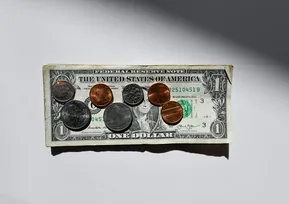
https://asset.coinness.com/en/news/04d1fa672398f22e94bb079f7054f58b.webp
Photo by George Bakos on Unsplash

Unlocking growth opportunities

The duo also envision the unlocking of growth opportunities for Asian businesses looking to expand into new markets within Africa. By facilitating seamless cross-border payments, Klasha and FOMO Pay believe that they can help businesses diversify and broaden their customer base.


In the joint statement, the management teams of Klasha and FOMO Pay expressed their enthusiasm for the collaboration. Jess Anuna, CEO of Klasha, shared her insights, stating:

"With combined efforts, we will continue to enable merchants in Asia to collect payments from the continent more seamlessly through our payment rails and our unique ability to terminate payments in greater Asia."


Africa has been undergoing a transformation from the perspective of trade relationships while Asia is emerging as a pivotal trading partner, contributing to over 40% of both exports and imports for the continent. It is with that in mind that Klasha and FOMO Pay have united to introduce a platform aimed at enhancing cross-border payment capabilities for businesses and merchants across Africa and Asia.


Crypto credentials

FOMO Pay claims to be Asia’s first licensed gateway connecting fiat currencies and cryptocurrencies. The firm was established in 2015 and is regulated by the Monetary Authority of Singapore (MAS) to conduct cross-border money transfer services, domestic money transfer services, digital payment token services and merchant acquisition services.


In 2022 FOMO Pay announced a partnership with enterprise blockchain firm Ripple, which resulted in the fledgling company using Ripple’s On-Demand Liquidity (ODL) offering, a product that revolves around the use of Ripple’s XRP in moving value globally, without the need for correspondent banking relationships.


In July of last year, FOMO partnered with crypto compliance and blockchain analytics firm Elliptic. That partnership is aimed at building out a payment ecosystem in Asia that offers seamless interoperability between fiat currency and cryptocurrency. With that same goal in mind, last September FOMO Pay initiated a collaboration with crypto sector decision making specialist, Notabene, who are helping the company optimize in terms of know-your-transaction capabilities.


Zack Yang, co-founder of FOMO Pay, emphasized the partnership's significance, stating:

"In this era of globalization, the synergy between FOMO Pay and Klasha marks a significant milestone in increasing financial connectivity between Africa and Asia. Our partnership is more than just a business collaboration; it's a commitment to fostering seamless payments and economic growth across continents.


This collaboration not only opens up new avenues for African and Asian merchants, facilitating market expansion and easing entry into new territories, but also provides greater opportunity for merchants in those regions to fully benefit from day-to-day use of digital assets in international trade.

More to Read
View All
Web3 & Enterprise·

Aug 22, 2023

Dunamu Pushes for Biodiversity Conservation Through NFT Project

Dunamu Pushes for Biodiversity Conservation Through NFT ProjectDunamu, the fintech company operating South Korea’s leading crypto exchange Upbit, said Monday that it signed a memorandum of understanding (MOU) with the Korea Arboreta and Gardens Institute (KoAGI) and the Korea Green Foundation (KFG) to drive a non-fungible token (NFT) biodiversity project over the course of three years. This comes as part of efforts to ramp up biodiversity conservation efforts.Photo by Eelco Böhtlingk on UnsplashThe MOU was signed at Dunamu’s headquarters in Gangnam, southern Seoul, with Dunamu CEO Lee Sirgoo, Director Ryu Kwang-soo of the KoAGI, and Lee Mi-kyung, Head of the KFG, in attendance.“This partnership serves as a starting point for Dunamu to actively utilize our technology to conserve biological resources — especially trees — and collaborate with various communities,” said Lee Sirgoo, CEO of Dunamu.Conservation meets NFTsThe project will involve creating NFTs from images of plant seeds stored in the Seed Vault — a conservation facility managed by KoAGI — which will then be issued through Upbit NFT, the exchange’s NFT trading platform. Owners of these NFTs will have the opportunity to engage in various events such as quizzes, Dunamu said, thereby promoting biodiversity conservation and fostering awareness about the importance of forests.Additionally, certain plant species that have been issued as NFTs will be selected to be placed in plant conservation facilities built in collaboration with botanical gardens located near the plants’ natural habitats.“Given the irreplaceability of both NFTs and flora and fauna, we will continue to do our utmost to fulfill our environmental responsibilities,” CEO Lee emphasized.The involved parties are also looking to establish an online community where they could directly gather the NFT owners’ opinions through methods such as polling to help plan for more upcoming projects. This integration of online projects with offline conservation activities is expected to contribute to local development and biodiversity.Boosting ESG effortsAs a key part of its ESG strategy, Dunamu has been focusing on trees while leading efforts for environmental protection and forest restoration. Earlier this year, the company teamed up with KoAGI to issue NFTs and contributed its entire sum of sales proceeds and transaction fees of around KRW 20 million (approximately $14,800) to establish an endangered plant protection fund.The company also held a campaign back in March with the Korea Forest Service and the Korea Forest Welfare Institute called “2nd foRest,” dedicated to restoring forests affected by fires. For every virtual tree planted in Dunamu’s metaverse, 2ndblock, two real trees were planted.The following month, Dunamu donated KRW 500 million in aid for the recovery of areas hit by the large-scale forest fires in Gangneung, Gangwon Province. The company also established virtual reality healing gardens at the Geumcheon Fire Station and Seoul Rehabilitation Hospital.

news
Web3 & Enterprise·

Nov 01, 2023

CPLABS and Protocol Capital to collaborate on blockchain-enhanced autonomous driving in Qatar

CPLABS and Protocol Capital to collaborate on blockchain-enhanced autonomous driving in QatarKorean blockchain development firm CPLABS (formerly known as Coinplug) announced on Wednesday (local time) that it has signed a memorandum of understanding (MOU) with Qatar-based company Protocol Capital to collaborate on blockchain-driven ventures in the Middle Eastern country.Protocol Capital is known for partnering with institutional clients and delivering bespoke solutions to investors in sectors such as real estate, energy, construction, and manufacturing.Photo by Lucca Belliboni on UnsplashBlockchain and autonomous drivingThrough this agreement, the two companies aim to execute projects that leverage and champion blockchain technology, with initiatives including an autonomous driving pilot project. They also plan to register with Qatar’s Tasmu Digital Valley, established by the Ministry of Transport and Communications (MoTC) and the Qatar Free Zones Authority (QFZA), as part of their collaborative efforts towards Qatar’s National Vision 2030.CPLABS plans to integrate its blockchain platform and upcoming 2024 Web3 portal into the autonomous driving pilot project. This move will grant the Korean firm an avenue to offer identity verification and payment services, further broadening its footprint in the finance and information communications technology (ICT) sectors.”As a dedicated Web3 tech firm, CPLABS possesses around 320 blockchain patents both domestically and internationally. Its projects encompass areas such as decentralized identifiers (DIDs), decentralized finance (DeFi), security token offerings (STOs), non-fungible tokens (NFTs), and decentralized autonomous organizations (DAOs).Commenting on this joint effort, Uhr Joon-sun, CEO of CPLABS, stated that the company aims to deliver Web3 platforms that connect Korea with the global community.

news
Policy & Regulation·

Aug 01, 2023

Binance Expands Crypto Offering in Dubai with New License

Binance Expands Crypto Offering in Dubai with New LicenseDubai has welcomed one of the biggest players in the crypto sector, Binance, with the Virtual Asset Regulatory Authority (VARA) awarding the firm a new trading license.Photo by Petar Avramoski on UnsplashServing qualified investorsAccording to an announcement made by the company on Monday, Binance’s Dubai-based subsidiary, Binance FZE, has secured the operational Minimum Viable Product (MVP) license from VARA.Eligible investors in Dubai, deemed as “qualified retail clients,” will now have access to authorized services such as compliant crypto-to-fiat exchanges, adhering to the guidelines set by the Financial Action Task Force (FATF). To qualify, investors must meet specific criteria, including being at least 21 years old and possessing a minimum of 500,000 United Arab Emirates dirhams ($136,000) in net liquid assets, supported by relevant documentary proof like bank statements and proof of funds.Additionally, qualified investors are required to provide valid identification documents, including passports and visas, along with proof of a valid UAE address and contact details. This comprehensive verification process ensures compliance with regulatory requirements and enhances security measures for all parties involved.Expanded service offeringThe move is a significant development as it allows Binance to offer cryptocurrency exchange and virtual asset broker-dealer services to institutional and qualified retail investors in Dubai.With the new license, Binance’s Dubai entity can now offer crypto-to-fiat exchange, conversions, transfer and custody solutions, brokerage facilities, as well as virtual asset payments and remittance services. The development builds upon Binance’s previous progress, having received the provisional MVP license in March 2022, followed by the preparatory MVP license in September 2022.Licensing challengesIt’s worth noting that some crypto exchanges have faced challenges operating with preparatory MVP licenses due to limited capabilities, only serving a restricted set of accredited investors. Bybit CEO Ben Zhou had previously highlighted this concern. That said, Zhou still came to the conclusion recently that the regulatory approach in the UAE is superior by comparison with many other jurisdictions.The news of Binance’s successful licensing comes shortly after VARA suspended the operational license of another crypto exchange, BitOasis, for not meeting required conditions within the set timeframes. BitOasis assured its commitment to fulfilling the remaining conditions in collaboration with VARA.In April 2023, VARA sought additional information from Binance, aiming to tighten regulatory standards in the emirate. Binance promptly provided all requested information and looked forward to further collaboration with VARA as it prepared for the next phase of licensing.Compliance with VARA’s framework includes adherence to compulsory rulebooks related to general operations, compliance, and market conduct requirements. The regulator has published key highlights of the regulations in 2023, underscoring its efforts to create a robust and well-regulated crypto market in Dubai.Regulatory headwindsBinance’s latest regulatory achievement indicates the exchange’s dedication to expanding its services and offerings in the region. It could potentially lead to something even more significant for the company in the Middle East as Binance has suggested that it would be more likely to expand in places such as Dubai, given an adverse regulatory approach elsewhere.Over the course of the past three months, the company has been forced out of key markets such as Germany, Canada, Belgium, the Netherlands, and Cyprus, due to regulatory pushback.

news
Loading