Top

Bitcoin-Yen pair sets new record amid pressure on Japan’s fiat currency

Markets·February 16, 2024, 5:33 AM

Early on Thursday bitcoin surged to a record high in terms of its valuation in Japanese yen, outpacing its valuations in other leading fiat currencies such as U.S. dollars, euros, British pounds and Australian dollars.


Currency devaluation

This increase in yen valuation can be attributed to the recent depreciation of the Japanese currency against the backdrop of continued money printing by the Bank of Japan (BoJ) and resurging inflation, which have collectively weakened sentiment surrounding the yen.


Fiat currencies, including the Japanese yen, lack backing by hard assets and derive their value solely from market perceptions. The current rally of bitcoin is indicative of the prevailing market sentiments, with the yen exhibiting particular vulnerability among major fiat currencies.


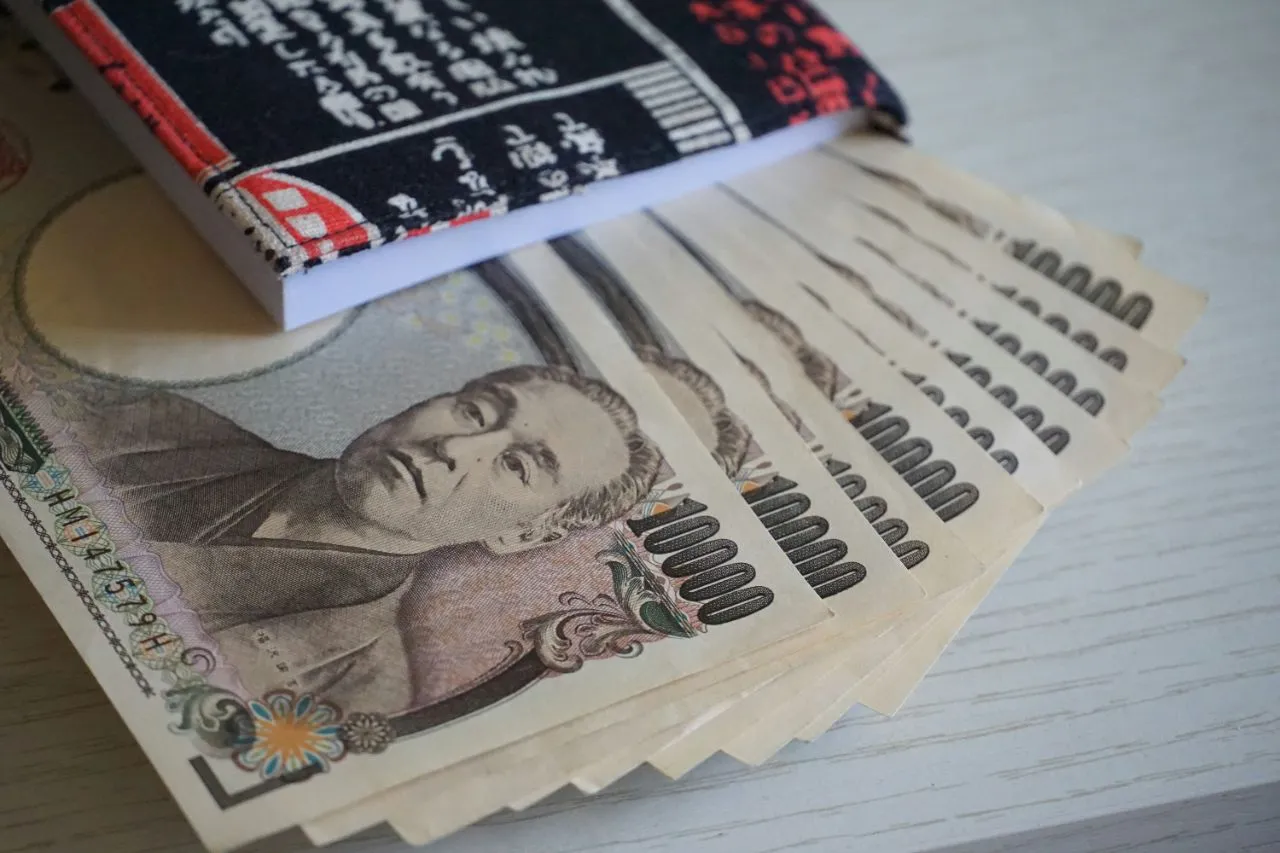
For instance, early market activity on Thursday witnessed bitcoin, often hailed by proponents as digital gold, hitting a fresh all-time high of 7.9 million yen on Tokyo-based cryptocurrency exchange bitFLYER. In contrast, the cryptocurrency's dollar-denominated price hovered above $52,000, still 32% below its peak of $69,000 in November 2021. This price disparity underscores the strain on the Japanese yen, fueled by the Bank of Japan's persistent liquidity easing measures, rising inflationary pressures and indications of economic fragility.
https://asset.coinness.com/en/news/3be884245fbab4f63de5365d4dd38b12.webp
Photo by jun rong loo on Unsplash

Entering recession

This recent surge coincides with reports confirming Japan's descent into an economic recession by the end of the previous year, slipping to fourth place behind Germany in terms of the world’s largest economies.


While central banks worldwide, including the Federal Reserve, aggressively raised interest rates in attempts to curb inflation, the Bank of Japan maintained near-zero interest rates and continued printing fiat currency. A recession characterized by inflation without corresponding growth prompts investors to seek refuge in safer havens like gold and digital gold. With that, there could be further opportunities for bitcoin to make further in-roads in Japan.


In 2023, Japan's core inflation, excluding volatile food and energy components from the consumer price index (CPI), rose by 3.1%, marking its most significant increase since 1982. Consequently, the yen depreciated to a 33-year low against the dollar, declining by 13% and 7.5% against the dollar previously, with an additional 6.4% decrease this year.


Bitcoin's persistent premium in Japanese yen terms suggests that it may continue to maintain higher valuations unless the Bank of Japan accelerates its exit from the ultra-loose monetary policy it has been pursuing. That would make yen holdings relatively more attractive compared to other assets.


Although a complete regulatory framework for digital assets in Japan is still lacking, the country has recently moved to make tax rules more crypto-friendly. Bitcoin's elevated valuation against the Japanese yen underscores the challenges facing Japan's fiat currency, driven by monetary policy decisions and economic uncertainties.


More to Read
View All
Policy & Regulation·

Oct 27, 2023

Taiwan Advances Crypto Regulation with Initial Reading of Digital Asset Bill

Taiwan Advances Crypto Regulation with Initial Reading of Digital Asset BillTaiwan has furthered its efforts on the path of digital asset regulation, as the nation’s legislature introduced a cryptocurrency bill for its inaugural reading.The “Virtual Asset Management Ordinance Draft” bill represents a significant stride toward establishing a legal framework for digital assets in the country. The proposal passed its first reading at the Taiwanese state legislature, according to published parliamentary records.Photo by Ethan Lin on UnsplashBill objectivesThe primary objectives of the bill are to define virtual assets, establish operational standards for asset operators, enhance customer protection, and make it mandatory for industry players to join relevant associations and secure regulatory permissions.Up until now, Taiwan has maintained a relatively hands-off approach to the cryptocurrency sector. Its oversight was limited to existing know-your-customer (KYC) and anti-money laundering (AML) laws. However, this stance evolved following the collapse of the cryptocurrency exchange FTX in November. The platform’s popularity among Taiwanese users, owing to favorable US dollar interest rates compared to local banks, led to increased regulatory scrutiny.A member of Taiwan’s parliament, Yung-Chang Chiang, told The Block that “after the first reading of the bill, discussions on the regulatory framework for the virtual asset industry have progressed to the next stage.” Chiang added:“We hope that the Financial Supervisory Commission can also submit their version of a draft bill to the legislature, allowing various sectors of society to further consolidate consensus during the process.”In contrast to cryptocurrency regulations in neighboring Hong Kong, Taiwan’s bill does not adopt a strong stance on derivatives or stablecoins. Nevertheless, it recognizes that derivatives linked to virtual assets possess unique characteristics, with a specific mention of perpetual contracts. This recognition opens the door for the possibility of cryptocurrency derivative-specific regulation in future drafts.Importantly, the bill does not restrict the trading of virtual assets to professional investors, which allows broader participation in the digital asset market.Auditing and segregation of fundsUnlike Japan, which mandates the use of custodians for locally licensed exchanges, the draft bill in Taiwan only necessitates the segregation of customer assets from business funds. It does not explicitly require the involvement of third-party custodians.Under this legislation, exchange operators will be obliged to commission periodic reports from accountants regarding their operations and asset management. Additionally, regulators, such as the Financial Supervisory Commission (FSC), will have the authority to conduct regular inspections of exchange internal control and audit systems.Although this initial draft does not explicitly mention “Proof of Reserves,” it does indicate that the regulator will establish standards for asset ratios after consulting with industry stakeholders, with the expectation that licensed exchanges will adhere to these standards.Fostering self regulationTaiwan’s crypto industry stakeholders have expressed their support for formal regulatory oversight. Wayne Huang, co-founder and CEO of Taipei-based fintech company XREX, recently affirmed the industry’s willingness to collaborate with the FSC in defining regulatory operations.In tandem with the establishment of a regulatory framework, regulators have indicated that they want industry stakeholders to move towards some level of self-regulation. That led nine exchange businesses to form an industry association last month.The bill’s second reading is pending, and the FSC is anticipated to provide its input and recommendations before the next phase of the legislative process.

news
Policy & Regulation·

Jun 27, 2025

Hong Kong releases ‘LEAP’ framework for digital assets

The Financial Services and the Treasury Bureau (FSTB), a policy bureau attached to the government of the special administrative region of Hong Kong, has released a new digital assets policy statement, incorporating its “LEAP” framework for the digital assets industry within the city. The document, outlining the government’s objectives and guiding principles relative to the digital assets sector, builds on its first policy statement for the industry which it published in October 2022.Photo by Harry Shum on PexelsA ‘LEAP’ towards an integrated digital assets ecosystemThe FSTB suggests that this new policy statement builds upon foundational initiatives pioneered through the initial policy statement, asserting that “Hong Kong is poised to 'LEAP' towards a trusted, sustainable, and deeply integrated [Digital Assets] ecosystem embedded within the real economy.” The government agency also suggested that this “Policy Statement 2.0” also builds on the “ASPIRe” digital asset regulatory roadmap introduced by the Securities and Futures Commission (SFC) in February, outlining the next phase of digital asset sector development in Hong Kong. Strengthening global hub statusThe government has set out to home in on strategic measures to bring about greater liquidity in digital asset markets and diversify digital asset product offerings, while strengthening the Chinese autonomous territory’s position as a global hub for the digital asset sector. “LEAP” is an acronym for the proposed initiatives that underpin the new framework, including: - Legal and regulatory streamlining- Expanding the suite of tokenized products- Advancing use cases and cross-sectoral collaboration- People and partnership development The framework focuses heavily on the tokenization of real-world assets (RWA), with particular emphasis on bond tokenization. In February 2023, Hong Kong pioneered the issuance of the world’s first-ever tokenized government green bond. Building on that, it now seeks to bring about the regularization of the issuance of tokenized government bonds. The Hong Kong government would also like to see tokenization efforts expanding into “a broader range of assets and financial instruments.” It cited sectors such as precious metals, non-ferrous metals and renewable energy as candidates for tokenization. Promoting tokenized ETFsThe authorities are also encouraging tokenized exchange-traded funds (ETFs), with plans to introduce a stamp duty waiver for these products as an incentive. Additionally, the Hong Kong government is interested in nurturing the development of secondary market trading of such tokenized ETF products, whether that’s through digital asset trading platforms or other channels. The framework considers the further development of stablecoins. The city’s new licensing regimen for stablecoin issuers commences on Aug. 1. The FSTB maintains that stablecoins have the potential “to transform payments, supply chain management, and capital market activities by offering a cost-effective and efficient alternative to traditional systems.” In order to capitalize on this potential, the Hong Kong government, together with the city’s regulators, intends to enable licensed stablecoin issuers in the city “to explore and implement different stablecoin use cases.” Cyberport, a Hong Kong business park and digital technology incubator that hosts in excess of 1,650 startups, will also extend its support through its incubation ecosystem to further the objectives set out in the Hong Kong government’s new digital assets policy statement.

news
Web3 & Enterprise·

Dec 06, 2023

Bithumb celebrates 10th anniversary with a commitment to change

Bithumb celebrates 10th anniversary with a commitment to changeBithumb, South Korea’s major fiat-to-cryptocurrency exchange, celebrated its 10th anniversary on Wednesday (local time), as per a report by local news agency Newsis.Photo by Adi Goldstein on UnsplashFoundation for the marginalizedTo celebrate this occasion, the platform has set up a foundation with a budget of KRW 10 billion (approximately $7.6 million). The foundation is dedicated to addressing the challenges faced by marginalized individuals in the community.Bithumb has also introduced a new slogan, “Deep change for customers,” reflecting the exchange’s commitment to transformation, its top core value.Demonstrating such efforts, the platform has implemented a zero-trading fee policy for all supported cryptocurrencies since October. This policy will remain in effect until further notice. In response to this competitive move, other players in the market followed suit. Later in the same month, Korbit introduced fee-free trading for all types of tokens, and Gopax removed trading fees for four major cryptocurrencies: BTC, ETH, XRP and USDC.IPO planned in 2025Furthermore, Bithumb is striving to go public on the Korean stock market, a move partly driven by criticisms of inadequate governance transparency. The virtual asset service provider aims to conduct an initial public offering (IPO) in the second half of 2025. Through this IPO, Bithumb intends to demonstrate its corporate transparency and strengthen its position as a trustworthy exchange.Identifying and fostering young entrepreneurs is another initiative Bithumb is spearheading. The crypto exchange is processing applications from aspiring business owners for its support program. These applicants will be assessed based on their creativity and the feasibility of their business models without any restriction on the type of business area they are involved in. For this purpose, Bithumb has allocated KRW 30 billion to support startups that have been operational for less than three years.User engagement eventsA customer engagement event called the “10 Bitcoin 1/N challenge” is also underway for Bithumb users. Participants in this event will have the opportunity to equally share a total of 10 BTC. To join, customers need to send the message “Happy 10th birthday, Bithumb” to Bithumb’s KakaoTalk channel. Upon successfully sending this message, customers will receive a coupon code. After receiving a coupon code, they must apply it on the Bithumb app. The distribution of rewards is set for Dec. 11.In addition, Bithumb is set to airdrop cryptocurrencies worth up to KRW 1 million to users who have been inactive for an extended period. To participate, these users simply need to log into the Bithumb app and enter the MISS-YOU coupon code. This promotional event will last from Dec. 6 to 12, with the airdrop occurring on Dec. 18.Lee Jae-won, CEO of Bithumb, remarked that Bithumb’s 10-year journey mirrors the rapid growth and evolution of the cryptocurrency market. He emphasized that the exchange believes growth stems from embracing new challenges and transformative efforts. Lee added that Bithumb is determined to implement authentic changes to better serve its customers.

news
Loading