Top

Hackers spirit away over $300M in Bitcoin from DMM Bitcoin

Markets·June 04, 2024, 3:28 AM

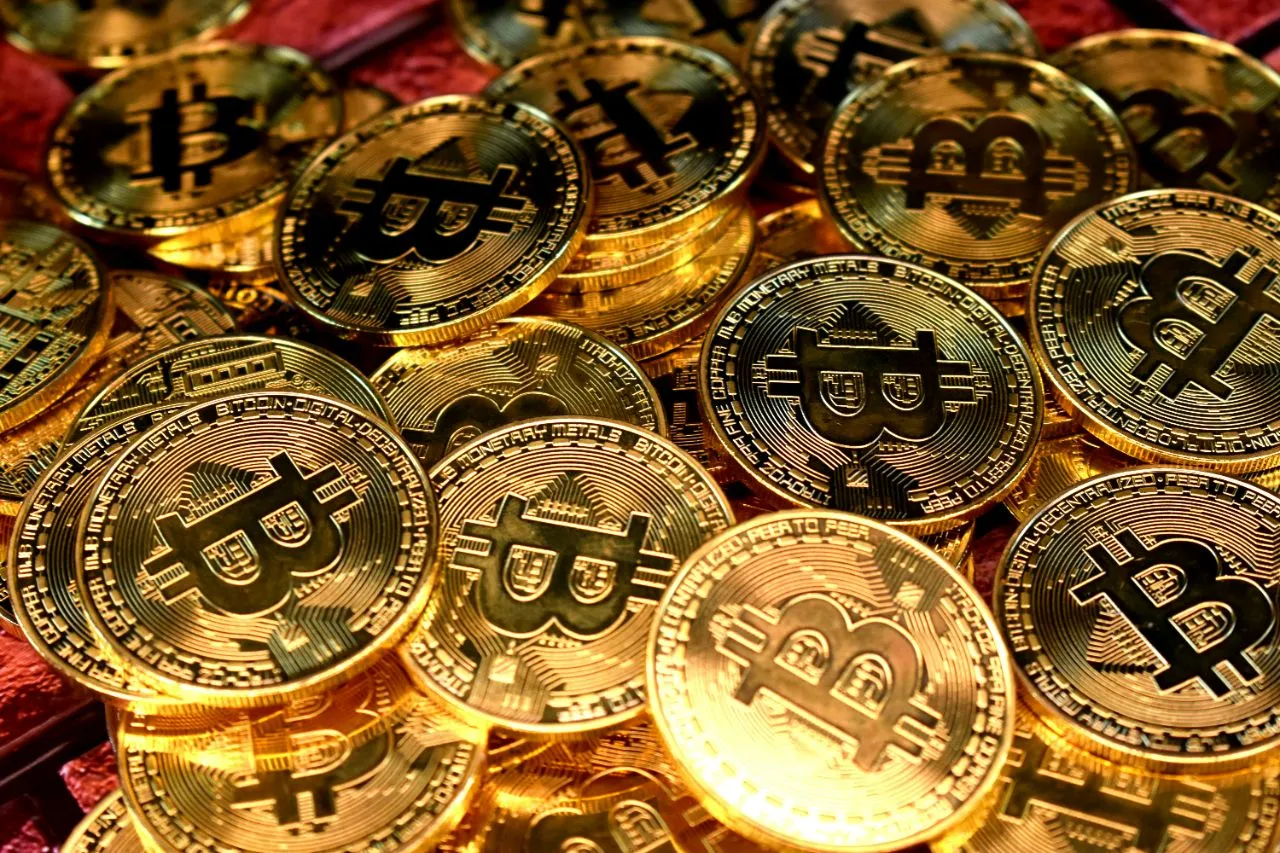
Japanese crypto exchange DMM Bitcoin announced on Friday that over $300 million worth of Bitcoin was stolen from its primary wallet, marking one of the digital asset industry's largest hacks in recent years.
https://asset.coinness.com/en/news/eebe7e21c5cf8ed0475ba0d9f4e98d52.webp
Photo by Kanchanara on Unsplash

Hack confirmed without further detail

"At approximately 1:26 p.m. on Friday, May 31, 2024, we detected an unauthorized leak of bitcoin from our wallet," the company stated, based on an English translation of its original statement in Japanese, which had been posted on the firm’s website. DMM Bitcoin is a subsidiary of DMM Group, which incorporates businesses covering a broad spectrum of activities including solar energy, gaming, 3D printers, FX, e-books and software.


The company has, as yet, not provided any further detail relative to the manner in which the hack occurred. Notwithstanding that, DMM Bitcoin did confirm that measures have been taken to prevent any repeat of the hack. Furthermore, the company outlined that a full investigation into the hack is ongoing right now.


Buy orders and leverage trades suspended

The company has moved to reassure platform users that their digital assets are fully guaranteed. It stated:


"Please rest assured that all of your bitcoin deposits will be fully guaranteed, as we will procure the equivalent amount of BTC that was leaked with support from our group companies." 


The exchange has taken the decision to temporarily suspend a number of activities, including spot trading buy orders and the opening of leveraged trading positions. A temporary halt has been imposed on crypto withdrawals while Japanese yen withdrawals are permitted, albeit that the exchange suggests that service users may experience delays.


Blockchain security sector response

In light of the hack, a number of well-known blockchain security firms have been giving the matter their attention. Beosin, a blockchain security specialist, outlined that it is continuing to monitor the wallet addresses implicated in the hack, with a view towards tracing any further movement of the funds.


Meanwhile, blockchain analysis firm Arkham Intelligence has offered a 1,000 ARKM token bounty to anyone who may provide information leading to the identification of the perpetrators of the hack. Blockchain analysis firm Chainalysis described the hack as “the 7th largest crypto hack ever.” The company has labeled the stolen funds within its products.


Broader industry implications and historical context

This hack is a significant blow to the industry, given that a hack on this scale has not occurred thus far in 2024 or at any point during 2023.


The crypto industry has faced numerous significant breaches in the past. In 2022, a series of large-scale exploits targeted layer-1 blockchains, crypto exchanges and DeFi protocols. The largest hack amongst them implicated the BNB Chain (formerly Binance Smart Chain), which resulted in the loss of $566 million worth of BNB.


The latest hack is second only (within Japan) in size relative to the 2018 hack of Coincheck, one of the country’s largest exchanges, when over $550 million worth of XEM was stolen. Japan was also host to the most infamous Bitcoin hack, that of the Mt. Gox exchange, whose bankruptcy administrators moved $9 billion worth of its remaining Bitcoin holdings on the blockchain in recent days for the first time in many years.


 

More to Read
View All
Web3 & Enterprise·

Sep 04, 2025

UAE’s RAK Properties to accept crypto payments through Hubpay partnership

RAK Properties has signed a strategic agreement with Hubpay that will allow international buyers to pay for homes in the United Arab Emirates (UAE) using digital assets, the real estate developer said in a Sept. 1 statement on its website. Under the arrangement, customers can settle property purchases with major cryptocurrencies, including USDT, Bitcoin (BTC), and Ethereum (ETH). Payments will be processed on Hubpay’s regulated platform, converted into UAE dirhams, and transferred directly to RAK Properties’ account. The company said it will not handle digital assets directly. Instead, all transactions will be processed by Hubpay and its partners, who are licensed by Dubai’s Virtual Assets Regulatory Authority (VARA), to ensure compliance and transparency. The initiative is aimed at drawing new categories of overseas investors to Ras Al Khaimah, the UAE’s sixth-most populous city, including the developer’s Mina waterfront community.Photo by Precondo CA on UnsplashUAE’s crypto market expands amid rising risksThe move comes amid growing crypto activity in the UAE. A Chainalysis report last year ranked the Middle East & North Africa as the seventh-largest crypto market and noted that the UAE’s decentralized finance adoption was above the global average, citing regulatory clarity. From July 2023 to June 2024, crypto inflows to the UAE leaned heavily toward stablecoins, which represented 51.3% of value received, compared with 44.7% worldwide. Bitcoin’s share was smaller than the global average at 16.5% versus 22.3%, while altcoins and Ethereum showed little difference at 24.4% and 7.8%, respectively. At the state level, the UAE itself has emerged as a significant player. Based on Arkham’s tracking, it is the world’s fourth-largest government Bitcoin holder, with about 6,352 BTC ($703 million). In contrast to the U.S. and U.K., whose holdings largely stem from law enforcement seizures, the UAE’s reserves come from mining through Citadel Mining. The firm is majority-owned by 2PointZero under the International Holding Company (IHC), which is chaired by Sheikh Tahnoun bin Zayed al-Nahyan, the UAE’s national security adviser and a prominent member of the ruling family in Abu Dhabi. As crypto use has grown, so too have the risks. In the first half of this year, the UAE recorded the world’s largest average per-victim losses from crypto crime, with nearly $80,000 stolen per individual, according to Chainalysis. Only the U.S. came close to that figure, while Chile, India, Lithuania, Japan, Iran, Israel, Norway, and Germany rounded out the global top ten. Harmonizing crypto rulesAmid a shifting crypto landscape, regulatory structures in the UAE are continuing to evolve. At the federal level, the Securities and Commodities Authority (SCA) supervises virtual asset services, while the Central Bank of the UAE (CBUAE) oversees payment tokens. The Dubai International Financial Centre and the Abu Dhabi Global Market operate their own frameworks. Last month, the SCA and VARA introduced a cooperation framework to harmonize oversight and allow mutual recognition of licenses, though the system stops short of automatic passporting in order to preserve national security controls. In related developments, the National Bank of Ras Al Khaimah (RAKBANK) became the first bank in the UAE to partner with Bitpanda Technology Solutions, a Vienna-based crypto exchange and digital assets infrastructure provider. The partnership, which builds on earlier work exploring the issuance of digital payment tokens, is expected to give RAKBANK customers access to a variety of crypto use cases. 

news
Web3 & Enterprise·

Dec 27, 2023

AMO Labs and Webility team up to expand Korea’s blockchain-based mobility industry

AMO Labs, the operator of a driving data platform that facilitates the exchange and valuation of automotive data, has secured a strategic partnership with Webility, a Web3 mobility sharing economy service, to expand its business endeavors in the mobility field, according to Korean media outlet SEN TV on Tuesday (KST).Photo by Luis Villasmil on UnsplashDiversification of blockchain-based servicesLaunched this year, AMO Labs’ service provides automotive data such as car information and sensor-based data, which helps contribute to a safer and more efficient driving experience with value-added products and services. Meanwhile, Webility brings blockchain technology to Web2-based sharing economies, creating a new decentralized Web3 service where service users and providers can be directly connected. Its main products include an AI node service and an NFT sharing economy service. Under the new agreement, the two companies agreed to expand their services and provide various products to users to innovate South Korea’s mobility as a service (MAAS) ecosystem. Anticipation for cooperation“Through our cooperation, we will strengthen data related to automobiles and micro-mobility and expand the blockchain-based mobility data pool,” Webility said. “We plan to bring mobility users into a new Web3 environment, diversify the blockchain-based mobility market and expand our cooperation for mutual growth.”

news
Web3 & Enterprise·

Mar 08, 2024

World’s oldest exchange gains in-principle approval in Singapore

Bitstamp, regarded as the longest-running cryptocurrency exchange in the business, declared on March 6 that it has obtained in-principle approval for a license to function as a Major Payment Institution (MPI) from the Monetary Authority of Singapore (MAS).Photo by Zhu Hongzhi on UnsplashFirst major Euro exchange in SingaporeThis preliminary approval, a precursor to a full-fledged license for operation in Singapore, marks a significant milestone for Bitstamp towards offering digital payment token services within the city-state. According to the exchange's press release, it's the first crypto trading platform with a substantial presence in the European Union (EU) to secure such approval from MAS. The nod from Singapore’s financial regulator arrives amidst notable regulatory strides in the crypto domain, including the European Union’s rollout of the Markets in Crypto-Assets (MiCA) framework and the green light given by the U.S. for Bitcoin ETFs. Focusing on AsiaBitstamp's strategic focus on the Asia Pacific region, with Singapore as its central hub, underscores its focus in delivering services to both institutional and retail clientele across the region. The firm’s intent in this regard became clear in August of last year when Bitstamp sought capital funding to enable it to extend the platform’s reach into various markets across Asia. Whilst the company’s origins can  be traced back to Slovenia, it has since developed further ties with Asia. In 2018, the company was acquired by NXMH, a subsidiary of South Korea’s NXC Corporation. The same holding company owns Korean crypto exchange Korbit. Compliance strategyWhile the licensing is quite the achievement, the company already boasts a robust regulatory track record, surpassing the 50-license mark across key markets such as Luxembourg, the Netherlands, Italy, Spain, France the United States (with coverage in 40 states including New York, Washington, Texas and Florida) and the United Kingdom. In its press release the company referred to its ever-growing licensing collection, outlining that “compliance and regulation [are] at the heart of all operations.” Leonard Hoh, Bitstamp's APAC General Manager, lauded Singapore's proactive stance in establishing a regulatory framework for crypto exchanges, positioning the city-state as a pivotal player in the digital assets landscape. Singapore has already granted full licenses to several crypto service providers, including Blockchain.com, Circle, Coinbase and Ripple. In late 2023, Bitstamp initiated talks with three major European banks regarding the potential introduction of cryptocurrency services in 2024. This signals a broader trend within the EU, where the crypto regulatory initiative, MiCA, is smoothing the path for traditional financial institutions to venture into the digital assets realm. Robert Zagotta, Bitstamp’s Chief Commercial Officer, highlighted the surge in interest surrounding its “Bitstamp-as-a-Service” offering, especially within European circles. This service furnishes a white-label licensing framework, coupled with requisite technology, to aid banks and fintech entities in facilitating cryptocurrency transactions for their clientele. However, the regulatory landscape isn't as welcoming in India, where the country’s Financial Intelligence Unit (FIU) urged the Ministry of Electronics and Information Technology to block the URLs of nine major global crypto exchanges, including Bitstamp, in late 2023. 

news
Loading