Top

Hashgraph ecosystem developer explores use cases in Qatar

Web3 & Enterprise·September 23, 2024, 6:04 AM

The Hashgraph Association, a non-profit organization that focuses on building an ecosystem of startups and enterprises relative to the use of the Hedera Hashgraph public ledger, has announced that it intends to explore use cases for the technology in Qatar.


Hedera Hashgraph was first created in 2015 by Leemon Baird and Mance Harmon. The network is designed such that anyone can transact using it and deploy applications on it. However, governance is separated from consensus, with a group of businesses overseeing the network protocol.

https://asset.coinness.com/en/news/9e70ddbfe97c737802a1c6356546da77.webp
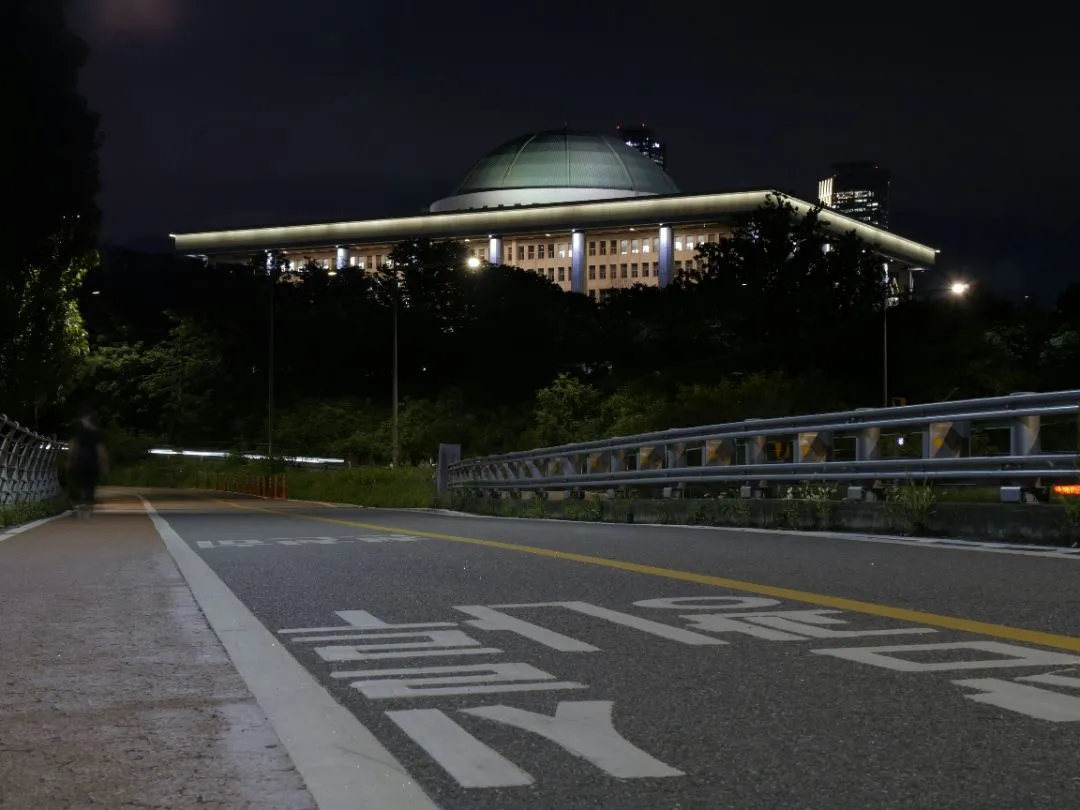
Photo by Hongbin on Unsplash

Five key use cases

In a LinkedIn post published on September 19, the Hashgraph Association outlined that within the next 12 months, it would explore the implementation of five key use cases relative to the Hashgraph network in Qatar, collaborating with stakeholders within the Middle Eastern country in order to do so.


First on its list is the tokenization of equities. During the TOKEN2049 event in Singapore earlier this week, the HBAR Foundation, another entity which supports the creation of Web3 communities on the Hedera network, launched the Hedera Asset Tokenization Studio. 


According to the HBAR Foundation, the initiative “enables the seamless issuance and management of tokenized bonds and equities on the Hedera network.” The move, when considered in the context of the Hashgraph Association’s intentions relative to the pursuit of the tokenization of equities as a use case in Qatar, demonstrates that the distributed ledger technology (DLT) network’s most prominent stakeholders are homing in on this particular use case in furthering the use of the network. 


Dr. Sabrina Tachdjian, the HBAR Foundation’s head of fintech and payments, stated that the  Asset Tokenization Studio will lower technical barriers to the tokenization of bonds and equities, along with the recording of their underlying data on the ledger.


Sukuk tokenization

Other use cases up for exploration in Qatar are real estate tokenization and sukuk tokenization. A sukuk is an Islamic financial certificate. It’s a bond-like financial instrument which is sharia-compliant. The world’s first tokenized sukuk, linked to a sovereign instrument, was created in Malaysia in 2023. 


Fusang Exchange listed the product, as a digitized version of a sukuk issued by the International Islamic Liquidity Management Corporation (IILM), represented via an ERC-20 token. Shariah-compliant finance represents a $4 trillion opportunity.


Additionally, the Hashgraph Association is looking to exploit the carbon credit sector as a use case, while also looking towards the use of the Hedera Hashgraph ledger for the purpose of consumer engagement and loyalty programs.


Digital assets framework

On September 1, the Qatar Financial Centre (QFC) announced that the Qatar Financial Centre Authority (QFCA) and the Qatar Financial Centre Regulatory Authority (QFCRA) had launched the QFC digital assets framework. The Hashgraph Association believes that the regulations strengthen its role in “fostering innovation and trust within the digital assets ecosystem, further solidifying the region’s position as a global leader in fintech.”


In May, the Hashgraph Association announced at the Qatar Economic Forum a $50 million partnership with the QFC, with the goal of creating a digital assets venture studio in Qatar to support solutions built on the Hedera network.

More to Read
View All
Web3 & Enterprise·

Mar 05, 2025

RWA tokenization gaining momentum in UAE

Real-world asset (RWA) tokenization, the conversion of tangible assets into digital tokens on a blockchain, is gaining momentum in the United Arab Emirates (UAE), according to a number of industry professionals working in the sector.Photo by ZQ Lee on Unsplash‘No lack of demand’Scott Thiel, founder and CEO of Dubai-based RWA token marketplace Tokinvest, recently outlined to Cointelegraph that the company is experiencing “no lack of demand” for tokenized RWAs. Thiel believes that demand is coming from real estate developers and large property owners who “want to explore how they can use this as an alternate means of financing or selling their property.” The Tokinvest CEO explained that a booming property market in the UAE,  particularly in Dubai, is contributing towards RWA tokenization demand in the country. He stated: “What’s the hottest real estate market in the world? Well, I think today it’s probably Dubai, and so, everyone would like to own a piece of this or to get access to the economic benefits of being a participant in that marketplace.” RWA tokenization dealsLast year, Liv Digital Bank, a subsidiary of Emirates NBD, the second largest bank in the UAE, signed a deal with RWA tokenization firm Ctrl Alt. At the time, Ctrl Alt CEO Matt Ong pointed to a Boston Consulting Group report that forecast a $16 trillion business opportunity with regard to the tokenization of global illiquid assets by 2030. In January, MANTRA, a layer-1 blockchain project that focuses on RWA tokenization, inked a $1 billion deal with Damac Group, an Emirati property development company. The objective of the partnership is to bring transparency, security and access to Damac’s assets using blockchain. Last month, MANTRA was awarded a Virtual Asset Service Provider (VASP) license by Dubai regulator, the Virtual Assets Regulatory Authority (VARA). MANTRA Co-founder and CEO John Patrick Mullin described the license award as “a validation of our purpose, which is to provide developers and institutions with a purpose-built RWA Layer 1 Blockchain, that’s capable of adhering to real world regulatory requirements.” Proactive regulationIt is with regard to regulation that many in the industry feel that the UAE is gaining the upper hand where RWA tokenization is concerned. Tokeninvest’s Thiel provided input into the formulation of VARA’s regulatory framework back in 2022. He said that the authorities there have taken a proactive approach to digital asset regulation, with a genuine desire to provide regulatory clarity. The Tokinvest CEO was sufficiently impressed by the regulatory approach in the UAE to relocate the company there. Back in January, VARA awarded the company a trading license for its tokenized RWA marketplace. Commenting following the announcement of the Damac deal, MANTRA’s Mullin complimented the UAE authorities on their business-friendly approach: “The UAE has shown time and again that they can lead the crypto industry in innovation.”  In a series of posts on X recently, Julian Kwan, CEO and founder of IXS, a Singapore-based institutional bridge for tokenized RWAs, cited the Damac tokenized real estate deal while asserting that tokenized “RWAs are no longer a concept — they are an unstoppable financial movement.”

news
Policy & Regulation·

Jul 14, 2023

Hong Kong’s Bricks-and-Mortar Crypto Shops Attract Chinese Visitors

Hong Kong’s Bricks-and-Mortar Crypto Shops Attract Chinese VisitorsHong Kong has become a thriving destination for cryptocurrency enthusiasts, particularly mainland Chinese visitors, due to the ambiguity surrounding the regulatory status of these crypto shops.Despite the illegality of cryptocurrency transactions on the mainland and the ban on overseas exchanges serving onshore clients, Hong Kong allows legal crypto trading, and according to a recent report published by the Financial Times, the autonomous Chinese territory is being accessed by residents of the Chinese mainland for the purpose of trading crypto.Photo by Chapman Chow on UnsplashSurging demandBricks-and-mortar crypto shops, lightly regulated and scattered across the city’s popular tourism and shopping districts, have flourished thanks to the surging demand from mainland Chinese visitors. These stores offer customers the convenience of purchasing digital assets with cash, often without the need to disclose the source of funds or personal information.In contrast to the strict licensing requirements imposed on online exchanges in Hong Kong’s push to become a virtual assets trading hub, these over-the-counter (OTC) crypto stores provide customers with the opportunity to buy large volumes of cryptocurrencies with minimal or no verification checks.Before the border between China and Hong Kong reopened fully in February, mainland Chinese customers accounted for less than 5% of customers at Crypto HK, an OTC crypto outfit with two branches in the city. However, this figure has now increased significantly, making up around half of their customer base.Similarly, One Satoshi, a crypto store with nine branches in Hong Kong, reported trading volumes between January and May 2023 that were 20–25% higher than the same period the previous year. They anticipate a 35–40% increase in trading for the entire year.While some store owners, like Roger Li of One Satoshi, currently decline mainland Chinese customers due to Beijing’s crypto ban, they remain optimistic that restrictions will ease. This belief is prevalent among the crypto community in Hong Kong following the city’s announcement to become a virtual assets hub in October.Regulatory anomalyHong Kong introduced a new regulatory framework for cryptocurrency exchanges in June, requiring all online platforms operating in the city to apply for a license. However, most OTC stores still operate outside the purview of Hong Kong’s Securities and Futures Commission (SFC), presenting an area of further consideration for the government.OTC stores primarily serve as a simple way for users to convert money to and from unlicensed online exchanges, according to Carlton Lai, head of blockchain research at Daiwa Capital Markets. Hong Kong’s lenient regulations and ease of starting such businesses, as long as there is sufficient capital, contribute to the higher number of OTC stores compared to other locations.While some shops welcome increased regulation in the sector, others do not require customers to provide identification, promoting quick and anonymous transactions. However, this falls short of the investor protection measures mandated for online platforms seeking licenses to trade cryptocurrencies to retail clients.The lack of scrutiny faced by Hong Kong’s OTC shops, coupled with their proximity to mainland China — a market that ranked fourth globally for crypto trading in 2022 — makes them appealing to Chinese citizens still interested in the asset class.

news
Web3 & Enterprise·

Sep 05, 2023

Bybit Leans on Innovative Tech by Launching AI-Powered Trading Assistant

Bybit Leans on Innovative Tech by Launching AI-Powered Trading AssistantDubai-headquartered cryptocurrency exchange Bybit has introduced TradeGPT, an AI-powered educational tool aimed at changing the way in which traders interact with the cryptocurrency market.A ToolsGPT follow-upThe move follows on from the firm’s launch of ToolsGPT in June, an AI-based tool that aids platform users to generate technical analysis and takes a ChatGPT-like approach in providing responses to user queries. Vivien Fang, Head of Financial Products at Bybit, explained: “Our analysts and tech team created ToolsGPT to provide the financial education and mentorship that is sorely needed in our hyper-financialized world. Essentially, we built the tool that we all wished we had when we began our careers in financial engineering and trading.”Photo by Wance Paleri on UnsplashAI mentor and guideFor Bybit users, TradeGPT offers a multitude of benefits, including real-time market analysis, multilingual support, and personalized guidance. It functions as a mentor and guide, empowering users to comprehend market trends, formulate strategies, and select the most suitable investment products to achieve their financial goals.This offering addresses the limitations of traditional AI systems and provides real-time market data. TradeGPT leverages Bybit’s extensive market data, trading analytics, and technical analysis tools, making it a resource for traders navigating the complexities of the cryptocurrency landscape.Following industry trendBybit’s TradeGPT follows in the footsteps of Singapore-based platform Crypto.com, which unveiled its AI-enabled platform, Amy, in May. Amy leverages the technology of OpenAI’s ChatGPT to deliver real-time information about specific tokens, projects, price listings, and historical events to Crypto.com platform users.At the time Kris Marszalek, CEO of Crypto.com, highlighted the platform’s significance, stating: “Amy is the latest example of our incredible momentum.” The company added that it followed a series of notable product launches, including CFTC-regulated options trading, on-chain staking solutions, and the GEN 3.0 Crypto.com Exchange.Binance, the world’s largest cryptocurrency exchange by trading volume, introduced Binance Sensei in April. The company has integrated the AI-powered learning tool into Binance Academy and offers users of all skill levels an interactive chat window for guidance.As an increasing number of cryptocurrency companies launch AI-enabled platforms, the synergy between AI and the industry becomes more apparent. AI’s data processing capabilities could address scalability issues and expedite transaction processing for cryptocurrencies.Conversely, cryptocurrencies could incentivize research and development in the field of AI. Tokenized economies may reward contributors to AI projects, fostering collaboration and innovation. Furthermore, cryptocurrency-enabled decentralized networks could provide secure and transparent platforms for exchanging AI-generated insights without the need for intermediaries.Digital assets are developing in real-time alongside other technologies. The introduction of Bybit’s TradeGPT, alongside Crypto.com’s Amy and Binance’s Sensei, offers a step forward in harnessing the power of AI to empower cryptocurrency traders. As these AI-driven tools continue to evolve and gain traction, they’re likely to reshape how individuals and institutions engage with the cryptocurrency market.

news
Loading