Top

USDT stablecoin receives full regulatory approval in Abu Dhabi

Web3 & Enterprise·December 16, 2024, 11:47 PM

The Financial Services Regulatory Authority (FSRA), a regulatory body within the Abu Dhabi Global Market (ADGM) economic free zone and financial center in the United Arab Emirates (UAE), has fully approved USD₮, the world’s leading U.S. dollar stablecoin by market cap, as an accepted virtual asset (AVA).
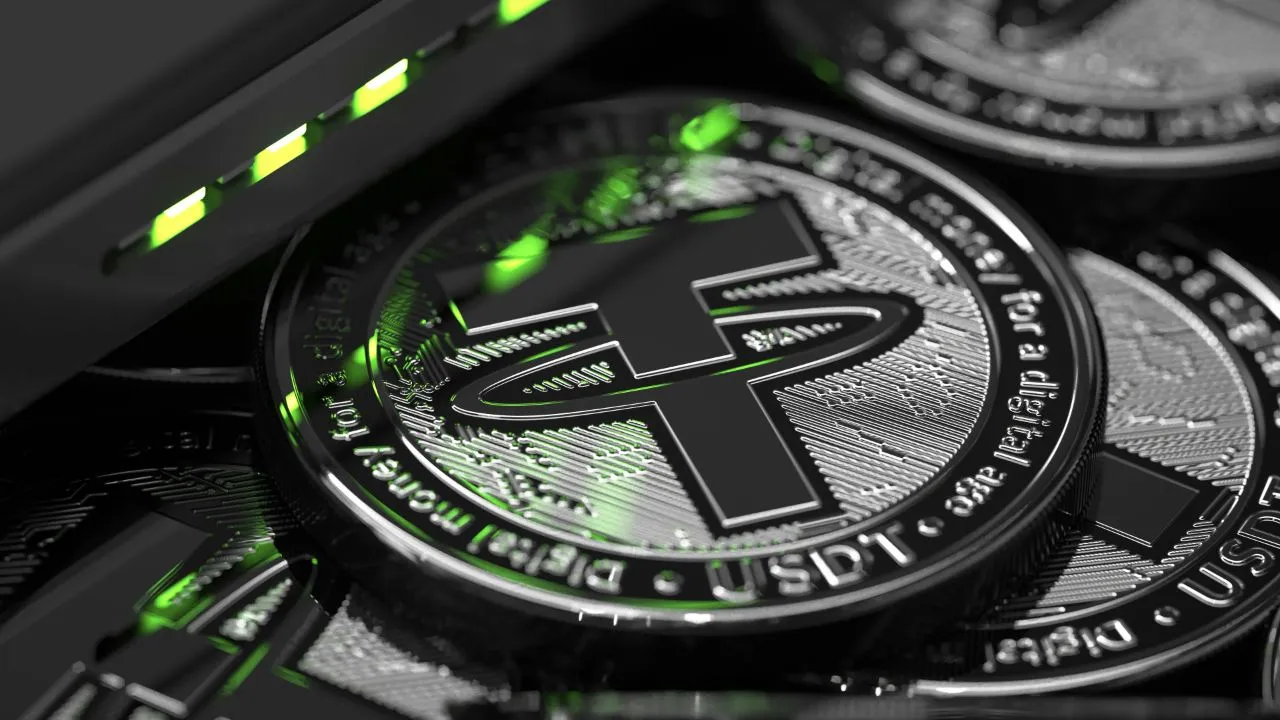
https://asset.coinness.com/en/news/eaf08a1ad4bdf292be57387fe07c3323.webp
Photo by DrawKit Illustrations on Unsplash

Pre-approved USDT services

USDT issuer Tether publicized details of the approval via a statement published to its website on Dec. 10. The company outlined that the approval means that “Authorised Persons” operating and licensed by the FSRA can offer pre-approved services related to USDT.


The company stated that the approval facilitates the integration of USDT into regulated financial ecosystems in Abu Dhabi while also claiming that the move helps to advance the region’s leadership relative to digital asset innovation.


The FSRA has acknowledged acceptance of the leading stablecoin with recognition of its issuance on various blockchains including Ethereum, Solana and Avalanche.


Validating the importance of stablecoins 

With the ADGM regulator now fully accepting and recognizing the stablecoin, Tether CEO Paolo Ardoino said that the move goes beyond just “validating the importance of stablecoins as critical tools for modern finance,” as he believes it opens the door for collaboration and growth across the Middle East.


Stablecoins are increasingly playing a significant role in bridging the gap between traditional finance (TradFi) and the Web3 sector. In October, crypto asset fund manager Bitwise identified a number of key insights that point to the ongoing development and use of stablecoins. 


It outlined that the top five stablecoin projects are currently holding more U.S. Treasury bonds than some G20 countries. Tether recorded profits last year that surpassed those of BlackRock, the world’s largest asset manager. Bitwise identified that leading payments firms like Visa are adopting stablecoins and incorporating them into their platforms for the purpose of effecting transactions.


A month prior to that, Wall Street investment bank Bernstein highlighted the fact that stablecoins are playing an increasingly important role relative to the global financial system as a whole. 


It’s thought that this latest development in Abu Dhabi may act as a further driver of USDT’s market cap. At the time of writing, the stablecoin asset had a market cap in excess of $140 billion. Its inclusion as an AVA reinforces the crypto asset’s position as the most used stablecoin within the industry.


AE Coin licensing 

In a further boost for further roll-out of stablecoins in the Middle East, the Central Bank of the UAE (CBUAE) awarded the final license to fully approve AE Coin, a UAE dirham-denominated stablecoin. Commenting on the development, AE Coin General Manager Ramez Rafeek said, "AE Coin harnesses the speed and efficiency of blockchain technology, offering instant, secure, and cost-effective transactions. It simplifies transfers, making them faster and more seamless."


In an effort to bring about greater adoption of the stablecoin, the AE Coin project intends to engage in partnerships with payment gateways, financial institutions and technology providers going forward. Tether also has plans to launch a dirham-backed stablecoin, having recently partnered with UAE-based entities to bring that about.




More to Read
View All
Web3 & Enterprise·

Aug 02, 2023

Puzzle Monsters Wins Investment from CRIT Ventures for Web3 Game Expansion

Puzzle Monsters Wins Investment from CRIT Ventures for Web3 Game ExpansionSouth Korean blockchain game developer Puzzle Monsters has secured an investment from CRIT Ventures, a venture capital subsidiary of Com2uS Group, during its recent Pre-A investment round. The amount hasn’t been disclosed.The investment comes as part of CRIT Ventures’ efforts to expand its investment portfolio with promising companies specializing in Web3 content and platforms.“Through CRIT Ventures’ investment, we look forward to honing our game development expertise and securing a faster and more meaningful gateway to the blockchain infrastructure and community,” said Yang Jin-hwan, CEO of Puzzle Monsters.Photo by Precondo CA on UnsplashAbout Puzzle MonstersPuzzle Monsters is known for its away-from-keyboard massively multiplayer online role-playing game (AFK MMORPG) called “Idle Ninja Online,” which began incorporating blockchain technology at the end of 2021 and earning popularity among users.The developer’s mounting success can be accredited to its creative game ideas and a keen understanding of market trends. Its other flagship game, Ninja Survivors Online, is also enjoyed by many users both domestically and overseas.“We want to present better products to the market, both in terms of gameplay and blockchain integration,” CEO Yang emphasized.Boosting the market for Web3 gamingCRIT Ventures’ parent group Com2uS has been focusing on leading the Web3 market with various games and game platforms that are based on the XPLA blockchain mainnet. It has also recently launched the immersive online community space SPAXE in Com2uS’s all-in-one metaverse service Com2Verse. Earlier this year, Com2Verse partnered with Microsoft Korea to apply artificial intelligence technology to the metaverse.Com2uS additionally unveiled plans to onboard Puzzle Monsters’ current and future games onto XPLA, aiming to create maximum synergy.

news
Web3 & Enterprise·

Jan 12, 2024

Nomura and Brevan Howard back Polygon-powered Libre Protocol

Laser Digital, the crypto arm of Nomura, Japan’s largest investment bank and brokerage group, in collaboration with WebN Group, has unveiled Libre, an institutional Web3 protocol powered by Polygon technology. WebN Group is an incubation hub for fintech and Web3 innovators. It’s backed by Laser Digital and Alan Howard, the co-founder of alternative investment management platform, Brevan Howard.Photo by Shubham's Web3 on UnsplashFocusing on asset tokenizationLibre leverages asset tokenization and smart contracts, aiming for regulatory-compliant issuance and management of alternative investments. According to a statement, the protocol is built using the Polygon Chain Development Kit (CDK), facilitating the development of purpose-built, zero knowledge-powered Layer 2 blockchains on Ethereum. Dr. Avtar Sehra, the founder of Libre, has been actively involved in real-world asset (RWA) tokenization since 2014. His previous experience includes founding the UK FCA-licensed tokenization platform Nivaura. The protocol's applications extend beyond primary issuance services, with additional use cases such as collateralized lending and automated rebalancing of private investment portfolios. In a press release which was published on Wednesday, Sehra commented on the project:”While our MVP objective is to increase AUM by launching the primary issuance service and driving distributor integrations, we are also working closely with our partners and clients on our 2024 product roadmap, which includes collateralized lending and automated portfolio rebalancing — building the future of wealth APIs.” Libre's anticipated launch is in Q1 2024, with investment management firms Brevan Howard and Hamilton Lane poised to become the first issuers on the platform. The industry has shown growing interest in leveraging blockchain technology to revolutionize the distribution and accessibility of alternative asset funds. Making blockchains ‘mainstay financial rails’Polygon’s Indian co-founder Sandeep Nailwal outlined on a social media post on Wednesday the relevance of a dedicated network relative to real-world assets. He wrote:”RWAs have the potential to make blockchains mainstay financial rails at a global scale. I have always believed that RWAs would need their own regulated, compliant environment. Public shared chains like Ethereum mainnet, or L2 mainnets are intrinsically permissionless and not the perfect for many types of RWAs.” With that outlook in mind, Nailwal believes that Libre showcases the potential of blockchain technology to unlock new opportunities for investors globally. Natalie Smith, Head of Strategy at Brevan Howard, said, “the tokenization of funds allows us to offer investors a new way to access our strategies, providing them with optionality, and further develops our platform to serve client needs.” Competing projectsLibre is not the sole project exploring the tokenization of funds. In November, JPMorgan's Onyx collaborated with asset and wealth managers WisdomTree and Apollo, along with various blockchain technology providers, on a blockchain interoperability proof-of-concept for investment portfolio management. SC Ventures, the Singapore-based investment and innovation arm of Standard Chartered, also entered the tokenization space by launching Libeara, its tokenization platform. The SGD Delta Fund, a tokenized Singapore-dollar government bond fund, recently received an AA rating from Moody's after becoming the first fund to use Libeara. The first tokenization platforms have tended to be run on private blockchains. It will be interesting to watch the development of Libre as it’s the first time a financial institution-focused layer 2 network is being built, with final settlement on the Ethereum blockchain. 

news
Policy & Regulation·

Jan 31, 2024

Hong Kong’s SFC bolsters investor protection with new insurance mandate

In an effort to fortify the cryptocurrency market and safeguard investors' funds, the Hong Kong Securities and Futures Commission (SFC) has introduced a minimum insurance requirement of 50% for licensed cryptocurrency exchanges handling customers' assets.Photo by Simon Zhu on UnsplashGuarding against insolvency riskThe move came to light through a statement published recently by OSL, one of Hong Kong’s licensed virtual asset trading platforms. It’s aimed at enhancing security measures, protecting users from potential security breaches or insolvency. As part of that disclosure, OSL announced a two-year partnership with Canopius, an underwriter syndicate associated with Lloyd's of London. Under this collaboration, OSL will provide insurance coverage for an impressive 95% of its users' assets, surpassing the mandated 50%. OSL emphasized its commitment to safeguarding regulated assets under custody, irrespective of the regulatory guidelines permitting virtual asset service providers (VASPs) to reduce insurance coverage to 50%. Response to recent failuresThis decision is grounded in the acknowledgment of the volatile market conditions and the series of cryptocurrency firm collapses witnessed in recent years. 2022 saw a number of high-profile crypto platform collapses, such as the demise of FTX. HashKey Exchange, another licensed crypto exchange in Hong Kong, has also proactively secured its users' assets by entering into a crypto insurance agreement with Hong Kong headquartered fintech firm OneDegree back in September. The insurer entered the digital assets space last July, expanding into the Middle East last month. OneDegree’s arrangement with HashKey offers coverage ranging from $50 million to $400 million, extending beyond standard security breaches and insolvency to include server downtime, data back-up and load management incidents, ensuring comprehensive protection. Broader regulatory effortsThe minimum insurance requirement is part of the SFC's larger strategy to regulate the cryptocurrency industry in Hong Kong. While the Chinese autonomous territory enabled cryptocurrency trading for retail investors in August, only OSL and HashKey have obtained virtual asset trading licenses. Thirteen other entities are currently in the application process, undergoing rigorous due diligence checks, including comprehensive financial audits exceeding the scope beyond proof-of-reserve systems. This insurance mandate represents a significant step toward enhancing investor confidence in the cryptocurrency market. As digital assets gain popularity, ensuring the security of customers' funds has become paramount. The SFC's proactive approach seeks to strike a balance between fostering innovation and safeguarding investors. Products are also emerging that crypto users themselves can access. UK-based CryptoShield offers insurance protection directly to users that covers potential loss of funds on crypto platforms. The cryptocurrency landscape in Hong Kong is evolving rapidly, with the SFC playing a pivotal role in shaping the regulatory environment. Regulators aim to establish a robust framework addressing potential risks and protecting market participants while embracing digital innovation. As the regulatory landscape matures, more licensed crypto exchanges in Hong Kong may be required to meet the 50% minimum insurance requirement, further strengthening security measures and making the market a safer place for investors.  

news
Loading