Top

PM encourages focus on crypto so Malaysia doesn’t get left behind

Policy & Regulation·January 17, 2025, 12:51 AM

Malaysian Prime Minister Datuk Seri Anwar Ibrahim has said that Malaysian government agencies and the country’s central bank need to study blockchain and cryptocurrency from a policy perspective so as not to get left behind.

https://asset.coinness.com/en/news/4353fee55059f3f764dccea68befb915.webp
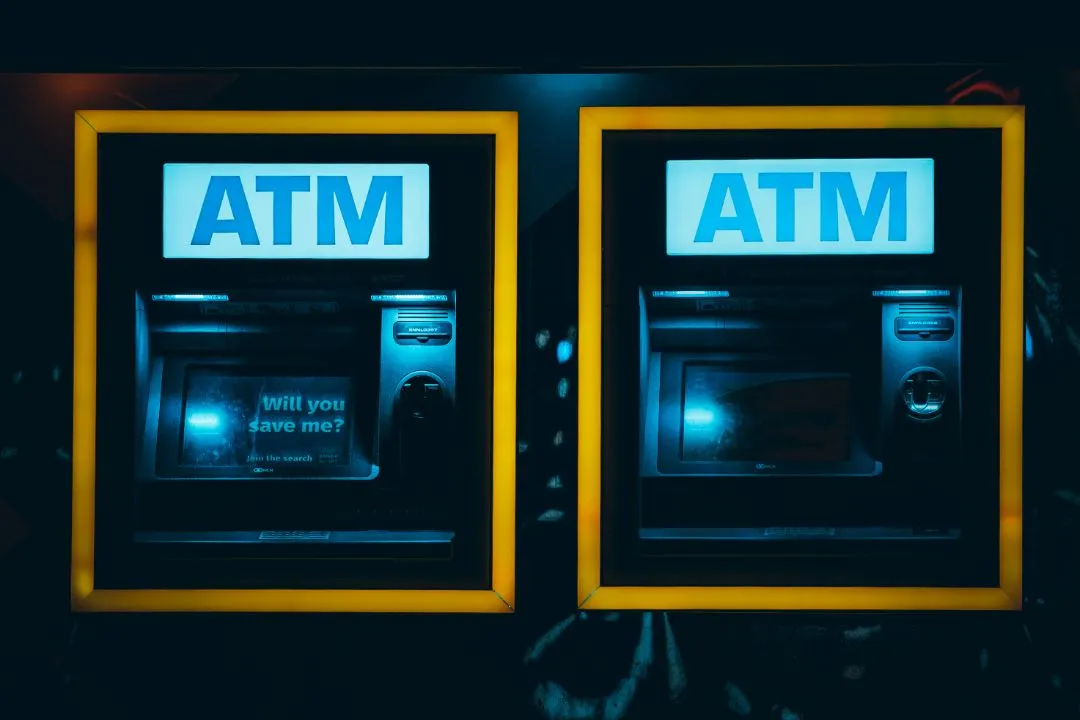
Photo by Esmonde Yong on Unsplash

Considering major changes

His comments emerged alongside the news that Anwar had discussed digital finance policy matters with Abu Dhabi government officials and with Changpeng Zhao (CZ), the founder and former CEO of Binance.


According to the New Straits Times, an English-language newspaper published in Malaysia, the Malaysian government is homing in on the establishment and adoption of a formal policy relative to digital assets and blockchain. 


Anwar confirmed that discussions also related to “digital transformation, data centers and artificial intelligence (AI),” and that the demands that Malaysia now faces require the government to consider major changes.


In discussion with local media, Anwar stated:


"I proposed several months ago how our agencies, including security, treasury and Bank Negara study how Malaysia can explore this so we aren't left behind. Ensuring that is regulated could safeguard the people's interests and prevent leakages.”


Crypto-friendly regulations

Anwar added that a “radical departure from the old ways” would be needed for Malaysia to remain competitive, emphasizing the need for the Southeast Asian country to keep up to speed through the application of crypto-friendly regulations.


Addressing the pace of technological change, he stated:


“This is an evolution which happens quickly and requires us to be equally fast. We feel that Malaysia should not be left behind while mired in an old financial system.”


In moving towards setting out a clear policy relative to digital assets, the Malaysian prime minister is encouraged by his recent dialogue with United Arab Emirates (UAE) government officials. He said that they confirmed that they feel they can forge close cooperation with Malaysia on the matter. Anwar added:

“We need to discuss this in detail, leave behind the old business model and give meaning to this digital finance policy.”


Taking to the X social media platform, Binance’s CZ described the nature of his discussion with the Malaysian prime minister, stating:


“The discussions were not about Binance but about the crypto industry and Malaysia, including regulations, policies, risks, and collaborations between industries and across national borders. Forward!”


A pseudonymous crypto investor and programmer, @darren_com_myresponded to CZ’s tweet to explain that the Malaysian government provides support to the digital assets industry via government agencies, but that, on the other hand, it has blacklisted a number of exchanges such as HTX (formerly Huobi) and Binance


The local regulator has issued licenses to six virtual asset service providers. In recent weeks, Malaysia’s Securities Commission has taken action against global exchange Bybit and crypto app Atomic Wallet, prohibiting them from trading within the jurisdiction due to both companies not having obtained the required licensing.

More to Read
View All
Web3 & Enterprise·

Feb 28, 2024

Profitability eludes Canaan despite further growth

Beijing-headquartered crypto mining equipment manufacturer Canaan recently revealed its financial results for the fourth quarter of 2023, demonstrating that it continues to struggle with profitability despite positive numbers relative to revenues and growth.Photo by Sasun Bughdaryan on UnsplashIncreased revenues and salesAccording to the company’s filing, during the last quarter of 2023 Canaan reported a surge of 45.7% in total computing power sold compared to the preceding quarter, reaching 5.5 million Thash/s. This ascent, which reflects a 191.9% increase from the same period in 2022, signifies not just a recovery but a robust resurgence in demand and operational ability. The company's dispatch of 19.6 million Thash/s throughout the year, marking a 29.6% leap from 2022, aligns with the rebound in bitcoin prices observed in Q4 2023, a pivotal factor shaping Canaan's operational revitalization. 47% growth on previous quarterA closer examination of the financials reveals not only surpassing total revenues but also a notable 47.3% quarter-over-quarter growth. Canaan's foray into international markets, bolstered by securing substantial orders from esteemed public company clients, underscores a buoyant sales performance and a positive outlook for the computing sector. Despite the buoyant sales and revenue figures particularly in the mining machine market, the sector has faced ongoing regulatory uncertainties and market fluctuations. Nonetheless, the company's strategic initiatives, alongside the positive market effects of the approval and listing of spot bitcoin exchange-traded funds (ETFs), have been positive. Moreover, Canaan's investments in wafer supply capabilities and strategic financial maneuvers garnered approximately US$136 million through at-the-market (ATM) programs and preferred shares. Recording a lossYet, the company’s journey in 2023 was not without its hurdles. Q4 2023 witnessed a significant increase in product revenues from the previous quarter but a decline from Q4 2022, attributed to dwindling sales prices as the halving event loomed, underscoring the volatility inherent in the cryptocurrency market. Results published last year are indicative of the company’s difficulty. In Q2 2023, revenues were strong, yet the company wasn’t turning a profit.With Q4 results, it’s now clear that the firm lost $421 million in 2023. In Q4, Canaan recorded a net loss of $139 million. That compares with a loss of $91 million in Q4, 2022. The company also expects tough market conditions in 2024. In its forward-looking outlook, it stated:”For the first quarter of 2024, and the second quarter of 2024, the Company expects total revenues to be approximately US$33 million and US$70 million, respectively, considering the challenging market conditions across the industry. This forecast reflects the Company’s current and preliminary views on the market and operational conditions, which are subject to change.” The crypto mining sector remains a very challenging market. With the upcoming Bitcoin halving event set to occur in April, it’s expected that as much as 20% of mining capacity could be forced offline, as some equipment would simply fail to mine on a profitable basis. Indicative of the challenges within the sector, crypto miner Core Scientific was forced into bankruptcy due to market difficulties in December 2022. It has only recently exited that bankruptcy process and now expects to generate revenues of $600 million in 2024. Another Bitcoin miner, Riot Platforms, has warned that profitability may be difficult to achieve in 2024 due to chip shortages.   

news
Web3 & Enterprise·

Aug 09, 2023

Galaxia Metaverse Joins Hands with MVL Foundation to Expand Blockchain Ecosystems

Galaxia Metaverse Joins Hands with MVL Foundation to Expand Blockchain EcosystemsSouth Korean blockchain company Galaxia Metaverse said Wednesday it will collaborate with MVL Foundation, a blockchain-based mobility enterprise in Singapore, to advance their respective blockchain ecosystems by enabling the use of their tokens, Galaxia (GXA) and MVL, within them.Photo by Shubham Dhage on UnsplashPromoting token utilizationAs of now, MVL tokens can be used for purchasing discount coupons for TADA, MVL Foundation’s ride-hailing service. Through the partnership, GXA tokens will also be able to purchase TADA discount coupons through MVL’s cryptocurrency wallet, Clutch Wallet. Discussions are currently underway regarding more joint ventures, such as integrating the MVL token with staking products offered by Galaxia’s own digital wallet.“The MVL token is already being used by millions of mobility service users with Southeast Asia as its base. Through this partnership, we expect that our global expansion will be accelerated as we bring more users to our ecosystem,” Galaxia emphasized.Expanding the Southeast Asian user baseMVL Foundation operates its mobility services mainly in Southeast Asian countries including Singapore, Cambodia, and Vietnam. Its ride-hailing service TADA is the second-largest of its kind in Singapore. This ecosystem is connected via blockchain, enabling participants to receive rewards in accordance with their activities and ultimately forging a Web3 mobility system.Subsequently, Galaxia intends to take advantage of MVL’s solid footing in Singapore to push joint localized marketing within the country.“We are planning to develop various solutions, rewards, and service integrations with MVL by leveraging our strengths, expertise, and networks,” Galaxia said.Meanwhile, throughout this year, Galaxia has been expanding its blockchain ecosystem in other ways. Notably, it has collaborated with industry leaders such as Korean NFT exchange Pala and karaoke app Somesing.

news
Web3 & Enterprise·

Apr 17, 2025

OKX relaunches in the United States

Global crypto exchange platform OKX has announced that it has relaunched its exchange services and Web3 wallet within the U.S. market. In a press release published on April 15, the company said that customers can now access the platform in the United States, “with existing customers migrating seamlessly and new customers gradually gaining access ahead of a full nationwide launch.”Photo by Danny Burke on UnsplashOnboarding OKCoin usersIn terms of existing customers, the company is referring to users of OKCoin, the former name of OKX, who will now be onboarded onto the newly launched OKX exchange service. The Seychelles-based company, which was originally founded and operated in China, has established its U.S. headquarters in San Jose, California. The company has appointed Roshan Robert, formerly an executive at Morgan Stanley and Barclays, as its U.S. CEO. Commenting on the U.S. market relaunch, Robert stated: "With the US advancing crypto regulatory clarity, we see tremendous opportunities to build trust and deliver secure, compliant digital asset solutions.” Inflection pointIn a blog post published to the firm’s website, Robert said that he had been watching the development of the industry since its earliest days, but that he thinks that the crypto sector has now reached “a critical inflection point.” He added that more so than ever before, the crypto sector is currently interacting more directly with traditional finance and capital markets.  Referring directly to what platform users can expect from the relaunched service in the U.S., the OKX U.S. CEO said that the firm plans on rolling out new features throughout the year as part of its vision to build a crypto super app. Rollout of the platform’s services in the U.S. will be carried out on a phased basis. The firm also intends to offer integrations with local banks, together with full support for major assets such as Bitcoin, Ethereum, USDC and USDT.The OKX Wallet will be made available to U.S. users, supporting a range of digital assets across 130 blockchain networks. The wallet will enable users to access a number of Web3 dApps, facilitate the movement of digital assets between blockchain networks and include a number of tools to assist platform users with their trading activities. Entering a ‘new era’It’s likely that a change towards a more positive outlook where the crypto sector is concerned at government and regulatory levels in the U.S., together with a settlement reached with the U.S. Department of Justice (DOJ), has influenced OKX in relaunching its service stateside.  The DOJ had opened an investigation into the company on the basis of allegations that it was operating a money-transmitting business on an unlicensed basis. In its settlement, the company paid fines and penalties totaling $500 million. With that settlement behind it and a more enlightened climate for digital assets having emerged in the U.S., OKX described the service relaunch as “a new era for OKX in the U.S.”Yves La Rose, CEO of Web3 banking project, the Vaulta Foundation, said that OKX’s U.S. expansion is a signal, indicating that “a new era of compliant, wallet-led Web3 innovation is underway.” Diana Pires, an executive at crypto payments firm Beam, expressed a similar take, stating on X that OKX was relaunching “because the world’s largest economy is finally ready for crypto,” adding that “the floodgates are now open for international crypto companies.”

news
Loading