Top

Animoca Brands & Standard Chartered form Anchorpoint in Hong Kong

Web3 & Enterprise·August 11, 2025, 2:31 AM

Animoca Brands, a company focused on Web3 and metaverse projects, has gotten together with the Hong Kong subsidiary of British banking giant Standard Chartered to establish Anchorpoint Financial Limited.

In a press release published to its website on Aug. 8, Animoca Brands outlined that the joint venture company has been established with the objective of building a business model that will concern itself with the issuance and advancement of licensed stablecoins. The move follows Hong Kong’s Stablecoins Ordinance, which went live on Aug. 1.

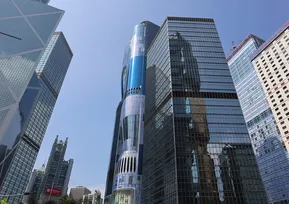
https://asset.coinness.com/en/news/64b578b39660ce9a9f70a3fc1c002657.webp
Photo by Andres Garcia on Unsplash

HKT involvement

The partnership also involves Hong Kong Telecom (HKT), one of the largest telecommunications companies in Hong Kong. This collaboration is not something that has just been formed. The trio had been participants in a regulatory sandbox related to stablecoin issuance established by the Hong Kong Monetary Authority (HKMA) in 2024. 


Back in February, it emerged that the three companies had entered into an agreement to establish a joint venture with a view towards applying to the HKMA for a license to cover the issuance of a Hong Kong dollar-pegged stablecoin. By June, the companies had formed that company.


Applying for a license

Anchor Financial has already informed the HKMA of its intention to apply for a stablecoin license. A recent Bloomberg report asserted that somewhere in the region of 50 companies have expressed an interest in obtaining stablecoin licensing in Hong Kong. However, the regulator is likely to issue no more than 10 licenses.


Additionally, disclosure by the HKMA of strict customer identification rules related to the city’s new Stablecoins Ordinance has sparked concern among industry stakeholders. Know-your-customer (KYC) rules will put an onus on stablecoin issuers in Hong Kong to verify the identity of every stablecoin holder. Bo Tang, head and assistant director at the HKUST Institute for Financial Research, told Reuters that the rules were “a bit too strict and not good for acquiring users.”


Ricky Xie, a crypto trader based in Hong Kong, pointed out that these KYC rules aren’t just for those who would hold accounts with the stablecoin issuer, but instead they will apply to every stablecoin holder.


A number of Hong Kong stablecoin-concept stocks, that had been performing well in the market, fell by as much as 20% when these stringent rules were disclosed by the HKMA.


Evan Auyang, group president of Animoca Brands, expressed contentment with Animoca’s partnership with HKT and Standard Chartered Bank (Hong Kong), while adding:

”Stablecoins represent one of the most compelling use cases within Web3, and we believe we are still at the early frontier of widespread adoption across institutions and retail alike. As assets continue to move on-chain, the HKMA-regulated fiat-referenced stablecoin is important in reinforcing Hong Kong’s position as a leading international financial center.”


The first stablecoin licenses are expected to be issued by the HKMA early next year.
More to Read
View All
Policy & Regulation·

Oct 01, 2025

South Korean police boost crypto team in fight against drug trade

South Korea’s National Police Agency will assign all 41 narcotics investigators recruited during the second half of the year to cryptocurrency-related duties, according to News1. The move follows the creation of a dedicated “Virtual Asset Analysis and Investigation Team” aimed at tackling drug offenses that use digital assets. To bolster skills, the agency plans specialist training for investigators from Sept. 29 to Oct. 2. Of the 41 recruits, 11 will staff an analysis unit and 30 will join field investigations. The analysis team, based at the Seoul Metropolitan Police Agency, will handle crypto-related drug cases nationwide, generate intelligence, and support phishing probes involving digital assets. The investigation group will be deployed to five regional headquarters (Seoul, Busan, Incheon, southern Gyeonggi, and southern Gyeongsang) to target illicit crypto payment processors and the money launderers behind them.Photo by Scott Rodgerson on UnsplashLatest crypto seizure in UK drug caseThe push mirrors trends overseas. In the U.K., Devon and Cornwall Police said detectives seized £1.3 million (about $1.76 million) in cryptocurrency from Ryan Coleman, 36, who received a 15-year sentence after admitting to supplying cocaine, ecstasy, cannabis, and ketamine via the dark web. Police indicated the seized assets are expected to fund proactive operations and community initiatives, with half allocated to HM Treasury. Cartels turn to crypto in North AmericaNorth American authorities report similar challenges. In a January 2025 post, blockchain intelligence platform TRM Labs pointed to the growing use of cryptocurrencies by Mexican drug cartels and other transnational groups. It noted that an executive order signed by President Trump earlier this year allows U.S. law enforcement to freeze crypto wallets linked to these organizations. The post also outlined laundering pipelines that rely on Chinese money brokers, who convert U.S. cash into crypto for global transfers or for buying precursor chemicals. The scale of these flows is underscored by TRM’s September 2024 research, which estimated that Chinese drug-precursor manufacturers took in over $26 million in crypto in 2023, a 600% jump from the year before. In the first four months of 2024, receipts nearly doubled year-over-year. Roughly 60% of these payments were made in Bitcoin, 30% in TRON, and 6% in Ethereum. The analysis also noted that U.S. cryptocurrency ATMs transferred more than $170,000 directly to Chinese precursor vendors in 2023, modest in scale but valuable for investigators. Freezing stablecoins and tracing Chinese linksWhile targeted sanctions and blockchain tracing have disrupted parts of the network, traffickers remain agile, TRM noted. It underscored the need for continued vigilance, technological adaptation, and cross-border coordination. Suggested steps include freezing cartel-linked stablecoins, tightening U.S. cash-to-bank laundering controls, and using legal tools like the Patriot Act to trace Chinese firms and accounts involved in laundering. South Korea’s redeployment of personnel reflects this push to align national enforcement with evolving enforcement dynamics. 

news
Web3 & Enterprise·

Nov 29, 2023

Rotonda revamps Burrito Wallet with cross-chain swapping, added mainnet and more

Rotonda revamps Burrito Wallet with cross-chain swapping, added mainnet and moreRotonda, a subsidiary of South Korean crypto exchange Bithumb, has recently revamped its Web3 wallet Burrito Wallet to make the app more convenient for users, according to Korean news agency Etoday on Wednesday (local time). The newest version features an improved mainnet support system, user interface (UI) and user experience (UX), with a stronger focus on enhancing user convenience and creating a framework for optimal investment.Photo by Shubham’s Web3 on Unsplash“Through this service renewal, we hope that many users will be able to experience a more convenient and unique web3 environment. We will continue to improve our services to establish Burrito Wallet as a user-friendly crypto wallet platform,” the company said.Expanded options for token tradingMost notably, Burrito Wallet now offers cross-chain swapping, which allows users to trade token currencies that have been issued on different mainnets. This is a step up from regular crypto swapping, which only allows the swapping of tokens issued on the same mainnet. Cross-chain swapping between the Ethereum, BNB Smart Chain, Matic, Avalanche and Arbitrum mainnets is now supported by the deSwap Liquidity Network (DLN), a decentralized cross-chain exchange built by deBridge Finance. DLN facilitates secure and unlimited liquidity transfers across chains with zero slippage.Rotonda added that it would continue to expand its lineup of swap platforms through collaborations with major industry names like Kana Labs, WOOFi and Unizen.Better user experienceThe company also added new features to help users make optimal investments. This includes a new notification bot dubbed “Burrito Chef,” which sends notifications for announcements, updates and events within the app. Users can quickly and conveniently check the insights they need to inform their personal investments and get the most out of the app’s services.On the UI front, a “Home” tab has been added, which provides users with a concise overview at of the most commonly used features like wallet, swap and chat, along with the most popular content. Token rankings by category — such as most swapped tokens and most rising tokens — that were previously available on the “Swap” tab have been moved to the “Home” tab and placed in the foreground of the screen. Rotonda also explained that it aims to provide a more customizable experience by adding more detailed chart features.The wallet also now supports the Sui mainnet, bringing the total number of supported mainnets to 12.This development comes shortly after Rotonda recently launched Burrito Wallet in the Latin American region in a move to expand its global user base.

news
Policy & Regulation·

Dec 14, 2025

Terraform Labs co-founder Do Kwon sentenced to 15 years for ‘generational’ fraud

Do Kwon, a South Korean national and the central figure in the 2022 collapse of the Terra blockchain ecosystem, was sentenced to 15 years in prison on Dec. 11, capping a federal case that exposed a multibillion-dollar scheme built on false promises and secret market manipulation. According to a U.S. Department of Justice press release, District Judge Paul A. Engelmayer handed down the sentence in Manhattan federal court, finding that the 34-year-old orchestrated a scheme that inflicted substantial losses on both retail and institutional investors.Photo by Tingey Injury Law Firm on Unsplash"This was a fraud on an epic, generational scale. In the history of federal prosecutions, there are few frauds that have caused as much harm as you have, Mr. Kwon," Engelmayer said, according to Reuters. Kwon, who was extradited to the U.S. in December 2024 following his arrest in Montenegro, pleaded guilty in August. Addressing the court, he acknowledged the devastation caused by the collapse. "All of their stories were harrowing and reminded me again of the great losses that I’ve caused. I want to tell these victims that I am sorry," Kwon said. A house of cardsAccording to court filings, Kwon’s deception ran from 2018 through 2022, misleading investors regarding the stability of the algorithmic stablecoin TerraUSD (UST), the LUNA token, and the independence of the Luna Foundation Guard. Prosecutors outlined a pattern of fabrication across Terraform’s products. When UST lost its $1 peg in May 2021, Kwon claimed an automated "Terra Protocol" restored balance. In reality, investigators found the company secretly utilized a high-frequency trading firm to prop up the price, creating a "false impression" of the system’s resilience. The fraud extended to Terraform’s partnerships and applications. Investigators said Kwon lied about the South Korean payments platform Chai, claiming its transactions were settled on the Terra blockchain. Instead, Chai used traditional payment networks, with Terraform simply copying data to the blockchain to feign integration. Similarly, Kwon allegedly manipulated the Mirror Protocol, a platform for synthetic stock trading. While touting it as decentralized, prosecutors said he used bots, funded by stablecoins he created, to inflate volume and manipulate asset prices. The collapse and captureBy spring 2022, the ecosystem’s value exceeded $50 billion. However, when UST broke its peg again in May 2022, Terraform could not artificially restore it. The resulting crash erased at least $40 billion in value and triggered a contagion across digital-asset markets. While Kwon publicly claimed cooperation with authorities during the fallout, prosecutors introduced recordings suggesting he privately explored seeking political protection to avoid accountability. He was eventually arrested in Montenegro in March 2023 for traveling on a fraudulent passport. In addition to the prison term, Judge Engelmayer ordered Kwon to forfeit over $19 million, including interests in Terraform and its digital assets. The case was investigated by the Federal Bureau of Investigation (FBI) with assistance from Montenegrin and South Korean authorities. The Securities and Exchange Commission (SEC) has filed a separate civil action. Global crackdown widensWhile the U.S. concludes the Kwon case, scrutiny of the crypto sector is intensifying abroad. DL News, citing the Belarusian outlet Onliner, reported that Belarusian authorities have blocked access to digital asset trading platforms Bybit, Bitget, and OKX. The Ministry of Information cited the Mass Media Act for the decision, though KuCoin and Binance remain accessible. The step contrasts with President Alexander Lukashenko’s earlier support for developing a national crypto reserve and mining sector. Meanwhile, the Belarusian arm of Russia’s Sputnik reported that State Control Committee chairman Vasily Gerasimov recently put in place a record system identifying wallets authorities suspect are used for criminal money laundering. 

news
Loading