Top

Fonte Capital launches Central Asia’s first spot Bitcoin ETF

Web3 & Enterprise·August 14, 2025, 8:56 AM

Fonte Capital, an Astana-based investment management company that allocates capital across a broad range of asset classes, including digital assets, launched a spot Bitcoin exchange-traded fund (ETF) in Kazakhstan’s capital city on Aug. 13.


The firm is based within the Astana International Financial Centre (AIFC), with the launch prompting AIFC Governor Renat Bekturov to take to X to outline that the product offering is the first spot Bitcoin ETF to be listed within the Central Asian region.
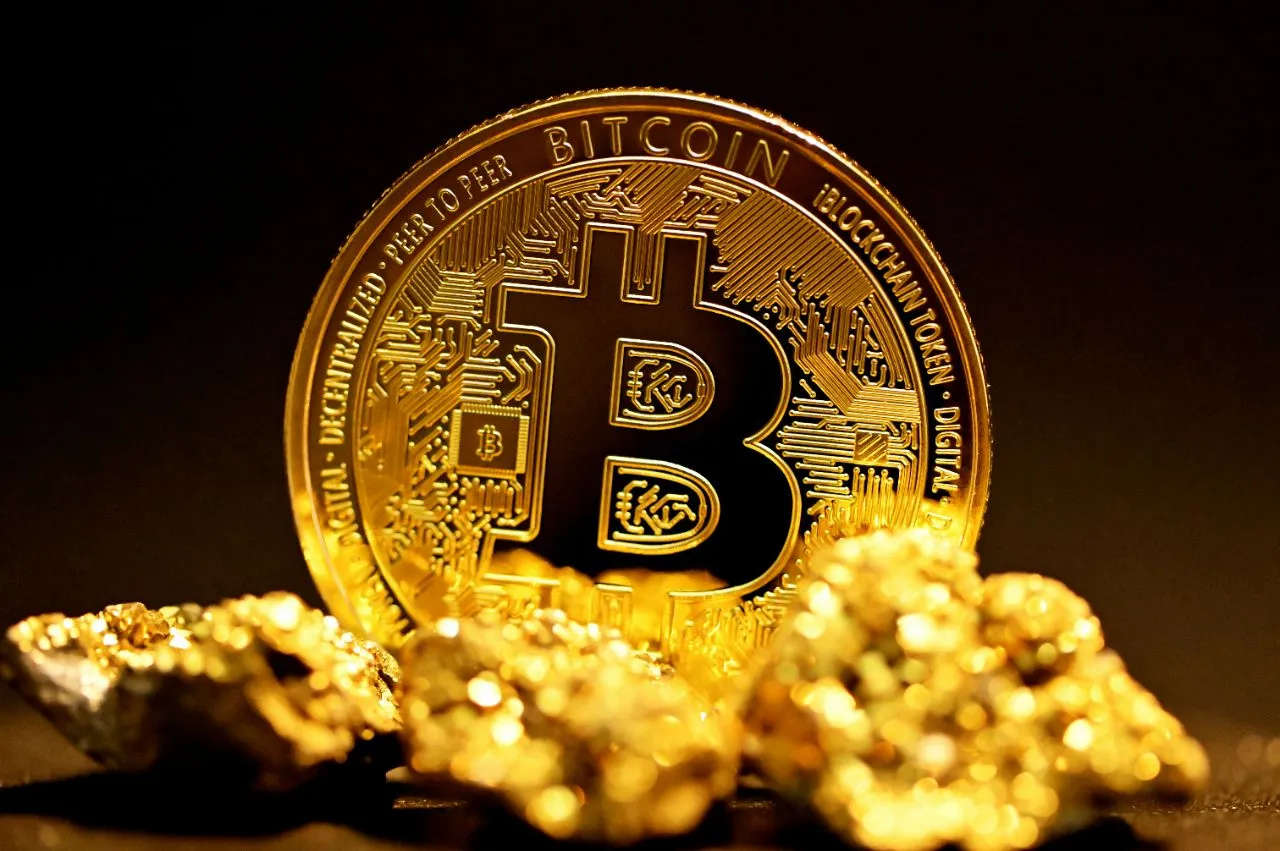
https://asset.coinness.com/en/news/3f3ce969e67b88cb49bd1d08d944995a.webp
Photo by Kanchanara on Unsplash

Reflecting Bitcoin price dynamics

The product has been listed on the Astana International Exchange (AIX) and has been assigned the ticker “BETF.” In announcing the offering, Fonte claimed that the ETF “aims to accurately reflect the price dynamics of bitcoin, striving to achieve this performance before fees and fund obligations.”

Shares in the ETF are listed in U.S. dollars, with the fund having a “non-exempt” classification, meaning that it can be offered to a broad range of investors, including non-qualified retail investors. Each ETF share will be fully backed by Bitcoin, with Fonte having partnered with BitGo for digital asset custody. 


Delivering institutional-grade access

Taking to social media, BitGo described the product offering as a “new era for digital assets” in Kazakhstan. The company asserted that through what it termed “U.S.-regulated cold storage,” the new fund is delivering institutional-grade access to Bitcoin within the region for the first time.


Fonte pointed out that the fund “provides investors with a regulated and secure way to include Bitcoin in their investment portfolios without the complexities associated with holding and transferring the underlying asset.”


This isn’t the first Bitcoin-related product that the AIX has listed. Back in 2021, it listed iX Bitcoin Exchange Traded Notes, with special purpose company iX Bitcoin SPC Limited acting as the note issuer. 


The product differs from the Fonte ETF in that it is backed by shares of ProShares Bitcoin Strategy ETF, a future-based ETF first listed on the New York Stock Exchange (NYSE) in 2021. In comparison, Fonte’s product has the advantage of being directly backed by Bitcoin.

The ETF’s backers have pointed out that there are further implications for the ETF’s shareholders. As the product is regulated by the AIFC, Fonte asserts that within that jurisdiction, holders of the product’s shares are protected from the potential reach of international sanctions. In this regard, the product offers further protection as it is not dependent upon overseas issuers. 


Overall, the AIFC has played a key role in the development of crypto within Kazakhstan over the course of the last few years. In 2023, it awarded crypto exchanges Bybit and Binance approval to trade within the Central Asian nation. 


Binance subsequently launched a local crypto exchange platform in Kazakhstan, achieving full licensing in October 2024. In June of this year, the authority granted its first license for the issuance of a fiat-backed stablecoin. 


It emerged recently that Kazakhstan is working towards the establishment of a national crypto reserve, with the administrators of the country’s sovereign wealth fund expressing the desire to commence investment in crypto assets.

More to Read
View All
Policy & Regulation·

Sep 22, 2023

Busan’s Digital Asset Exchange to Transform the City into a Global Financial Hub

Busan’s Digital Asset Exchange to Transform the City into a Global Financial HubBusan, the southern port city in South Korea, has unveiled an extensive plan for the creation of the Busan Digital Asset Exchange. The primary aim of this initiative is to establish a blockchain-based exchange that facilitates the trading of a wide range of valuable assets, including raw materials, precious metals, intellectual property rights, and carbon emission rights, all through tokenization.Photo by Joseph Pradipta on UnsplashDecentralized governance modelThis planned exchange will operate under a decentralized governance model, where separate entities will handle depository and settlement, listing assessment, and market monitoring. Such a governance framework is designed to ensure checks and balances and enhance investor protection. Busan is committed to providing both administrative and financial support for the establishment of these entities.The roadmap for this plan was presented yesterday at Busan City Hall by Mayor Park Heong-joon and the Busan Digital Asset Exchange Establishment Promotion Committee.The committee was introduced by the city in December of last year, and since then, it has been crafting specific plans. This committee is led by former lawmaker Kim Sang-min, who is recognized as an expert in blockchain policy.Operator selection processThe legal operator for the exchange is slated to be launched within this year. Starting from the middle of the upcoming month, the city of Busan will initiate an application-based process to find an exchange operator and intends to finalize the selection by November.The operator will be entirely funded through private contributions. Companies possessing blockchain technology and the capability to construct an exchange system will form a consortium to partake in the project and operate the exchange. The city of Busan will support the founding and operation of the exchange in accordance with the ordinance.Diverse asset tokenizationShould everything proceed as planned, the exchange is set to commence operations next year. It will tokenize and support the trading of items that pass through the Port of Busan, including gold, silver, copper, crude oil, and ammonia. Additionally, a marketplace will be developed to trade intellectual property (IP) rights, such as films, and carbon emission rights. Particularly, there are plans to broaden the spectrum of tradable items to include virtual assets and security tokens.In contrast to traditional stock exchanges that utilize home trading systems (HTS), the upcoming digital asset exchange will run on blockchain, which is immune to hacking and forgery. Users can trade their assets directly without intermediaries and benefit from reduced transaction costs.Highlighting blockchain as a pivotal technology in the era of the Fourth Industrial Revolution, Kim Sang-min, the chair of the committee, expressed that Busan will develop its digital asset exchange to set a global standard in the field.Mayor Park resonated with this perspective, emphasizing that in this age of digital transformation, Busan will leverage this opportunity to position itself as a global financial hub.

news
Policy & Regulation·

Apr 26, 2024

Crypto.com indefinitely delays South Korea launch following on-site inspections

Crypto.com, one of the world's largest cryptocurrency exchanges, has indefinitely delayed its service launch in South Korea after the country's financial regulators conducted an on-site inspection on the exchange. The inspection came after the country’s Financial Intelligence Unit (FIU) under the Financial Services Commission detected data that appeared to violate anti-money laundering (AML) compliance requirements from the documents submitted by Crypto.com, according to local media Segye Ilbo. This decision came just six days ahead of its planned launch, originally scheduled for April 29.  The exchange has secured a virtual asset service provider (VASP) license by acquiring the local trading platform called OkBit in June 2022. A VASP license allows a digital asset exchange to operate in Korea.  Photo by Leeloo The First on PexelMitigating ‘Kimchi Premium’ effect Crypto.com initially planned to launch a mobile app featuring cryptocurrency trading on April 29, targeting South Korean retail investors. The platform aimed to differentiate itself from other local competitors by offering crypto assets at reasonable prices, mitigating the so-called Kimchi Premium effect, as announced in a press conference on April 2. The Kimchi premium refers to relatively high crypto prices in the Korean market compared to other foreign markets, which is prevalent in Korea’s major licensed crypto exchanges. The effect often results in Korean investors buying crypto assets at higher prices than those on other global crypto exchanges such as Binance. This is likely where the concerns for AML violation come up, financial experts assume, as the platform’s strategy could facilitate arbitrage during operation.  Crypto.com remains committed to Korea launch In a statement sent to CoinDesk, a spokesperson of Crypto.com said, “Crypto.com maintains the highest Anti-money Laundering standards in the industry. We will postpone our launch and take this opportunity to make sure Korean regulators understand our thorough policies, procedures, systems and controls, which have been reviewed and approved by major jurisdictions around the world.”  The person also mentioned that South Korea is a difficult market for global crypto exchanges to enter, but still emphasized the company’s commitment to cooperating with local regulators.  “OkBit maintained approximately 900 customers at the point of acquisition by Crypto.com, and OkBit has never been cited for any AML infractions. Since the acquisition, existing OkBit customer access has been limited to withdrawals,” the spokesperson said. 

news
Policy & Regulation·

Aug 26, 2023

Hong Kong Regulator Explores Tokenization to Transform Bond Market

Hong Kong Regulator Explores Tokenization to Transform Bond MarketThe Hong Kong Monetary Authority (HKMA), the local regulator within the Chinese autonomous territory, unveiled the outcomes of its Project Evergreen study on Friday. Within the report, it indicated an interest in harnessing tokenization in order to improve aspects of the bond market.Photo by Jimmy Chan on PexelsBond market impact assessmentIn this comprehensive report, the regulator delved into the intricate world of bond tokenization, offering an in-depth assessment of its potential impact on the market. The 24-page report covers a range of insights, spanning use cases and benefits to the challenges encountered during the study. The overarching sentiment emerging from the study paints tokenization as a compelling avenue for enhancing the bond market’s functionality.Eddie Yue, the Chief Executive of HKMA, emphasized that the study underscored the latent potential of integrating distributed ledger technology (DLT) into real capital market transactions, all within the framework of Hong Kong’s existing legal structure. In addition, the research revealed the prospect of DLT elevating efficiency, transparency, and liquidity within bond markets.Highlighting efficienciesThe report highlighted that the digital nature of tokenized bonds has the power to render paper certificates obsolete, ushering in an era of streamlined processes and diminished errors. Moreover, the study emphasized the capacity for various stakeholders to seamlessly interact via a shared DLT platform, fostering an environment of collaboration. Real-time data synchronization would ensure heightened transparency, a crucial factor in modern financial markets.Furthermore, the report identifies that a standout feature of tokenization lies in atomic delivery versus payment (DvP) settlements for bond transfers. This innovation serves to significantly expedite the settlement process while bolstering the case for end-to-end DLT adoption.That said, the report acknowledges the nascent state of bond tokenization. Yue emphasized that a plethora of challenges must be overcome before mass adoption becomes viable. The HKMA official underscored the necessity for regulatory frameworks to evolve alongside technology adoption.These insights arrive at a time when Hong Kong is carving its niche as a haven for crypto and decentralized finance endeavors. A multitude of enterprises are believed to be queuing up for a coveted Hong Kong crypto license, underscoring the city’s rising stature in the digital finance sphere.July saw Hong Kong’s announcement of a partnership with Saudi Arabia, focusing on tokenization and payments. Additionally, the HKMA is actively exploring the establishment of a regulatory framework for the digital Hong Kong dollar and stablecoins, heralding a commitment to the distributed ledger technology (DLT) application. An imminent seminar with industry stakeholders is planned, aimed at introducing DLT technology and fostering its adoption.Arthur Chan, HKMA Assistant Chief Executive, anticipates wider DLT integration, envisioning reduced settlement times for bond issuances and instantaneous settlement through tokenized cash and smart contracts. He acknowledges the evolving nature of DLT platforms, acknowledging the need for further research and development. However, Chan envisions a future where tokenization extends beyond bonds, potentially encompassing securities, real estate, and mortgage products.

news
Loading