Top

Thailand plans to enable tourists to spend crypto

Policy & Regulation·May 29, 2025, 5:27 AM

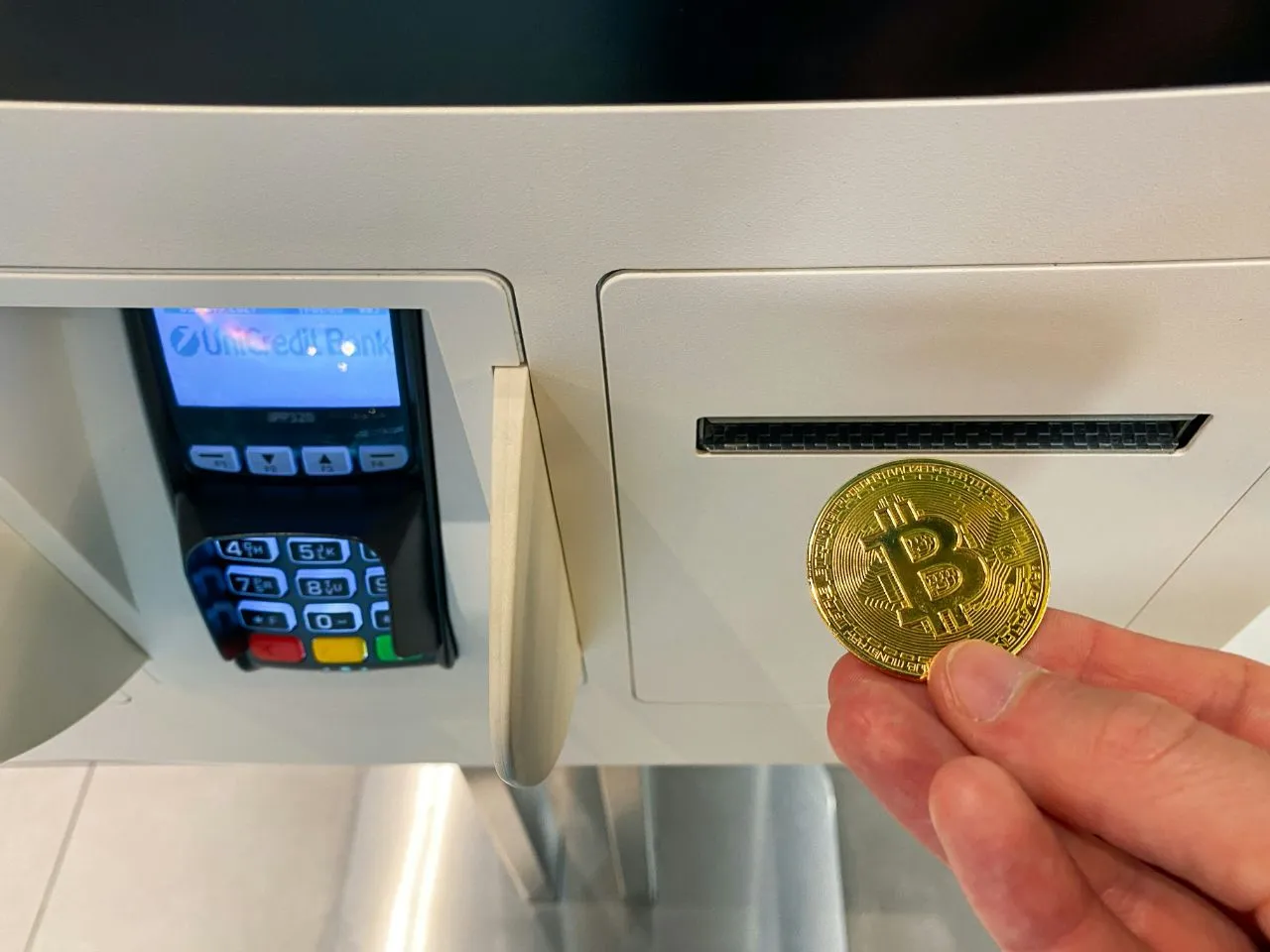
The Thai government is planning to enable tourists to spend crypto via credit card, according to information revealed by Thailand’s finance minister on May 26.
https://asset.coinness.com/en/news/6f1ef91bbb685b21725ae76f1c130e8c.webp
Photo by rc.xyz NFT gallery on Unsplash

Pichai Chunhavajira, the Southeast Asian nation’s finance minister and deputy prime minister, delivered a keynote speech at an investment seminar in Bangkok in which he outlined that while some countries enable people to purchase goods directly with cryptocurrency, another option is to allow consumers to link their digital assets with other services such as credit cards. 


In that way, the consumer can spend crypto through credit card services. English language news outlet The Nation reported that Chunhavajira confirmed that the government is preparing to launch a pilot project that would allow tourists to spend crypto in this manner within Thailand.


Seamless conversion from crypto to fiat

With this system, merchants would still receive payment in Thai baht. From the point of view of the user, crypto could be spent but any exchange between crypto and fiat currency would happen seamlessly and automatically via the credit card service provider’s platform.

Discussions between officials from the Bank of Thailand and the Ministry of Finance are ongoing with regard to the proposed scheme. It’s understood that similar existing models which have been introduced overseas are being examined.


It’s likely that the pilot program is the same as the project that was announced by Chunhavajira in January when he alluded to a program enabled for foreign tourists visiting the Thai tourist resort of Phuket.


At that time, it was envisaged that the scheme would adhere to existing legal frameworks and implicate identity verification through a third party service provider, with conversion from crypto to Thai baht to be enabled such that there would be no material difference experienced by merchants.


Targeting tourists

This is not the first occasion in which tourists have been targeted by crypto-related initiatives. Earlier this month, it was announced that Binance Pay, a crypto payment service offered by global crypto exchange Binance, had partnered with the government of the Buddhist kingdom of Bhutan to launch the world’s first national-level crypto tourism payment system.


In July 2024, the governor of Jeju Province in South Korea advocated for the use of non-fungible tokens (NFTs) and crypto as part of Jeju Island’s tourism strategy. Last December the province announced a digital transformation roadmap that sets out a cashless future. Plans include the introduction of a system for converting digital assets and facilitating payment methods from neighboring countries like China and Japan.


However, not all governments have been keen to facilitate tourists in spending crypto. In May 2023, the governor of the province of Bali in Indonesia cautioned foreign visitors to the region against the use of cryptocurrencies as a means of payment for goods and services. Governor Wayan Koster warned that visitors using cryptocurrency for payments could face severe consequences, including criminal penalties and deportation.

More to Read
View All
Policy & Regulation·

Jan 27, 2024

China advances digital yuan adoption in Beijing, Shanghai and Hong Kong

Chinese authorities are unveiling new strategies to expedite the integration of the digital yuan in selected districts in Beijing and Shanghai, with a separate initiative furthering cross-border use of the e-CNY with Hong Kong.Photo by Yigang Zhou on UnsplashPudong New AreaAccording to the Xinhua news agency, the Chinese authorities have introduced an extensive reform initiative for Shanghai's Pudong New Area, which is scheduled to span from 2023 to 2027. This five-year plan, issued by the Chinese Communist Party Central Committee and the General Office of the State Council, aims to position the Pudong District as a leader in modernization. The reform plan places a strong emphasis on the pilot implementation of the digital yuan across various sectors in Pudong. As part of the plan, Pudong will be granted new authorities to evolve into an international hub. Key aspects of the reform include the integration of digital yuan into trade settlement, e-commerce payments, carbon trading and green power trading. This move is expected to standardize and broaden the application scenarios of the digital currency. Beijing's ‘Digital Yuan Adoption Demonstration Zone’Simultaneously, a member of the Beijing Municipal Committee and Hong Kong Professionals Association president, Fung Kwok-yau, has advocated for the swift progress of Beijing's "Digital Yuan Adoption Demonstration Zone." In a recent interview, Fung suggested expanding the digital yuan's application by installing e-CNY terminals in local stores at popular tourist destinations, malls and shopping districts. Fung acknowledges challenges in promoting the digital yuan, including late entry into the contactless payment market, high user acceptance barriers and difficulties in sustaining subsidies. To overcome these challenges, Fung recommends that culture and tourism departments take the lead in popularizing the concept of central bank digital currency (CBDC) and educating the public on digital yuan usage. To encourage small and medium-sized merchants already using digital yuan terminals, Fung proposes providing incentives to help consumers understand and use the currency. He emphasizes the need for a regular promotion mechanism and measures such as electronic consumption coupons to boost citywide adoption. PBoC cross-border e-CNY pilotIn a related development, the People's Bank of China (PBoC) plans to expand its cross-border digital yuan pilot in Hong Kong. Deputy Governor Xuan Changneng expressed the intention to deepen the cross-border e-CNY pilot to enhance convenience for businesses in both Hong Kong and mainland China. According to a social media post from Chinese news outlet Caixin, the PBoC will collaborate closely with the Hong Kong Monetary Authority (HKMA) to introduce new policy measures, including financial services and cooperation initiatives to drive CBDC adoption. Areas of cooperation between PBoC and HKMA include providing support for institutions participating in the pilot, increasing convenience for digital yuan users, expanding the number of Hong Kong-based banks handling e-CNY and exploring new digital yuan-powered cross-border remittance services for micro-payments. The goal is to develop digital yuan services that align more closely with the habits of Hong Kong residents and promote interoperability with Hong Kong payment systems. The PBoC aims to make further progress in key scenarios such as cross-border e-commerce and education. 

news
Policy & Regulation·

Jul 21, 2023

Myanmar Government in Exile Backs Crypto Bank Launch

Myanmar Government in Exile Backs Crypto Bank LaunchMyanmar is on the cusp of a financial revolution as the National Unity Government (NUG), the country’s exiled shadow government, introduces the Spring Development Bank (SDB), a crypto-based financial institution.With a mission to bestow long-awaited financial freedom and digitized sophistication upon the nation’s citizens, the SDB aspires to reshape Myanmar’s financial landscape.Built on PolygonThe bank derives its name from the Spring Revolution, an opposition movement that bravely challenges the ruling military junta. The goal of the SDB is to bring “freedom and democracy to the 55 million citizens of Myanmar,” a lofty ambition that reflects the NUG’s determination to empower its people through innovative means.Constructed on the Polygon Network, the SDB aims to revolutionize domestic and international payments, making them faster and more efficient. But the bank’s vision extends beyond just payments. Following a recent press conference, bank officials revealed plans to offer a diverse range of financial products, including fixed deposits, currency exchange services, cross-country remittances, and even digital gold savings options.Reaching the Burmese diasporaNotably, the SDB’s reach extends beyond Myanmar’s borders to the two-million-strong Burmese diaspora residing abroad. This diaspora frequently sends money back to their homeland, but the current remittance fees can soar as high as 30%. The bank intends to alleviate this burden, reducing the costs associated with sending money back to Myanmar.The Spring Development Bank operates under the licensing and regulation of the Interim Central Bank of Myanmar, which is under the control of the NUG. U Calvin, the bank’s CEO, emphasized that this launch marks the initial step towards restoring financial independence to Myanmar.The bank’s emergence comes amid Myanmar’s complex relationship with cryptocurrencies. While there is no specific legislation addressing cryptocurrencies, the Central Bank of Myanmar issued a ban on them in 2020, and the military junta later proposed a cybersecurity law that criminalized their usage in January 2022.Photo by Dan Gold on UnsplashJuly soft launchA soft launch of the SDB is scheduled for July 22, with 1,000 private beta users and 100 relationship managers. The bank expects to achieve a full launch in late August, with the goal of attracting 100,000 active users within the first six months of operation.Despite these regulatory challenges, Myanmar’s people have turned to cryptocurrencies as an escape from their dire financial situation. Since the February 2021 coup, the country’s economy has suffered significantly, with the World Bank estimating an alarming 18% annual contraction. Fading trust in the traditional banking system, controlled by the military, has further crippled the financial market.The Myanmar kyat (MMK) plummeted to an all-time low of 2,200 against the US dollar (USD) in September 2021, down from 1,330 in February 2020 (currently 1 USD = 2,100 MMK).The SDB’s arrival signals a glimmer of hope amidst these trying times, offering a beacon of financial opportunity for the citizens of Myanmar. With the support of the NUG, the bank is looking to take an innovative approach to better serve Burmese citizens, both at home and abroad.

news
Web3 & Enterprise·

May 02, 2023

Alchemy Pay Enables Rupee Payments Through UPI

Alchemy Pay, a Singapore-based platform that supports fiat to crypto purchases across 173 countries using Visa, Mastercard, regional mobile wallets and domestic transfers, has announced that it now provides a rupee-denominated on-ramp using India’s UPI real-time payments system.Photo by rupixen.com on UnsplashIn a recent blog post, the fiat to crypto payments solutions provider outlined that it now has the capacity to more effectively on-ramp India’s 1.4 billion citizens by enabling domestic transfer payments to effect crypto purchases through the Unified Payments Interface (UPI), a popular instant payments system in India. Processing domestic transactionsThe move means that Indian citizens can interact with the platform by way of simple, real-time domestic transfers, with a minimum purchase value of 1250 INR. First introduced in 2016, UPI has been wildly successful. In September 2022, the system recorded a monthly transaction volume of 6.7 billion transactions, representing a movement of $140 billion.The platform has partnered with 358 banks and continues to grow and expand its network. In Alchemy Pay’s home territory of Singapore, UPI has recently secured an integration with PayNow, a Singaporean secure funds transfer service. Referring to the PayNow/UPI integration in its blog post, Alchemy Pay is likely to be extending its UPI-based transfer service as a direct consequence.The payments facilitator claims that its plugin is “now being used by many wallets, DeFi, gaming and NFT marketplaces, as well as exchanges like OKX and LBank.”The Alchemy Pay platform has focused in particular on emerging regional real-time payments platforms. Within emerging markets it supports similar systems such as Pix, SPEI, GCash, Dana and OVO. As the Singaporean start-up puts it, ”simplifying the on-boarding process is crucial for the widespread adoption of cryptocurrencies and by enabling local payment options, Alchemy Pay makes the adoption by a growing number of users possible.”Off the back of this expanded service offering, the company is currently inviting developers of Web3 platforms and dApps to get in touch so as to enable them in adding its plugin and integrating its API. Importance of bridging crypto with fiatIn another blog post on Monday, Alchemy Pay underscored the importance of an ability to on/off ramp to and from the crypto ecosystem. The company points out that in its recent history, the crypto space has been a complex and intimidating environment to enter or exit to/from the conventional world. It claims to be playing its part in changing this.According to the firm, its available options of transferring fiat currency to a user’s credit card, savings card or bank account via SWIFT, IBAN or local bank transfer is far more seamless than what has been offered to crypto space participants up until now. These transfers can be effected in minutes, with the platform supporting 22 currencies and payouts facilitated in over 60 countries.The digital assets space doesn’t exist in a vacuum. Current generations were all born into fiat-based monetary systems and naturally enough, the overwhelming majority of wealth is tied up within traditional systems.While digital assets have garnered quite a bit of attention over the course of the past few years, the overall market capitalization of crypto, which stands at $1.2 trillion at the time of publication according to cryptocurrency data aggregator CoinGecko, is only a drop in the bucket by comparison with the wealth that exists within the conventional system. More seamless bridging in line with what Alchemy Pay is offering will be necessary for this space to have a realistic chance of conquering mass market adoption.

news
Loading