Top

SGX to list Bitcoin perpetual futures in H2

Web3 & Enterprise·March 13, 2025, 8:21 AM

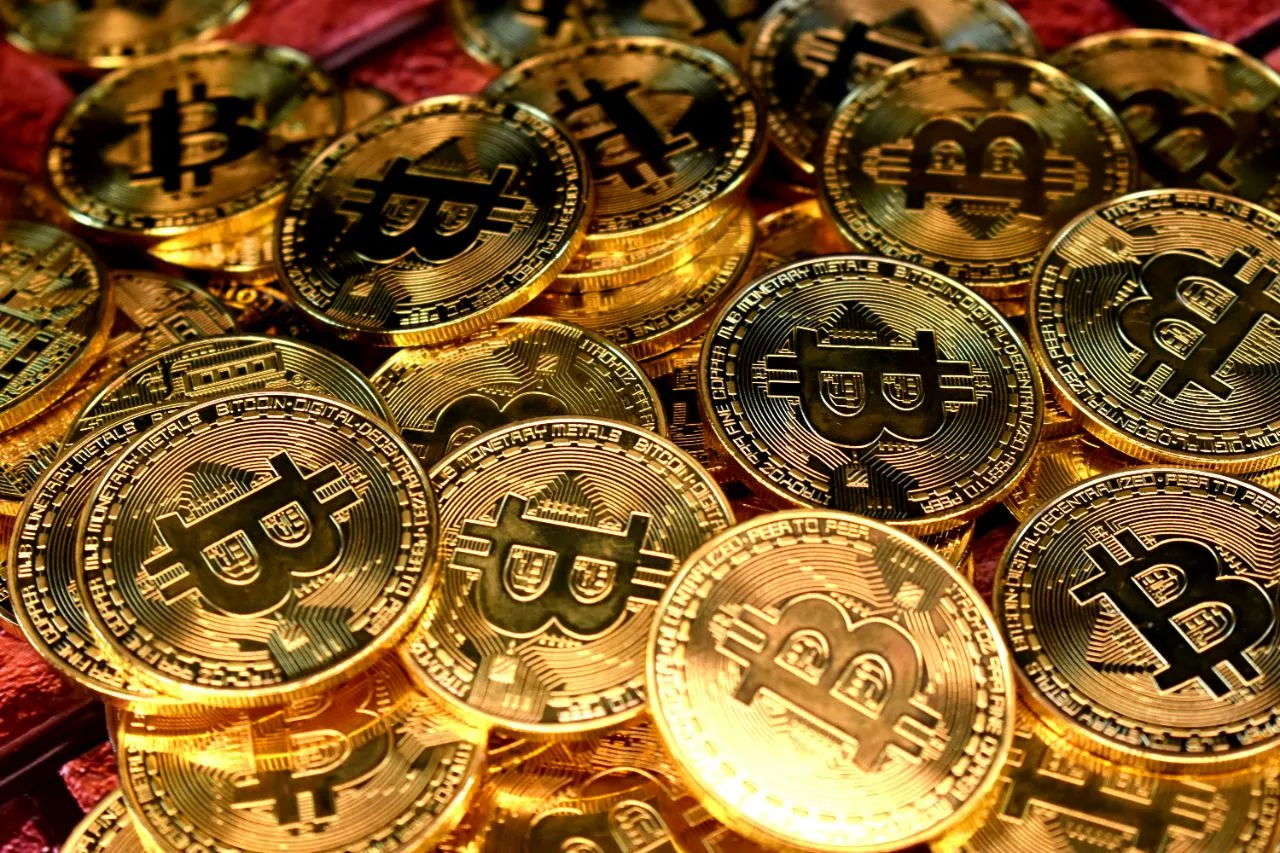
Singapore Exchange Limited (SGX), the city-state’s primary asset exchange, is in the process of establishing Bitcoin perpetual futures trading on the platform.
https://asset.coinness.com/en/news/df33c6d2d3dd1561e10b71712e87a852.webp
Photo by Kanchanara on Unsplash

Institutional product offering

According to a report published by Bloomberg earlier this week, the exchange platform intends to launch Bitcoin futures sometime during H2 2025. The product launch will be subject to regulatory approval from the Monetary Authority of Singapore (MAS).


A spokesperson for the company told Bloomberg that the product offering will be geared exclusively towards institutional investors and traders in an effort to “significantly expand institutional market access.” Retail access to the product will be prohibited.


Once launched, these Bitcoin perpetual futures contracts, being offered through a traditional finance (TradFi) outfit like SGX, will help to blur the lines between TradFi and the emerging crypto sector.


Perpetual futures have no expiry date. They offer a means for traders to bet on price changes in an underlying asset while doing away with the need to take ownership of the asset itself.


Cautious approach

SGX has been cautious in listing crypto assets and derivative products. Last year the firm’s CEO, Loh Boon Chye, said that the time was not yet right for such listings. 


His concern back then was that any such product launches would need “sustainable ecosystem support,” adding that “that means demand, that means governance, that means structure.”


While spot Bitcoin exchange-traded funds (ETFs) had been approved in the United States at that point, there has been much further development in the crypto-sphere since then, following the election of a pro-crypto administration in the U.S. That event has had knock-on effects globally.


Singapore’s SGX isn’t the only traditional exchange platform to respond. Japanese futures exchange, the Osaka Dojima Exchange (ODEX), is gearing up to file an application with the Financial Services Agency (FSA) to list a Bitcoin futures product later this month.


Closer to home, an American digital asset marketplace that focuses on institutional trading, EDX Markets, has plans to introduce Bitcoin perpetual futures products to the Singaporean market, according to a report which emerged in January. In May 2024, EDX launched EDXM Global, a settlement platform, in Singapore.


This product launch by SGX serves the purposes of decision-makers in Singapore, who have been trying to position the city-state as a digital asset industry hub. Additionally, the move will bring greater acceptance of the digital assets sector from traditional market participants.


Crypto perpetual futures contracts were first pioneered by crypto derivatives exchanges like BitMEX back in 2016. Since then, other crypto-native platforms like Binance and OKX have offered these products.


In the case of unregulated offshore exchanges, the products have proven to be controversial, as at times, they have been used in a manner that has exposed market participants to counterparty risk. Failed crypto exchange FTX, together with its sister company Alameda Research, relied on the products in their trading activities.


SGX, as a seasoned, regulated TradFi operator, which holds an Aa2 rating from Moody’s, is likely to prove to be a more palatable option for institutional players.

More to Read
View All
Policy & Regulation·

Jan 17, 2024

OKX expands Middle East presence through Dubai license approval

OKX Middle East Fintech FZE, the Dubai-based subsidiary of cryptocurrency exchange OKX, announced on Tuesday that the company has successfully obtained a Virtual Asset Service Provider (VASP) license from the Dubai Virtual Assets Regulatory Authority (VARA), signaling its entry into the Middle East market.Photo by David Rodrigo on UnsplashNon-operational licenseThis newly acquired license positions OKX Middle East to offer spot services and spot pairs to institutional and qualified retail customers in the region. However, it should be noted that the operational aspect of the license is pending. The company stated that it will remain non-operational until all remaining conditions and select localization requirements are fully satisfied, a process anticipated to conclude in the coming weeks. Once operational, OKX Middle East will have the green light to provide regulated VASP services, facilitate AED deposits and withdrawals and introduce spot trading pairs. The move, outlined in a blog post published by the company, comes months after the subsidiary received a preparatory license from VARA, underlining its commitment to complying with regulatory standards and expanding in the Middle East. Rifad Mahasneh, the general manager for the MENA Region at OKX, expressed optimism about the region's potential, stating: "The MENA region holds immense potential to become a hub of excellence for Web3 and virtual assets. We eagerly anticipate the chance to further enhance the already flourishing ecosystem throughout the region." Global hubThis strategic move aligns with the United Arab Emirates' (UAE) goal to establish itself as a global hub for the cryptocurrency industry. VARA, formed in March 2022, was tasked with regulating the emerging virtual asset sector in Dubai. The regulatory framework gained momentum when Sheikh Mohammed bin Rashid Al Maktoum, Dubai's prime minister and ruler, approved a new virtual assets law in March 2022, providing a legal foundation for the crypto industry in the city. Dubai's proactive stance towards regulating the cryptocurrency industry has attracted several major players, including Crypto.com, Ripple, Binance and Bybit, all securing crypto licenses from Dubai's regulator. OKX Middle East joins the likes of TOKO FZE and Trek Labs Ltd FZE in obtaining a license for exchange services. Tim Byun, the Global Head of Government Relations at OKX, emphasized the significance of this license in the company's journey towards a trustless system. "This license was a crucial step for OKX as we move from a trust-based system to one that is trustless and empowers users to take control of their financial future," he stated. Byun expressed excitement about contributing to the development of Dubai's crypto and Web3 ecosystem, highlighting the importance of the market. It's noteworthy that OKX, already regulated in the Bahamas, currently restricts customers from the United States due to regulatory issues. The expansion into the Middle East represents a strategic move for OKX to tap into the growing crypto market in the region and aligns with the broader trend of cryptocurrency exchanges expanding their global footprint. 

news
Web3 & Enterprise·

Nov 06, 2023

Web3 firm AIITONE rebrands as BU Technology, adding new business objectives

Web3 firm AIITONE rebrands as BU Technology, adding new business objectivesAIITONE, a Web3 and military technology firm located in South Korea, announced on Monday (local time) that it has rebranded and will now be known as BU Technology.Photo by Steve Johnson on UnsplashElectric trains, batteries as new objectivesDuring an extraordinary general meeting of shareholders on October 5, the company formerly known as AIITONE announced a change in its corporate identity to BU Technology. This rebranding coincides with an expansion of the company’s business objectives to include the manufacturing of electric trains, batteries and charging devices. With this move, BU Technology aims to diversify its sources of revenue.The meaning behind ‘BU Technology’BU Technology, which stands for “Beyond Your Technology,” embraces the motto “Beyond Your Today, Beyond Your Expectation, Beyond Your Imagination.” This slogan reflects the company’s ambition to be a forward-thinking tech enterprise that exceeds the expectations and imaginations of its customers.BU Technology applies extended reality (XR) technology to develop computer-based training (CBT) programs and simulators for military use. It’s also ventured into creating content for industrial safety that uses augmented reality (AR) and virtual reality (VR) technology. This content is recognized for its technical quality, notably in replicating realistic effects, including sound, wind and physical sensations.The fresh corporate identity and resolve of BU Technology are also anticipated to make a positive impression on its operations in the Middle East. Earlier this year, the company inked a memorandum of understanding (MOU) with the Royal Private Office of His Highness Sheikh Ahmed Bin Faisal Al Qassimi in the United Arab Emirates (UAE). This agreement is directed at strengthening the fintech sector across South Korea, China and Japan.Additionally, in September, BU Technology successfully launched a proof-of-concept (PoC) platform tailored for the blockchain-based security token projects of securities and financial firms. This PoC platform enables the testing and demonstration of the viability and operational processes related to security token ventures.Lee Jin-yeop, CEO of BU Technology, said that the rebranding effort is aimed at enhancing the company’s brand value and introducing a fresh image for the firm. He further emphasized that BU Technology is committed to advancing the three foundational pillars of its business: military applications, XR and blockchain technology.Lee stated that incorporating new business objectives is a strategy for diversification, intended to elevate the company’s overall value. He also expressed his commitment to steering the newly rebranded BU Technology towards becoming a frontrunner in the Web3 era.

news
Policy & Regulation·

Sep 22, 2025

Hong Kong zeroes in on tokenization as corporate crypto holdings climb

Hong Kong–listed companies are stepping up digital-asset bets as the city sets out a clearer rulebook, a sign that tighter oversight and new market rails are starting to unlock institutional demand.Photo by Ruslan Bardash on UnsplashCorporate moves signal rising appetiteBoyaa Interactive International has been adding Bitcoin (BTC) to its treasury, with the latest acquisition of 411 BTC bringing its total holdings to 4,091 BTC. The gaming company has said it will direct 90% of a planned $56.3 million rights issue into Bitcoin. Yunfeng Financial raised HKD 1.17 billion, or about $150 million, through a new share issuance and plans to use part of the proceeds to launch cryptocurrency trading and investment management services. The firm is associated with Yunfeng Capital, which was co-founded by Alibaba founder Jack Ma, and has previously outlined plans to accumulate BTC, Ethereum (ETH), and Solana (SOL). These moves land alongside a policy reset from the top. In his annual address on Sept. 17, Chief Executive John Lee reaffirmed Hong Kong’s goal of cementing its position as an international hub in finance, including digital assets, while pairing that ambition with stronger investor safeguards. Tokenization and blockchain testbedThe centerpiece is Project Ensemble, run by the Hong Kong Monetary Authority (HKMA). The initiative is building infrastructure for a tokenized market and operates a sandbox where institutions can test blockchain systems in live business settings. Priorities include tokenized bank deposits, settlement of tokenized assets such as money market funds, and standardized issuance of government tokenized bonds. Regulation is advancing in parallel. The government is preparing legislation for a licensing regime that covers stablecoin issuers as well as digital-asset dealing and custody providers. The Securities and Futures Commission is studying an expansion of products for professional investors, with tougher protections baked in. The regulator plans to use automated reporting and data surveillance to curb misconduct. Authorities also intend to deepen cross-border cooperation to combat tax evasion. Banking rules are set to shift as well. The HKMA has circulated draft guidance that would ease capital requirements for certain crypto exposures in line with Basel standards through a new policy module called CRP-1. Under the proposal, assets issued on permissionless blockchains could qualify for lower capital charges when issuers demonstrate effective risk management. Hong Kong aims to implement the international rules by early 2026.Publicly traded BTC treasury firms in China Source: BitcoinTreasuries.NETAdoption amid constraintsNot every institution will join the build-out. Mainland policies may constrain participation, according to Caixin. Chinese digital platforms, state-owned enterprises (SOEs), and financial entities operating in Hong Kong could face limits on stablecoin and other crypto activity. Branches of several SOEs and Chinese banks are also unlikely to seek a Hong Kong stablecoin license. Corporate adoption remains broad despite those headwinds. Publicly traded Bitcoin treasury companies in China and Hong Kong hold a combined 19,280 BTC, according to BitcoinTreasuries.net. Several appear among the top 50 public corporate holders worldwide, including Next Technology Holding (16th), Cango (18th), Boyaa (24th), Nano Labs (48th), and Ming Shing Group (50th). The tally points to rising regional interest in digital assets. Publicly traded BTC treasury firms in Hong Kong Source: BitcoinTreasuries.NET

news
Loading