Top

MiCA may force crypto firms into Middle East relocation

Policy & Regulation·September 30, 2024, 7:30 AM

The European Union (EU) introduced its Markets in Crypto Assets (MiCA) regulation in June of last year, refining the EU bloc’s stance relative to digital assets. However, one crypto sector entrepreneur believes that the regulatory framework may force crypto startups to relocate to the Middle East.


In an interview with Cointelegraph, Anastasija Plotnikova, co-founder and CEO of Fideum, a blockchain infrastructure company geared towards institutions, outlined that the application of this regulatory framework by EU member states may have some unintended consequences.

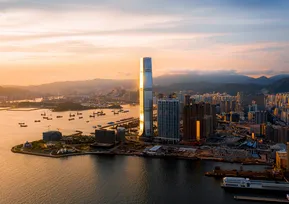
https://asset.coinness.com/en/news/0eb75054e7d7b080823cfad2519a43ba.webp
Photo by Christian Lue on Unsplash

Centralization concerns

While Plotnikova welcomes the legitimization of crypto through regulation as a net positive for the sector, she warns that this particular regulatory framework could lead to consolidation among crypto firms. That would mean a reduction in the overall number of Web3 enterprises in Europe and as a consequence, increased risk of centralization in an industry that is supposed to be all about decentralization.


Whilst the regulatory framework was introduced last year, it's not due to go into full effect until Dec. 30, 2024. Plotnikova believes that the framework doesn’t give crypto startups the wriggle room to scale whereas in the case of larger entities with much more assets under management, they will find it much easier to scale.


French multinational financial services company Societe Generale, an entity with around $160 billion worth of assets under management and 126,000 employees, stands out as an example. It recently announced that SG Forge, a subsidiary company, would partner with Austrian crypto exchange Bitpanda to issue and list its EUR ConVertible (EURCV) euro-denominated stablecoin.


Another European TradFi behemoth, Landesbank, Germany’s largest federal bank, announced earlier this year that it will launch crypto custody services.


Global competition

Speaking to the publication on the margins of the European Blockchain Convention in Barcelona earlier this week, Plotnikova stated:


“I'm afraid it will lead to consolidation between European and American companies, and they will just move somewhere to the Middle East. The European Union had has done amazing things in harmonising legislation, but enforcement comes down to local and national authorities and they vary greatly.”


There’s no doubt that various world centers and regions have been competing to varying extents to become innovative hubs relative to the development of blockchain-based enterprises. Plotnikova alluded to Europe losing out to the Middle East in this instance and principal among those nations in the region vying for a share of the business has been the United Arab Emirates (UAE). 


The UAE itself, together with individual emirates such as Abu Dhabi and Dubai, has been putting in place a regulatory framework relative to crypto that has been broadly praised by the crypto sector. As recently as earlier last week, the Dubai regulator continues to fine tune its regulatory framework, tightening up requirements related to the marketing of crypto products and services.


A recent report by Chainalysis found that the Middle East region accounted for 7.5% of global crypto trading volume, with the UAE and Saudi Arabia having been found to demonstrate a strong interest in decentralized platforms.
 

More to Read
View All
Web3 & Enterprise·

Feb 03, 2024

3AC-founded OPNX Exchange announces closure

In a recent announcement OPNX, the Seychelles-incorporated cryptocurrency bankruptcy claims platform co-founded by the creators of the now-defunct hedge fund Three Arrows Capital (3AC), has revealed its decision to cease all operations.Photo by Kelly Sikkema on UnsplashFebruary 14 shutdownIn a message to its users, subsequently shared on social media on Thursday, the OPNX team expressed its commitment to ensuring an orderly closure, urging users to settle all positions by Feb. 7 and withdraw their funds from the platform before Feb. 14, as all withdrawal functionality will be disabled thereafter. The team expressed gratitude to the OPNX community, acknowledging their dedication and trust throughout the platform's existence. Short for "Open Exchange," OPNX served as both a hybrid bankruptcy claims platform and a crypto exchange, enabling users to trade creditor claims of bankrupt crypto companies. The origin of OPNX can be linked to two defunct crypto entities — Coinflex and 3AC. Seychelles-based Coinflex was a crypto yield platform that was forced to suspend withdrawals in June 2022. It subsequently entered into a bankruptcy process. Coinflex co-founder Mark Lamb joined forces with 3AC’s Kyle Davies and Su Zhu to found OPNX. In October, Coinflex creditors sued Lamb, alleging that he had appropriated Coinflex's intellectual property, customer base, employees and technology to establish OPNX. Mired in problemsWithin its short existence, OPNX has been mired in problems. From the very outset, there was little goodwill for the new venture, given that many crypto sector participants took a dim view of Zhu and Davies due to the turmoil the collapse of 3AC caused within the industry. In April of last year, OPNX claimed to have significant venture capital backing, only for many of the VC entities mentioned to quickly deny such claims subsequently. The following month, the local regulator in Dubai, the Virtual Assets Regulatory Authority, formally reprimanded the OPNX founders for promoting an unregulated business within the Emirate of Dubai. In August, it emerged that VARA had hit OPNX and its founders with a hefty fine. Following the closure announcement, the native OX token of OPNX experienced a significant price decline. Over the course of the past 24 hours, the token unit price has fallen 13.6% to $0.007981. The failure of 3AC led to Teneo, the firm responsible for liquidating 3AC's assets, subpoenaing Zhu and Davies for concealing details of their physical whereabouts through messages on social media platform X. The closure of OPNX adds to the challenges faced by Zhu and Davies, as Teneo is actively seeking to recover $1.3 billion directly from the co-founders. The claim asserts that Zhu and Davies engaged in substantial leverage with investor funds after the insolvency of their hedge fund. In September 2023, Singapore's central bank issued nine-year prohibition orders against Davies and Zhu, citing alleged violations of the country's securities laws at Three Arrows Capital. All the while, crypto community sentiment remains negative where OPNX and its founders are concerned. Taking to social media, Ikigai Asset Management’s Travis Kling didn’t mince his words, stating:”I mean it from the bottom of my heart when I say **** these criminals.” As OPNX concludes its operations, the unfolding events surrounding its co-founders and their association with the failed hedge fund continue to draw attention to the need for the industry to raise its standards.  

news
Web3 & Enterprise·

Jul 31, 2023

Strategic Shift Sees Wintermute Expand Singapore Base

Strategic Shift Sees Wintermute Expand Singapore BaseCrypto market maker Wintermute is making a strategic shift towards Asia, specifically in Singapore, following the digital asset industry’s growing interest in the region’s growth opportunities.Photo by Hu Chen on Unsplash4% of staff moving to SingaporeIn an interview with Bloomberg last week, Wintermute Co-Founder Yoann Turpin said he will move from London, where the company is currently headquartered, to Singapore in the coming months. Additionally, approximately 4% of the company’s workforce, which currently comprises around 85 staff members, will also relocate to the city-state, where Wintermute conducts its derivatives business.At the time of publication, the company was also actively recruiting for an open position in the city-state. In further publicizing Wintermute’s developing presence in Singapore, Turpin took to social media recently to invite people to meet Wintermute’s Singapore-based team in September at Token 2049 Singapore. Evgeny Gaevoy, Wintermute Co-Founder and CEO, is scheduled to appear as a speaker at the event.Turpin emphasized the company’s focus on Asia and highlighted the significance of having a co-founder based in the region to drive the business forward. The move comes as the crypto industry faces the aftermath of a crackdown in the United States, triggered by bankruptcies at platforms like FTX and Celsius Network.Exploring global opportunitiesIn response, crypto businesses are exploring opportunities in Asian markets, with countries like Singapore, Hong Kong, Japan, and the United Arab Emirates vying to attract companies while ensuring robust regulatory frameworks in the wake of the market turbulence in 2022.Although tokens like Bitcoin and Ether have partially recovered from the crash experienced last year, spot digital-asset trading volumes and volatility have remained low, indicating reduced investor engagement. That said, demand for crypto futures and options has proven to be more resilient.Possible Dubai expansionWintermute established an office in Singapore in 2021, adding to its existing base in London. Turpin also confirmed to Bloomberg that the company is weighing up the possibility of establishing a third office in Dubai as part of its expansion plans. Dubai, like Singapore and Hong Kong, has been actively trying to attract crypto businesses over the course of the past twelve months.During the 2021 crypto bull market, the company reported trading volume worth $1.5 trillion and generated $1.05 billion in revenue. However, the market maker also faced challenges during the market turmoil, including exposure to around $55 million of assets on FTX. Moreover, in September of the same year, Wintermute experienced a hack that resulted in a loss of about $160 million from its decentralized finance operations.Despite the hurdles faced in 2022, Turpin expressed confidence in the company’s resilience and stated that they do not have immediate plans to raise funds. The company just celebrated six years in business, and has executed 8.4 million OTC trades over the course of the past twelve months.By relocating key personnel and expanding its presence in Singapore and possibly Dubai, the company aims to strengthen its foothold in the Asian market and navigate the challenges and opportunities that lie ahead.

news
Web3 & Enterprise·

Jul 22, 2023

McDonald’s Enters the Metaverse with McNuggets Land

McDonald’s Enters the Metaverse with McNuggets LandMcDonald’s, the global fast food giant, has ventured into the metaverse realm to commemorate the 40th anniversary of its beloved Chicken McNuggets, with McDonald’s Hong Kong spearheading the immersive experience.McNuggets Land, a virtual world situated within the metaverse platform The Sandbox, now welcomes enthusiastic players to embark on a quirky adventure filled with pixelated McNugget characters like “Coach McNugget” and his trusty sidekick, “Assistant Coach McNugget.” The project team behind The Sandbox laid out the details of the initiative via a blog post published on Medium on Thursday.In this novel virtual landscape, players are tasked with the mission of locating four McDonald’s signs, sparking excitement for the rewards that await. Among the enticing incentives are a shared prize pool of 100,000 SAND (approximately $44,000) and enigmatic “mystery boxes.” SAND is the native token of The Sandbox virtual world.Photo by Jas Rolyn on UnsplashCustomer engagement challengesThe CEO of The Sandbox, Sebastien Borget, expressed enthusiasm for collaborating with global brands like McDonald’s to drive mass adoption of the metaverse. The Sandbox has already witnessed the presence of several prominent brands like Adidas, Atari, and Gucci within its virtual world. Comparatively, it might be challenging for McNuggets Land to carve out a distinctive niche to capture enduring user engagement.Numerous brands have attempted whimsical activations within metaverses over the years, from Snapple’s virtual bodega to Taco Bell’s metaverse wedding. However, the fundamental question arises when virtual food or drink experiences are introduced — what’s the point when you can’t taste or smell in the metaverse?Bear market & regulatory setbacksMoreover, the timing of brands entering the Web3 space may be subject to scrutiny. With venture capital money flowing toward AI and Disney closing its metaverse ventures, the Web3 landscape faces a more challenging environment in 2023. The ongoing crypto winter and Securities and Exchange Commission (SEC) crackdowns have somewhat dampened the allure of these activations, making it imperative for brands like McDonald’s to offer a compelling “why” for their Web3 endeavors.Starbucks has been experimenting with its Web3 loyalty program called “Odyssey,” which ties in seamlessly with its customers’ real-world coffee purchases. This strategic approach aligns virtual rewards and digital collectibles with existing behaviors, giving added value to their regular activities. In doing so, Starbucks fosters a sense of community and gains valuable feedback for future improvements, ensuring a more sustainable and purposeful presence in the Web3 space.Formative developmentWhile McDonald’s McNuggets Land in the metaverse may excite some players with its whimsical charm, the bigger question remains: What value does it truly bring to the participants, and how does it ensure a lasting impact? In a rapidly evolving Web3 landscape, success lies in offering meaningful experiences that align with users’ existing behaviors and aspirations, fostering genuine engagement and community-building.We are still at a stage where consideration of the metaverse in terms of what it is, what it represents, and what experience users can or should glean from it is still formative. It remains to be seen as to the extent to which Mcdonald's will be successful in this instance, but it is encouraging that they’re brave enough to get involved with the innovation.

news
Loading