Top

StashAway opens access to Fidelity crypto ETFs in Malaysia

Markets·February 03, 2025, 5:26 AM

StashAway Malaysia, a Malaysian Securities Commission (SC)-licensed digital investment platform, has extended its market offering to include crypto exchange-traded funds (ETFs) within the Southeast Asian nation.


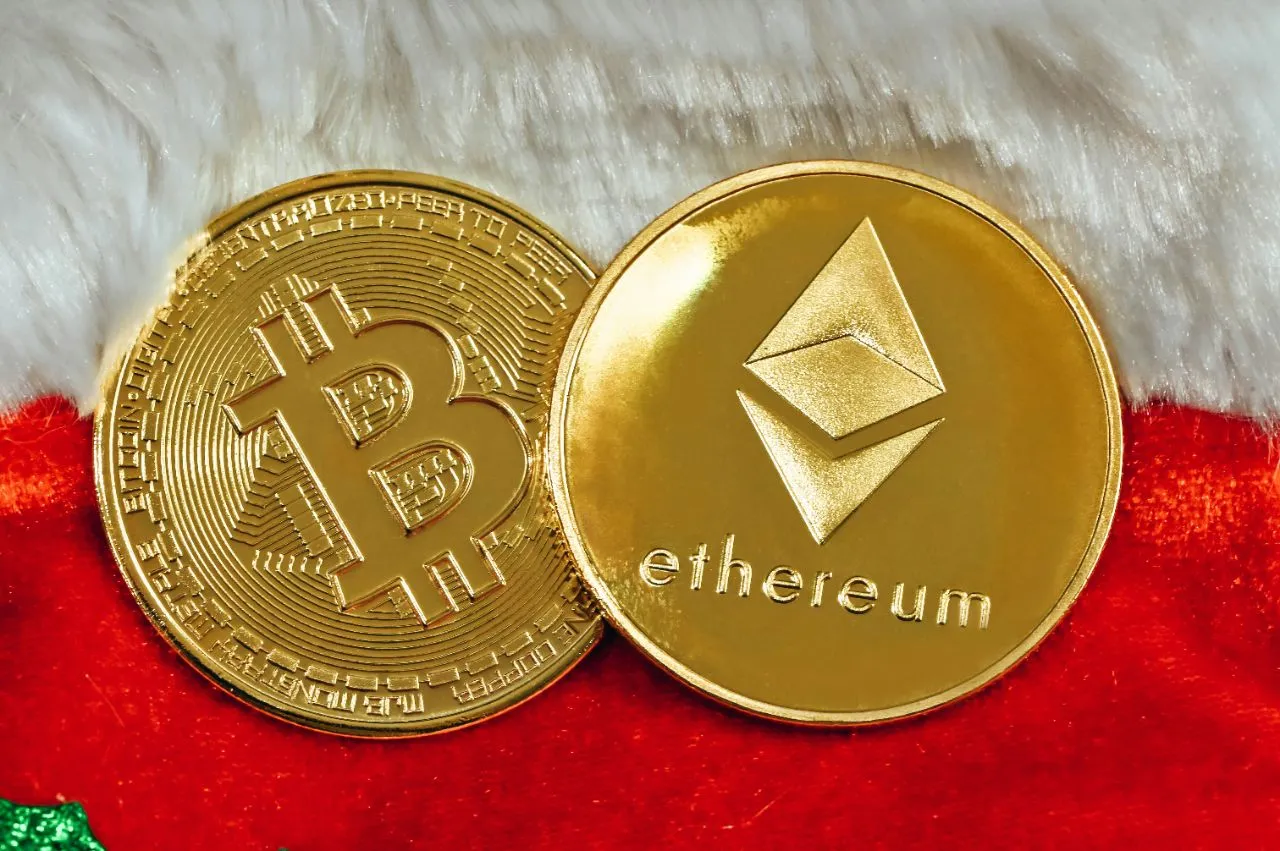
Malaysian daily English language newspaper the Sun reported on Jan. 22 that StashAway will enable Malaysians to invest in two top-tier cryptocurrencies, Bitcoin (BTC) and Ethereum (ETH), through its regulated platform.
https://asset.coinness.com/en/news/b3d65b012b23087826b8fa26858e0fd8.webp
Photo by Traxer on Unsplash

Fidelity products

The company is providing its Malaysian clientele access to crypto investment products offered by American multinational financial services company Fidelity Investments. These include the Fidelity Wise Origin Bitcoin Fund (FBTC) and the Fidelity Ethereum Fund (FETH).


StashAway Malaysia Country Manager Wong Wai Ken explained the company’s rationale in adding the two products. He stated:


“Many of our clients have expressed interest in the long-term potential of major cryptocurrencies like Bitcoin but have been hesitant because of security concerns or the complexities of navigating crypto exchanges. We’re now offering them a familiar and safe way to diversify their portfolios by incorporating crypto through a platform they already know and trust.”


On a previous occasion, Wong told the Sun that its role is to help investors to diversify their portfolios. Adding access to cryptocurrency fits that objective. The StashAway executive believes that while there may be growing mainstream adoption of cryptocurrency, many investors are turned off gaining exposure due to the risks involved with self-custody or the fees and counterparty risk involved with cryptocurrency exchanges.


StashAway charges management fees ranging from 0.2% to 0.8%. The Fidelity crypto ETF products will be offered with a 0.25% annual management fee. 


Last June, Malaysian commercial bank Affin Bank became the first entity to offer a crypto ETF in Malaysia. The bank partnered with local fund management company Cross Light Capital to launch the actively managed digital asset fund. Titled the “Performa Digital Asset Fund,” the product incorporates investment in Bitcoin and Ether exchange-traded products (ETPs), with the remaining third invested in blockchain-related equities.


The approval of eleven Bitcoin ETFs in the United States led to greater consideration for the approval and addition of such products internationally. However, in the first few months following the launch of these products, regulators, exchange platforms and asset management firms still remained cautious. 


In March of last year, Bursa Malaysia, Malaysia’s stock exchange, dismissed the notion of adding cryptocurrency to its multi-asset exchange. Within the region, regulators in Singapore and Thailand both dismissed the idea of enabling Bitcoin ETFs within their markets. 


Since then, Thailand’s regulator has moved closer in its consideration of such a product offering. In the case of Malaysia, earlier this month, the country’s Prime Minister, Datuk Seri Anwar Ibrahim, called for stakeholders such as the central bank to focus on cryptocurrency so that the Southeast Asian nation doesn’t get left behind.


StashAway is headquartered in Singapore. Besides Singapore and Malaysia, the company also serves investors in Thailand, the United Arab Emirates (UAE) and Hong Kong. The digital platform has 50,000 users in Malaysia, where it serves retail and accredited investors. The company was the first robo-advisor platform to acquire a Capital Markets Services License from the SC in Malaysia.


More to Read
View All
Policy & Regulation·

Jul 18, 2024

Hong Kong advances to prepare stablecoin legislation

Financial regulators in Hong Kong are moving towards the presentation of stablecoin legislation following the completion of a consultation process. In February of this year, that consultation process, which received 108 submissions from professional bodies and industry stakeholders, was completed. It was run jointly by The Financial Services and the Treasury Bureau (FSTB) and the Hong Kong Monetary Authority (HKMA), culminating in the publication of the results of the process.Photo by Pat Whelen on UnsplashLegislative proposal publishedOff the back of that prior body of work, the regulators have now published a legislative proposal, incorporating responses to issues that were brought to light via the consultation process. The regulators concluded that going forward, stablecoin regulation should be considered primarily in terms of those stablecoin assets which operate on a ledger which runs on a decentralized basis. Additionally, no individual or unilateral entity should have the ability to tamper with or control those assets or the network upon which they exist. On this basis, the regulators intend to submit a bill relative to fiat-referenced stablecoins for consideration to the Legislative Council at a later stage in 2024. Before submitting any legislative proposal, the regulators plan to once again consult with stakeholders prior to finalizing any such proposal. As part of what they have set out thus far, regulators are looking to include a requirement for any stablecoin issuer to obtain a license in Hong Kong.  Reserve asset requirementsThey remain open to the idea that reserve assets backing an issued stablecoin could be held in an overseas jurisdiction. However, if the issuer is an overseas entity, it will be required to establish a local corporate entity in Hong Kong, with relevant management personal based within the Chinese autonomous territory. In light of feedback received during the consultation process, the regulator is looking at reducing the attestation frequency that each stablecoin issuer will be required to provide via an independent auditor in order to verify that the stablecoins issued are backed by the requisite amount of liquid assets.  Such reserve assets must be segregated from the working capital of the stablecoin issuer’s business, with the HKMA expressing a preference for a trust-like structure following input via the consultation process. Furthermore, reserve assets must be deemed to be both high quality and highly liquid, which would include cash, bank deposits and government issued securities where counterparty risk is minimized. On the basis that the Hong Kong dollar is pegged to the U.S. dollar, the regulator is content to allow issuers to use USD-denominated reserve assets if they prefer to do so. The legislative proposal also stipulates the need for issuers to have a minimum share capital of HK$25 million or 1% of the value of stablecoin in circulation.  The HKMA foresees crypto exchanges, securities firms and regulated banks having the ability to offer stablecoins to customers, so such offerings won’t be confined to dedicated stablecoin issuers.Back in March the HKMA introduced a stablecoin sandbox with a view towards learning what works best from a regulatory standpoint. It’s understood that a list of participants will be announced in the near future. Participating entities will be able to issue stablecoins in Hong Kong within that controlled sandbox environment, prior to full scale implementation once stablecoin regulation has been fully legislated for.

news
Policy & Regulation·

Oct 20, 2023

Regulatory Caution Among Asian Nations Amid Reports of Illicit Financing

Regulatory Caution Among Asian Nations Amid Reports of Illicit FinancingWith a plethora of reports of crypto-related terrorist financing having been published in recent weeks, it’s understood that Asian nations may be looking to exercise caution when it comes to the current ongoing process of establishing regulatory guidelines for crypto.That’s according to a report published by the South China Morning Post (SCMP) on Thursday. The use of cryptocurrency by Hamas to fund its attack on Israel is being seen as the catalyst that may drive authorities in various Asian nations to take a more cautious approach to regulating digital currencies, according to analysts cited by the publication.Raj Kapoor, the founder of India Blockchain Alliance (IBA), commented on these recent developments, stating:”It is a kick on the backside for most governments. All regulatory bodies will take a closer look at crypto regulation. Governments will need to start implementing new rules and regulations.”At the recent G20 summit held in New Delhi, a joint declaration called for the regulation, supervision, and oversight of crypto assets, among other measures. The declaration emphasized the importance of supporting “a coordinated and comprehensive policy and regulatory framework.”Kapoor stressed the importance of revisiting the declaration and developing solutions to implement its objectives.Photo by Adolfo Félix on UnsplashRenewed scrutinyEvents in Palestine in recent weeks have led to renewed scrutiny when it comes to monitoring illicit financing activity via cryptocurrency. Only days following the recent Hamas attack, Israeli authorities moved to freeze specified crypto accounts.That scrutiny has continued in recent days, with more accounts having been frozen on crypto platforms such as Binance, while more still have been identified as suspicious, with requests for further information having been submitted in respect of over 200 additional accounts.On Wednesday it emerged that the United States Treasury’s Office of Foreign Assets Control (OFAC) had sanctioned a Gaza-based crypto platform.Potential over-reactionWhile crypto-related terrorist financing has been widely publicized, blockchain analytics firm Chainalysis warned on Wednesday that crypto’s role in this illicit activity has likely been overstated. In its blog post on the subject, the firm stated:“Although terrorism financing is a very small portion of the already very small portion of cryptocurrency transaction volume that is illicit, some terrorist organizations raise, store, and transfer funds using cryptocurrency.”Additionally, Chainalysis stated that it had seen “overstated metrics and flawed analyses of these terrorist groups’ use of cryptocurrency.” Peter Van Valkenburgh, Director of Research at non-profit crypto advocacy group Coin Center, also believes that reporting on the matter is not balanced. Taking to X, he stated:“Sensational early reporting on the scale of Hamas crypto fundraising significantly misstated the amounts involved.”Coin Center’s Director of Communications, Neeraj Agrawal, highlighted an article which claimed that crypto “fueled Hamas’ terror attack on Israel” in its title, only to reveal within the body of the article that “cryptocurrency is still far from the largest funding source for terrorism.”Anndy Lian, a Singapore-based author and inter-governmental blockchain adviser, noted that while some countries may consider banning cryptocurrencies as a solution, this could merely drive illicit financing underground and make it more challenging to trace and halt. Lian argued that cryptocurrencies are traceable and trackable, unlike traditional fiat currencies like US dollars.

news
Web3 & Enterprise·

Jun 09, 2023

OKX Burns $244M $OKB in Record Exchange Token Supply Cut

OKX Burns $244M $OKB in Record Exchange Token Supply CutSeychelles-headquartered OKX, the world’s second largest cryptocurrency exchange, has conducted its largest-ever burn of its exchange token, $OKB, according to on-chain data.Approximately 5.5 million OKB tokens, equivalent to around $244 million, were removed from circulation. This record-breaking burn represents a significant milestone for OKX, surpassing the previous burns conducted since the monthly program’s inception.The burn was valued at approximately $258 million when calculated based on a 90-day average price, as reported by OKX. Chinese reporter Colin Wu highlighted that this burn marked another significant milestone in terms of the value of OKB tokens burned.Taking to Twitter on Thursday, Wu wrote: “The OKX exchange carried out the 20th OKB repurchase and burning on June 8, with a total of about 5.5 million OKB, or about 244 million US dollars, which once again set a new record for the value of OKB burning. OKX previously stated that it will burn OKX according to the seasonal market and operating performance, but has not disclosed the specific rules.”Photo by Jens Mahnke on PexelsBuy-Back & Burn program$OKB is described by OKX as a “global utility token issued by the OKX Blockchain Foundation,” offering holders various benefits such as discounts and exclusive access. The global exchange initiated the first Buy-Back & Burn program in May 2019. Since then, it has burned a total of 64,042,314.70 tokens as part of that ongoing burning process. Despite this significant development, the price of OKB has remained relatively stable, experiencing a slight increase of 0.29% on OKX. At the time of publication, the token was trading at a unit price of $44.97.Exchange token concernExchange tokens have recently garnered attention following the United States Securities and Exchange Commission’s (SEC) lawsuit against global crypto exchange Binance. The SEC has levied charges related to the sale of unregistered securities, resulting in a steep decline of nearly 15% in the value of Binance’s exchange token, BNB, over the past week.That scrutiny is likely to have followed the collapse of Bahamas-based cryptocurrency exchange FTX in November. At that time, it became apparent that the exchange was using its exchange token, $FTT, to prop up the business. FTX had issued $FTT tokens and used them as collateral, a dangerous act given that exchange tokens have no real-world asset backing and limited token utility.As the crypto market continues to face regulatory scrutiny and legal challenges, the burn of $OKB by OKX stands as a noteworthy event within the industry. The burn not only reduces the supply of $OKB tokens but also underscores OKX’s commitment to managing and enhancing the value of its exchange token. Market participants will undoubtedly monitor the implications of this burn and how it may influence OKB’s future performance in the evolving cryptocurrency landscape.Exchanges like OKX are likely to carefully manage the supply levels of exchange tokens, given market perceptions in relation to the extent of the utility of such tokens, the scrutiny of regulators, and the problems caused in over-extending supply in the case of other exchanges in the past.

news
Loading