Top

Former Binance CEO advising Kyrgyzstan on blockchain & crypto

Policy & Regulation·April 07, 2025, 2:25 AM

Binance co-founder and former CEO, Changpeng Zhao (CZ), has partnered with the authorities in the Central Asian republic of Kyrgyzstan to provide advice on crypto regulation and the development and adoption of blockchain technology.


It’s understood that CZ has signed a memorandum of understanding (MOU) to this effect with the National Investments Authority (NIA), a state authority that falls under the direction of the President of the Kyrgyz Republic. The NIA promotes foreign direct investment, assisting foreign companies in developing business opportunities within Kyrgyzstan. 
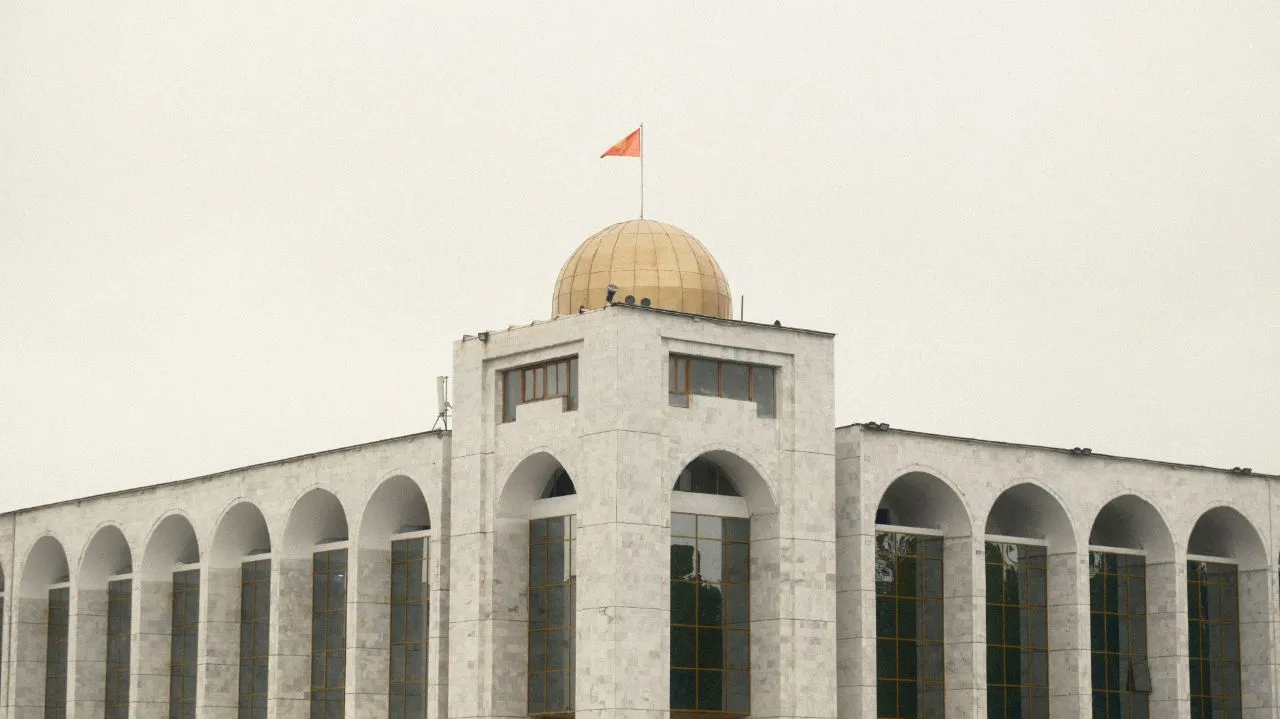
https://asset.coinness.com/en/news/3592a5bd8529dae70ba8c03b135cc96e.webp
Photo by Abai K on Unsplash

Crypto & blockchain ecosystem development

In a statement published on X on April 3 by the President of the Kyrgyz Republic, Sadyr Zhaparov, the president outlined that in accordance with the MOU, the parties will cooperate on the development of the crypto and blockchain ecosystem.


Breaking that down further, the president said that this cooperation will involve the provision of technical, infrastructural and technological support and expertise. Additionally, it will involve collaboration towards the implementation of related educational initiatives. Zhaparov added:


“This cooperation marks an important step towards strengthening technological infrastructure, implementing innovative solutions, and preparing highly qualified specialists in blockchain technologies, virtual asset management, and cybersecurity. In light of the rapid global evolution of digital technologies, such initiatives are crucial for the sustainable growth of the economy and the security of virtual assets, ultimately generating new opportunities for businesses and society as a whole.”


‘Crypto adoption one country at a time’

CZ reacted to this X post by the President of the Kyrgyz Republic, stating:


“Kyrgyzstan. Crypto adoption, one country at a time.”


He also remarked that this event had brought Zhaparov to X, given that this was his first post on the platform, with an account registered last month.


Steve Milton, co-founder and CEO of Web3 wallet project Fintopio and a former Binance marketing executive, commented on the development. Milton stated that Kyrgyzstan is a forward-thinking country, while interpreting CZ's involvement as a step that will help move adoption forward.


Additional advisory activity

In another X post, CZ provided details on his advisory activity. He stated:


“I officially and unofficially advise a few governments on their crypto regulatory frameworks and blockchain solutions for gov efficiency, expanding blockchain to more than trading. I find this work extremely meaningful.”


Reports emerged in January that Malaysian Prime Minister Datuk Seri Anwar Ibrahim had discussed digital finance policy matters with CZ. The Binance co-founder said that those discussions revolved around digital asset regulation and risks related to such assets. Furthermore, cross-border collaborations and collaborations between industries were discussed.


In December CZ met with the King of Bhutan. Prior to that visit, he posted a link to an article on X that outlined that the Kingdom of Bhutan has accumulated in excess of $1 billion in Bitcoin. At that time, the Binance co-founder said that many nation states will use Bitcoin and other cryptocurrencies as reserve assets.


In the past, commentators have identified Kyrgyzstan as having considerable potential for crypto mining, given ample hydroelectric generation within the mountainous country. However, crypto mining tax receipts as of the end of last year suggest that crypto mining still remains a niche activity in the Kyrgyz Republic.


More to Read
View All
Web3 & Enterprise·

Nov 17, 2023

Metaworld Global’s Web3-based shopping metaverse to be launched worldwide next month

Metaworld Global’s Web3-based shopping metaverse to be launched worldwide next monthHong Kong-based Metaworld Global’s shopping metaverse, MWCC, is scheduled for global release on Dec. 25. As a Buy-to-Earn (B2E) platform, it is expected to surpass the limitations of traditional online shopping by incorporating a Web3-based online store and offering a unique, rewards-based shopping experience for customers.“This will be a shopping mall that no consumer has ever experienced before,” said Lee Geun-ho, who is in charge of development at Metaworld Global.Photo by Lucrezia Carnelos on UnsplashForging a new digital frontierMWCC aims to become a decentralized commerce ecosystem built together by buyers, sellers and influencers. The ecosystem will run on tokens that can be used across several social settings, thus expanding the scope of cryptocurrency beyond traditional settings. It will also harness various blockchain technologies to create a social media-based consumer network, ultimately handing over digital ownership to shoppers.What also sets MWCC apart is that it will employ a multi-purpose middleware to carry out global-scale commerce activities such as intermediary payment and copyright monetization via NFT marketplaces, among others. Notably, the platform plans to mint high-value, collectible NFTs.Supporting all participants in the shopping processSuppliers within the MWCC network who own manufacturing facilities will be able to export their products to over 200 countries through the platform’s promotion and logistics systems. Sellers can also use social media to sell their products to customers overseas and get their transactions settled in real-time. In turn, these customers can easily purchase Korean products without the hassle that is usually associated with making payments on overseas online shopping sites.“MWCC offers benefits for buyers, sellers and suppliers, which will serve as the base for a new operation system in the digital era,” Lee explained.

news
Web3 & Enterprise·

Aug 07, 2023

NEOPIN Strengthens Japanese Market Strategy for Its Global Expansion

NEOPIN Strengthens Japanese Market Strategy for Its Global ExpansionNEOPIN, the global CeDeFi platform of South Korean investment holding company Neowiz Holdings, announced the strengthening of its strategy to enter the Japanese market as part of its global expansion plan.Photo by Aditya Anjagi on UnsplashThree key initiativesTo achieve this goal, NEOPIN has devised three key initiatives. Firstly, it will make investments in Japanese partners and provide support for their entry into other markets such as Korea, the Middle East, and Africa. Secondly, NEOPIN aims to facilitate the entry of its existing partners into Japan. Lastly, the Korean platform plans to collaborate closely with the Finschia Foundation and its members to effectively drive its expansion efforts in Japan.Web3 landscape in JapanSince the Mt. Gox incident in 2014, wherein the major Tokyo-based cryptocurrency exchange went bankrupt due to hacking attacks, Japan has responded by implementing stricter regulations. However, in recent times, the Japanese government has displayed a more positive stance towards Web3 technology, aiming to attain dominance in this sector. Illustrating this commitment, the Web3 project team, operating under the ruling Liberal Democratic Party’s (LDP) Working Group for Digital Society Promotion, released the Web3 White Paper in April. The document underscores Japan’s determination to lead the global market by fostering a business-friendly environment for Web3 innovation.Moreover, Prime Minister Fumio Kishida recently delivered a keynote speech at Japan’s annual Web3 conference, WebX, reaffirming the government’s dedication to establishing a Web3-friendly ecosystem. These initiatives signal Japan’s potential to contribute to the growth of the cryptocurrency and decentralized finance (DeFi) industry.Adaptation to regulationsNEOPIN’s operator Neowiz Partners, formerly known as NEOPLY, became part of the Innovation Programme of the Abu Dhabi Investment Office (ADIO) in the United Arab Emirates (UAE), with an aim to become the world’s first regulated DeFi platform. It is also working with the Abu Dhabi Global Market (ADGM) to develop a DeFi regulatory framework for the Gulf nation. In a similar vein, NEOPIN strives to respond quickly to the changing regulatory landscape in Japan to ensure the Korean CeDeFi protocol firmly establishes its presence in the Japanese market.In addition to providing direct and indirect service offerings in Japan, NEOPIN will also invest in and partner with local Web3 projects. One significant step taken by NEOPIN was its participation in IVS Crypto 2023, a high-profile Web3 startup event held in Kyoto in June. At this event, NEOPIN engaged with various Japanese businesses, initiating important connections. Since then, the Korean platform has been making progress in advancing communication and collaborations with Japanese enterprises.NEOPIN as blockchain validatorCollaboration with the Finschia Foundation will also be strengthened to achieve success in the Japanese market. In July, the blockchain mainnet Finschia launched its governance consortium and revealed its members. Within just four hours of the consortium’s launch, NEOPIN, as a governance member, received more than 1 million delegated votes, maintaining its position at the top spot in terms of voting power ever since. The Finschia mainnet was established by Line Tech Plus, a blockchain subsidiary of Tokyo-based messaging app giant Line Corporation.Serving as validators on various blockchains, including Ethereum, Tron, Cardano, and Cosmos, since 2017, NEOPIN has acquired blockchain and technical expertise. Last month, NEOPIN launched liquid staking products for ETH and KLAY, making it Korea’s first blockchain project to introduce an ETH liquid staking product. Liquid staking is a mechanism that allows users to deposit their cryptocurrencies into a staking pool, where they receive liquidity provider tokens in exchange. By holding these tokens, users can further redeposit them to earn additional yield.In light of this development, NEOPIN CEO Kim Yong-ki emphasized the CeDeFi protocol’s global expansion strategy, establishing its bases in the UAE, Japan, and Indonesia. These locations will serve as hubs for NEOPIN’s expansion efforts in the Middle East and Africa, Northeast Asia, and Southeast Asia. Kim added that NEOPIN will leverage its physical and human resources to achieve notable outcomes in the Japanese market.

news
Policy & Regulation·

Aug 31, 2024

Global crypto fraud suspect arrested in Istanbul

Accused of one of the world's largest cryptocurrency scams, Andreas Szakacs, a Swedish national who became a Turkish citizen under the name Emre Avcı, was detained in Istanbul. The alleged international fraud scheme, led by Szakacs, began in 2019 under the guise of OmegaPro, a company dealing in forex and cryptocurrency trading. OmegaPro claimed to generate significant profits for its investors through complex financial algorithms and high-risk leveraged trading. The company, registered in opaque jurisdictions like Saint Vincent and the Grenadines and headquartered in Dubai, promised returns as high as 300% within 16 months, attracting investors from across the globe. High-profile endorsements and lavish eventsTo bolster credibility, Szakacs and his partners, including well-known figures in the finance and crypto sectors like Dilawar Singh and Mike Sims, organized extravagant events. These included the OmegaPro Legends Cup, a football tournament featuring former stars like Ronaldinho, Kaka and Iker Casillas, who were branded as OmegaPro ambassadors. The company also sponsored car races and held opulent conferences in luxury hotels, where gifts and prizes were distributed to participants, further enticing new investors. OmegaPro's operations spanned multiple continents, with representatives in countries such as Colombia, Mexico, the UK and Nigeria. Over time, the company claimed to have attracted 1.5 million investors. However, in late 2022, as withdrawals were suddenly halted, suspicions grew. By July 2023, the company had shut down, leaving an estimated three million investors defrauded and $4 billion unaccounted for.Photo by Xiaoyi Huang on UnsplashAs OmegaPro collapsed, investors from around the world began filing complaints. In France alone, over 1,500 victims have initiated a class-action lawsuit. Similar legal actions have been reported in countries including Mexico, Congo and Myanmar. Despite multiple investigations, the whereabouts of Szakacs and his partners remained unknown—until recently. A tip-off leads to arrest in IstanbulThe breakthrough came on June 28, when an anonymous informant tipped off Turkish authorities about Szakacs' presence in a luxury villa in Istanbul's Acarkent neighborhood. Following an investigation, the Istanbul Gendarmerie identified 18 complainants connected to OmegaPro. On July 9, Szakacs was arrested in a raid on the villa, where authorities found 32 cold wallets containing cryptocurrencies, along with extensive documentation related to OmegaPro’s operations. During questioning, Szakacs denied all allegations, claiming that OmegaPro was a legitimate business that went bankrupt in late 2022, resulting in significant losses for him and his partners. He also refused to provide access to the cold wallets and the encrypted data on his devices. Despite his defense, Szakacs was charged with fraud using information systems and detained by the Beykoz Criminal Court of Peace on July 10. Ongoing legal battles and future implicationsAs the investigation continues, authorities are scrutinizing Szakacs' digital transactions, which reportedly involve $160 million in movements over a single month. His legal team argues that investors knowingly took on risks in the forex market, but the sheer scale of the losses—especially the $103 million claimed by a Dutch complainant representing 3,000 victims—has intensified the case. The outcome of this case could set a precedent for how international crypto-related fraud is handled, particularly in an era where digital currencies and high-risk investments are increasingly intertwined. 

news
Loading