Top

Komainu acquires Singaporean digital asset custodian

Web3 & Enterprise·October 23, 2024, 7:56 AM

Jersey-headquartered Komainu, a digital asset custodian backed by Japan’s Nomura Holdings, is in the process of acquiring Propine Holdings, a Singaporean competitor.


Subject to approval

Komainu has signed an agreement in principle with Propine to acquire the company, according to a press release published on Oct. 22 by PR Newswire on behalf of the two firms. One of the key elements in completing the deal is attaining the approval of local regulator the Monetary Authority of Singapore (MAS).


This is Komainu’s first acquisition, and according to the firm’s co-CEO Paul Frost-Smith, it will be the first of several. According to Bloomberg, Frost-Smith stated in an interview that “an absolutely key factor in building” the business is obtaining access to Propine’s Capital Market Services license, which the company was awarded in Singapore. Frost-Smith described the acquisition as "setting ourselves up for the future with a licensed platform that we can grow."


The company intends to further its efforts in terms of compliance by applying for a Major Payment Institution (MPI) license in Singapore. Komainu is motivated in developing in this manner as it has identified increasing demand from established institutions in Singapore for advisory services.
https://asset.coinness.com/en/news/fb56b6e7e4c1ceba773b64dfe542f998.webp
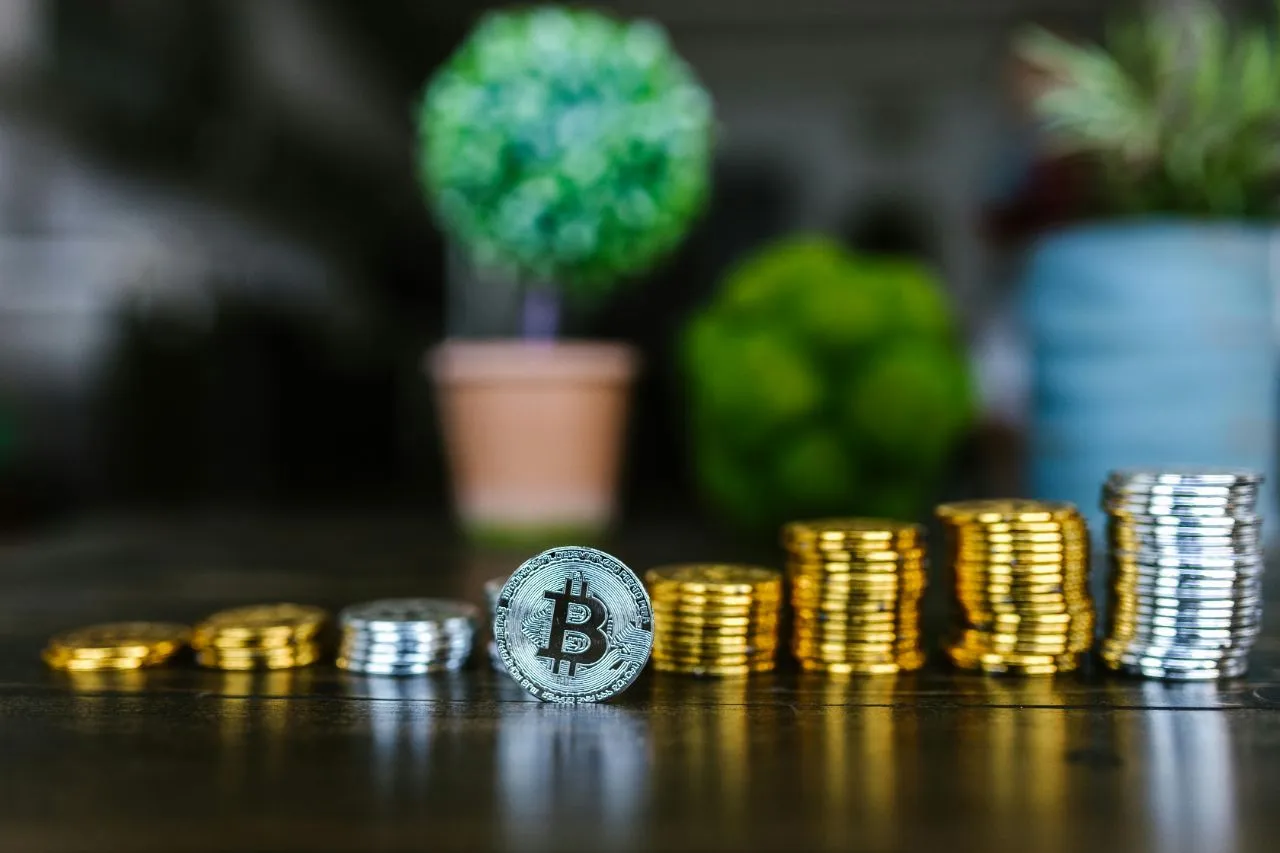
Photo by RDNE Stock project on Pexels

Strategic hub

The Komainu co-CEO said that the Asia-Pacific (APAC) region was central to Komainu’s heritage. With that, he added that Singapore is “an important strategic hub for Komainu in Asia and Propine will enhance our capabilities in meeting the significant client demand we are experiencing, including for Komainu Connect, our collateral management service, which is already extensively utilised by our investor clients in Hong Kong, Singapore, Malaysia, Thailand and Australia.”


Back in August, global crypto exchange platform Bitfinex signed a memorandum of understanding (MOU) with Komainu Connect, with a view towards enhancing trading security. In July Komainu was added by crypto infrastructure firm Fireblocks to its Global Custodian Partner Program.


The Japanese market has been one that Komainu has been focusing on. Frost-Smith asserted that it will serve as a major hub for the company, given that it is home to its primary backer, Nomura. 


In November 2023, the company partnered with Crypto Garage, a regulated Japanese crypto-asset financial services firm. The collaboration extended Komainu’s dealings with the firm, given that it had invested in Crypto Garage’s parent company, Digital Garage, previously. At the time, the companies claimed that the partnership would allow them both to leverage their collective expertise.


Komainu has also been following a regulatory-compliant path in other markets. In the UK, where it’s stationed, it received permission from the Financial Conduct Authority (FCA) to operate as a crypto custodian in October 2023. In August of the same year, it was awarded an operating license by the Virtual Asset Regulatory Authority (VARA) in Dubai.


Alongside Nomura, the company was also established with the backing of digital asset security firm Ledger and digital asset investment manager CoinShares. Earlier this year, Komainu was approved by Nasdaq to be a core custodian relative to its suite of crypto indices. 
More to Read
View All
Policy & Regulation·

Jun 07, 2023

SEC Lawsuit Stalls Binance’s Gopax Acquisition Deal in South Korea

SEC Lawsuit Stalls Binance’s Gopax Acquisition Deal in South KoreaNothing exists in a vacuum, and on that basis, it appears that ripples emanating from the recent lawsuit filed by the Securities and Exchange Commission (SEC) in the United States against global crypto exchange Binance have resulted in the company struggling to complete the acquisition of South Korea’s Gopax.Photo by Daniel Bernard on UnsplashSuspended pending reviewThe acquisition deal between Binance and South Korean crypto trading platform Gopax has hit a roadblock as a direct consequence of the lawsuit. The Financial Services Commission (FSC), the financial watchdog in South Korea, has put the acquisition on hold as it reviews the situation.Binance had acquired a majority stake in Gopax in February, with plans to re-enter the South Korean crypto market after a two-year absence. Gopax is a top five cryptocurrency exchange in South Korea, alongside Upbit, Bithumb, Coinone, and Korbit. However, according to a report by local news media, the FSC has suspended Gopax’s executive change report filed on Tuesday in light of the SEC lawsuit. The report outlined the nomination of three Binance members, including Leon Singh Poong, as inside directors of Gopax.The FSC cited the allegations of securities law violations against Binance and the SEC’s request to freeze Binance.US assets as the reasons for its cautious approach.Gopax revivalThe significance of Binance’s acquisition of Gopax goes beyond its re-entry into the South Korean market. It also aimed to revive the struggling local crypto trading platform. In November 2022, Gopax faced challenges when it suspended withdrawals of principal and interest payments from its decentralized finance service, GoFi, following the collapse of the Bahamas-based FTX crypto exchange and the bankruptcy of Genesis, a US digital assets financial services firm.Digital Currency Group, the parent company of Genesis, was reportedly the second-largest shareholder of Gopax and a key business partner providing the GoFi product. Binance’s acquisition deal intended to inject new capital into Gopax to facilitate customer withdrawals and interest payments for GoFi.The SEC lawsuit against Binance alleges the exchange’s commingling of customers’ funds and violations of various securities laws. The SEC has filed 13 charges against Binance, its subsidiaries, and its CEO, Changpeng Zhao.Acquisition strategyBinance appears to have been pursuing an acquisition strategy in attempting to carve out a greater market share in Asian markets. Binance entered the Japanese market via acquisition in November 2022 when it purchased local crypto platform, Sakura Exchange BitCoin. At the end of last month, Binance announced that it was rebranding the business as Binance Japan and launching it as a stand alone bespoke platform dedicated to the Japanese market.In Thailand, the global crypto exchange has varied its approach, entering into a joint venture rather than a full acquisition. It has partnered with Gulf Innova, with the new entity, Gulf Binance, recently having been awarded a trading license by the Thai regulator.The outcome of the SEC lawsuit and its impact on Binance’s operations in South Korea remains uncertain. The FSC’s review process will consider the allegations against Binance and the implications of the SEC’s actions before making a decision on the Gopax acquisition. The crypto industry will closely monitor the developments as they unfold, as no doubt the saga will have broader implications for Binance and its expansion plans.

news
Policy & Regulation·

Sep 19, 2023

Rising Cryptocurrency Arbitrage Transactions Raise Concerns in South Korea

Rising Cryptocurrency Arbitrage Transactions Raise Concerns in South KoreaThe number of arbitrage transactions between South Korean and foreign cryptocurrency exchanges has been experiencing a notable uptick, according to a report by local media outlet Maeil Business Newspaper.In recent developments, foreign actors engaging in price manipulation have been transferring substantial amounts of cryptocurrency assets to Korean exchanges, driving up prices. Subsequently, they transfer these tokens from Korean exchanges back to overseas platforms, capitalizing on the price discrepancies to generate profits.Photo by Maxim Hopman on UnsplashBithumb’s case in H1According to documents submitted to Kim Hee-gon, a member of the ruling political party People Power Party, on Monday, KRW 3.4 trillion ($2.6 billion) worth of tokens were moved from Bithumb, a leading Korean cryptocurrency exchange, to foreign trading platforms during the first half of this year. Although this figure marks a 40% decrease compared to H1 2022’s KRW 5.7 trillion, primarily due to the significant decline in token prices across the cryptocurrency market, it’s noteworthy that the number of transactions has seen a significant increase.Other exchangesGopax, another major exchange in the nation, recorded token outflows totaling KRW 12.3 billion. On the other hand, Upbit, Coinone, and Korbit, which are also prominent exchanges, declined to provide data due to reasons like confidentiality concerns. However, given that Upbit holds an 82.0% share of the Korean crypto market, nearly four times larger than Bithumb’s share (14.2%), it is suspected that the volume of tokens transferred from Upbit to foreign platforms would likely have followed a similar proportion.While the value of tokens sent from Bithumb to overseas operators saw a year-over-year decrease, the number of transactions surged to 231,302, nearly doubling the figure of H1 2022’s 124,048 transactions. The average transaction size was KRW 14.7 million.Even though the overall enthusiasm for cryptocurrencies might have cooled off since last year, the spike in the number of transactions suggests that there’s been a surge in arbitrage trading between Korea and foreign markets.Kimchi premiumEarlier this month, a significant transaction caught the eye of cryptocurrency market observers in South Korea. On September 1, crypto data analytics firm Arkham identified that 170,000 CyberConnect (CYBER) tokens were transferred to Bithumb from a crypto wallet thought to be owned by DWF Labs, a firm specializing in cryptocurrency trading and investment. The timing of the transaction coincides with a period during which the Kimchi premium for CYBER exceeded 100%. The Kimchi premium refers to the crypto price gap between Korean exchanges and their foreign counterparts.The complicating factor here is that DWF Labs is a foreign entity that is managed by a foreign team.The use of corporate accounts is virtually prohibited in the Korean crypto market. The Travel Rule mandates that any transfers of tokens between Korean and international exchanges must go through accounts that have been verified under Know Your Customer (KYC) guidelines. Given these regulations, there are growing suspicions within the crypto community that foreign venture capitalists may have used accounts in borrowed names to conduct sales on Korean exchanges, which are restricted to Korean citizens. However, it’s worth noting that there is currently no legal basis for taking punitive action even if borrowed-name accounts were indeed used.Lawmaker Kim commented on the limitations of current financial regulations aimed at preventing money laundering in the cryptocurrency market. Despite efforts by financial authorities, including the introduction of the Travel Rule, Kim stated that these measures have not been very effective. He emphasized the urgency of enhancing the regulatory framework to curb potential illicit activities involving cryptocurrencies, such as those exploiting market arbitrage opportunities.

news
Policy & Regulation·

Dec 20, 2023

Internet-only Kbank offers virtual accounts for fractional art investors

Internet-only Kbank offers virtual accounts for fractional art investorsKbank, a neobank based in South Korea, announced on Tuesday (local time) a new service for its customers interested in art investment. According to a report by local news outlet Newsis, Kbank has introduced virtual accounts for clients investing in securities that allow fractional ownership of artworks. These virtual account numbers will mirror the mobile phone numbers of securities subscribers, making them easy to remember and use. Subscribers will utilize these accounts to deposit funds for placing bids on fractional shares of art pieces.Photo by Precondo CA on UnsplashYayoi Kusama’s pumpkinThis unique bidding event, a first in the nation, is scheduled to run until Dec. 22. It will feature “Pumpkin,” a 2001 artwork by renowned Japanese contemporary artist Yayoi Kusama. Artnguide, a platform operated by Yeolmae Company, is managing the event. Yeolmae Company has secured regulatory approval to issue security tokens backed by the artwork.Total of 12,320 sharesThe event offers a total of 12,320 shares, with each share having a par value of KRW 100,000, which is approximately $77. An individual participant in this event is allowed to place bids for a maximum of 300 shares.In the Korean crypto market, Kbank is well-known for providing banking services to Upbit, the nation’s largest fiat-to-crypto exchange. In Korea, legal regulations mandate that any virtual asset service provider offering trading in Korean won must secure bank accounts from a local bank.Kbank’s recent initiative highlights the internet-only bank’s active engagement in the blockchain industry. Presently, Kbank provides its virtual account services to 16 companies, and it is focused on expanding its partnership base. Looking ahead, the bank plans to diversify its financial offerings, exploring innovative approaches like security token offerings to broaden its services in the evolving financial landscape.

news
Loading