Top

Vietnam’s Military Bank to launch the country’s first domestic crypto exchange

Policy & Regulation·August 18, 2025, 12:57 AM

Military Bank (MB Bank), a subsidiary of Vietnam’s Ministry of National Defence and a top-five bank in Vietnam serving 33 million customers, has partnered with South Korea’s Dunamu to launch the Southeast Asian nation’s first domestic digital asset exchange.


Dunamu is the operator of Upbit, South Korea’s largest cryptocurrency exchange. In a statement published on its website on Aug. 13, Dunamu outlined that the two companies had signed a memorandum of understanding (MOU) with the objective of forging a technical partnership to foster Vietnam’s virtual asset market.


With that overarching aspiration, the companies plan to establish a digital asset exchange. The deal was signed on Aug. 12 at the Korea-Vietnam Business Forum, an event that was held at the Lotte Hotel in Seoul.


Through Upbit, Dunamu has considerable experience and know-how in the crypto exchange business. Its purpose in this partnership is to bring that ability and Upbit’s technology to the establishment of a new exchange in Vietnam.

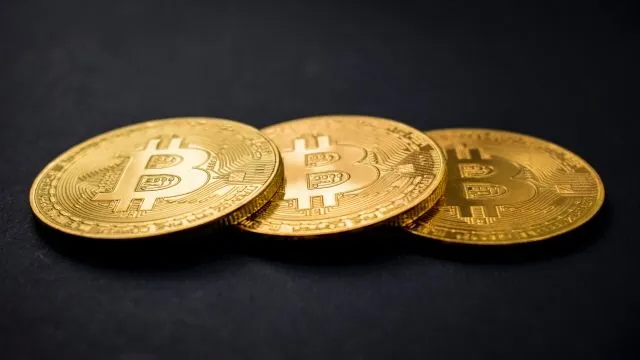
https://asset.coinness.com/en/news/6a8a33b4092867aef7276d6b032abd9d.webp
Photo by Peter Nguyen on Unsplash

Dunamu CEO Oh Gyeong-seok commented on the development, stating: 

“Vietnam's potential is shown by the more than 20 million virtual asset holders, annual trading volume of more than $800 billion and the inflow of global top 5 blockchain assets.”


The Dunamu CEO added that when Vietnam’s proven growth potential meets the Upbit model, it will provide an opportunity to go further than the creation of a crypto exchange, with the development and design of “the entire national digital financial infrastructure based on trust.”


Growing and developing Vietnam’s digital financial market

This aspiration was shared by Military Bank Chairman Liu Zongtai, who stated:


“In the future, Vietnam and Korea, Military Bank and Upbit will work together to grow and develop Vietnam's digital financial market as reliable cooperation partners.”


As well as sharing its technology and infrastructure, Dunamu will also advise the company on matters such as regulatory compliance and investor protection.


Vietnam has previously been hailed as a market that is seeing a significant level of crypto adoption. According to Statista, the market is expected to experience significant growth in the coming years. Crypto user penetration has been forecast to reach over 21% by 2026.


The Vietnamese government has also been putting things in order to accommodate crypto assets. In June, the Vietnamese National Assembly passed the Digital Technology Industry Law. The legislation goes some way in providing regulatory clarity, with the categorization of virtual assets and crypto assets.


Last October, the authorities set out a blockchain strategy for the Southeast Asian nation, with the aspiration of achieving regional leadership relative to the digital assets sector by 2030.


Upbit is a significant player in the crypto sector. According to CoinMarketCap data, it’s the fourth-largest spot exchange platform globally, measured in terms of trading volume. For the month of July, it achieved a trading volume of $110.21 billion, trailing Bitget at $126.05 billion and Bybit at $122.3 billion, while Binance led the market with $683.41 billion.

 

More to Read
View All
Markets·

Sep 30, 2025

Vietnam $3.8B gambling case in a world of rising crypto crime

Vietnamese authorities have dismantled a criminal ring that used cryptocurrency to launder illicit gambling profits, AFP reported, citing local media. The group converted local currency into digital assets such as USDT and Ethereum, routing funds to users for online betting. Operating multi-layered investment websites, the network grew to as many as 20,000 users and managed 25 million accounts, despite Vietnam’s ban on cryptocurrency. In total, the transactions involved were valued at roughly $3.8 billion. Police allege that millions of dollars were funneled into real estate, luxury cars, and cross-border cash transfers. While the money laundering probe continues, the gambling case has already produced convictions. Four Vietnamese siblings who ran the network, along with 39 other defendants, received sentences in Ho Chi Minh City ranging from a three-year suspended term to 13 years in prison. An Indian national identified as the alleged mastermind remains at large.Photo by Amanda Jones on UnsplashThai police foil crypto-themed fraudElsewhere in the region, police in neighboring Thailand busted a South Korean crime syndicate based in Pattaya that allegedly stole more than 20 billion won ($14.2 million) through fraud schemes that invoked cryptocurrency as a lure, along with other scams, the Chosun Ilbo reported. The scam ring reportedly obtained customer data from a lottery tip site and collected money from victims either by posing as agents offering membership refunds or by claiming to provide compensation for leaked personal information, which they disguised as opportunities to buy digital assets. In addition to these schemes, the syndicate ran romance scams and posed as authorities. Thai police arrested 20 members in a June resort raid. Nine more suspects, including ringleaders, remain in custody awaiting extradition. Seoul police said that, in total, 25 members have been caught, 21 of whom are now detained. Authorities believe the network may be linked to other groups in Thailand and are widening the investigation. Europe uncovers $120M crypto fraudCrypto crimes aren’t limited to Asia. In Europe, police arrested five suspects in a Eurojust-led operation that uncovered an online investment scam worth at least €100 million ($116.8 million). Operating since 2018 across 23 countries, the scheme lured victims with platforms promising high returns, then funneled deposits through Lithuanian accounts before disappearing. In a report by the Organized Crime and Corruption Reporting Project, Elliptic Chief Scientist Tom Robinson said such schemes often have little to do with cryptocurrency itself, instead exploiting its technical obscurity and the allure of quick gains. Beyond scams, outright theft from crypto platforms is also climbing. A Chainalysis study found that by the end of June 2025, more than $2.17 billion had been stolen from exchanges and related platforms—already surpassing the total for all of 2024. The firm projects losses could reach $4 billion by year-end. The single largest incident was the February hack of the Bybit exchange, in which thieves took $1.5 billion, roughly 69% of all funds stolen in the first half of this year. Crypto crime turns increasingly violentThe Chainalysis report also flagged a rise in physical attacks, in which criminals use violence or coercion to force individuals to hand over their crypto holdings. The firm warned that 2025 may log nearly twice as many cases as the worst year on record, noting that the attacks often rise and fall with expectations for Bitcoin’s price. In response to these threats, Chainalysis stressed the need for a multilayered approach to crypto security. It advised service providers to strengthen internal controls through regular audits and employee screening, while upgrading wallet infrastructure and other technical defenses. For individuals, the firm said, keeping holdings discreet has become as critical as technical safeguards, especially amid the rise in physical attacks. 

news
Web3 & Enterprise·

Apr 12, 2023

South Korea’s GDAC Suffers $13M hack

South Korea’s GDAC Suffers $13M hackSouth Korean cryptocurrency exchange, GDAC, has suffered a significant hacking incident that has resulted in the loss of approximately 23% of its custodial digital assets.©Pexels/PixabayThe hack occurred on Sunday when some of the exchange’s hot wallets were breached, and the stolen assets were transferred to an unidentified wallet. GDAC reported the incident on Monday and disclosed that the exchange lost over $13.1 million in Bitcoin, Ether, Wemix, and USDT, with more than $10 million in Wemix.According to blockchain analytics firm Arkham Intelligence, the hacker has since swapped the USDT for ETH, sending 461 ETH to cryptocurrency tumbler, Tornado Cash. The hacker used three separate wallets to take funds from two of the exchange’s hot wallets. Arkham has labeled the wallets as follows:GDAC Hacker 1: 0x244615D99684175d31369332039b2D84ce925EC5GDAC Hacker 2: 0x62B5eb2cb925Ce2898f9327B235b3228e7Cac1C2GDAC Hacker 3: 0x87597bDB421482190e223aCa0A4DEAd75AB0a98DGDAC deposits/withdrawals suspendedGDAC has suspended its withdrawal and deposit services and reported the incident to the Korea Internet and Security Agency and the Financial Intelligence Unit. The exchange has also requested other cryptocurrency exchanges to block incoming transactions from suspicious addresses.In a notice posted on its website, GDAC CEO Seunghwan Han apologized for the suspension of deposits/withdrawals and concern relative to the hack, adding that the firm will be working towards investor protection and safe withdrawal of funds in due course. GDAC also posted the breakdown of the digital asset quantities lost in the hack, with the hacker stealing 60.80 BTC, 350.5 ETH, 10,000 WEMIX and 220,000 USDT.Crypto hacks increasingThis hacking incident comes at a time when cryptocurrency hacks have been on the rise. According to blockchain analytics firm Chainalysis, illicit actors stole $3.8 billion worth of assets last year, the largest one-year loss in crypto’s history. In addition, other crypto platforms have also suffered notable hacks and exploits in the past 15 to 18 months. Axie Infinity’s Ronin bridge, for example, suffered a $625 million hack last year, and decentralized-finance protocol Sushi was exploited for $3.3 million on Sunday.GDAC is not the only South Korean cryptocurrency exchange to suffer a significant hacking incident. In 2018, Coinrail was hacked, resulting in the loss of approximately $40 million worth of assets, and in 2021, Upbit suffered a $50 million hack.In response to these incidents, South Korea has taken steps to tighten regulations around cryptocurrency exchanges. In March 2021, the country’s Financial Services Commission issued a revised regulation that requires cryptocurrency exchanges to maintain stricter anti-money laundering measures and report suspicious transactions.The GDAC hack is a stark reminder of the risks associated with cryptocurrency investing and the importance of implementing robust security measures. Investors and cryptocurrency exchanges should take note of this incident and ensure that they have adequate security measures in place to protect against potential hacks and exploits.

news
Web3 & Enterprise·

Nov 02, 2023

Hong Kong’s HaskKey launches app following regulatory approval

Hong Kong’s HaskKey launches app following regulatory approvalHong Kong-based cryptocurrency firm HashKey has unveiled the HashKey Exchange app, which has received the approval of the Securities and Futures Commission (SFC).News of the app launch emerged following insights shared by HashKey’s Chief Operating Officer, Livio Weng, in an interview with The Block recently.Photo by Manson Yim on UnsplashAppealing to retail tradersThe HashKey Exchange app went live on Wednesday, having received regulatory clearance from Hong Kong’s securities regulator the previous Friday. This achievement allows the app to offer full mobile trading capabilities. Prior to this milestone, HashKey had been primarily catering to professional investors under a voluntary licensing scheme.With the new app, Hongkongers can now conveniently purchase bitcoin and ether, utilizing either Hong Kong dollars or US dollars, directly from their local bank accounts. The app launch is significant as HashKey has become one of Hong Kong’s first fully compliant retail-facing crypto trading platforms. “We’ve recorded large trading volume since we began to serve retail users,” Weng stated. The move aligns with the Hong Kong government’s efforts to bolster the virtual asset sector, which was set in motion one year ago with various policy shifts.These shifts included the introduction of a mandatory licensing scheme for cryptocurrency platforms, enabling them to offer tokens with large market capitalizations to retail traders. The new licensing regulations officially took effect in June, with a one-year grace period, though no new exchanges have been approved to date. HashKey and its rival, OSL, had their previous licenses upgraded in August.Developmental challengesHong Kong has faced several challenges on this journey. While the new regulations are largely in line with international norms, the process has been notably expensive, particularly against the backdrop of a bearish crypto market.The lingering fallout from the JPEX scandal, a cryptocurrency exchange allegedly involved in fraudulent activities, continues to impact Hong Kong’s virtual asset landscape. The SFC first raised concerns about JPEX in mid-September, and since then, it has moved to tighten regulation in response, having received thousands of complaints in relation to JPEX.Despite these challenges, HashKey Group has reported significant activity on its retail platform since its launch in August, with a total trading volume exceeding US$600 million. On October 30, the 24-hour trading volume exceeded US$100 million.Planned token launchIn a move designed to incentivize new users, HashKey Exchange has introduced its platform token, HSK, which is slated to be officially listed on the exchange next year. With a total supply of 1 billion HSK, the company has specified that these tokens will not be initially sold to retail investors, emphasizing its long-term vision for the project.Established in Hong Kong in 2018, HashKey Group operates a digital asset brokerage and a venture capital arm. HashKey Exchange earned the distinction of becoming Hong Kong’s second licensed exchange in November of the previous year, following in the footsteps of OSL. Notably, five companies have applied for the new licensing scheme, according to the SFC, while several other exchanges have expressed their intent to pursue similar approval.

news
Loading