Top

Circle moves towards further APAC expansion via MHC Digital partnership

Web3 & Enterprise·October 04, 2024, 1:01 AM

MHC Digital Group, an Australian digital assets management platform, has entered into a partnership with USDC stablecoin issuer Circle Internet Financial, with a view towards increasing the circulation of USDC within Australia and the Asia-Pacific (APAC) region.


MHC was founded by well-known venture investor Mark Carnegie, with the company having offices in Sydney and Singapore. The firm will work with Circle to distribute USDC in Australia and within the APAC region.


MHC has been marketing its services towards institutional investors and it’s that same client group that the two firms want to target in order to increase USDC circulation. The firm will provide “cost-effective and efficient USDC access” where institutional clients are concerned.

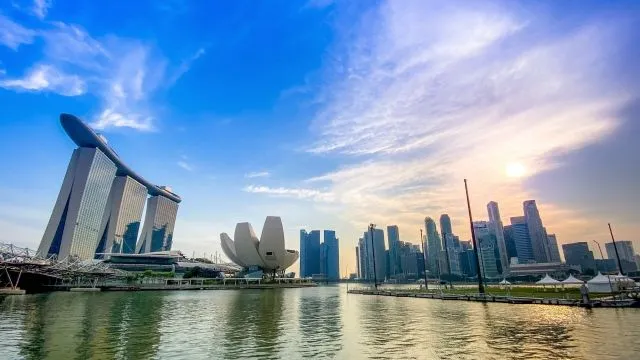
https://asset.coinness.com/en/news/90338cb4cb73014252be039037fa5616.webp
Photo by Catarina Sousa on Pexels

Crypto ‘a better mousetrap’ 

In a media release published on behalf of the two companies, Carnegie claimed that while many people still claim that there is no use case for crypto, hundreds of billions move globally at a fraction of the cost experienced via the traditional financial system. “Crypto is simply a better mouse trap for the vast majority of international payments,” he added.


Commenting on the development in an interview with the Australian Financial Review, Carnegie stated:

“I’m hoping we can show there are hundreds of millions of dollars of forex [foreign exchange] trading fees, where super funds are getting their faces ripped off by Macquarie Bank and the other incumbent banks.”


Appealing to pension funds 

Carnegie wants to get large pension funds on board in using USDC. He pointed to the fact that global banks make $170 billion from corporations and individual investors through the movement of funds over the SWIFT network. He can see that major savings can be made if USDC is used relative to these fees. Despite all this, Carnegie acknowledges that it will be a hard sell to get them on board.


As part of these plans, MHC Digital will be launching an over-the-counter (OTC) trading desk, which will be targeted towards hedge funds, crypto enterprises and high-net-worth individuals.


APAC opportunity 

Kash Razzaghi, Circle’s chief business officer (CBO), identified APAC as presenting with an adoption opportunity beyond institutional clients. Razzaghi stated:


“With its young, mobile-first and digital wallet-ready population, the Asia Pacific region is ahead of the curve when it comes to digital asset adoption."


Carnegie appears to be similarly enthusiastic when it comes to the APAC region. In an interview with CNBC back in January, he suggested that the crypto bull run was “an Asian story this time round.” It’s understood that the two companies are also considering collaborating on the issuance and distribution of an Australian dollar (AUD) denominated stablecoin.


This development is the latest in a string of initiatives taken by Circle to bring about USDC adoption in the APAC region. In 2023 the company partnered with SBI Holdings with the objective of enhancing the circulation of USDC within the Japanese market. The very same rationale resulted in it partnering with Tokyo-based crypto trading platform Coincheck in February 2024. The company has also tried to trigger adoption at a retail level, through collaborations with FamilyMart convenience stores in Taiwan and Southeast Asian super app Grab.

 

More to Read
View All
Policy & Regulation·

Jun 17, 2025

Vietnam legalizes crypto assets

Vietnam has moved to take a positive approach to crypto assets by passing legislation to legalize them. Last week, the Southeast Asian nation’s National Assembly passed the Digital Technology Industry Law, which takes effect on Jan. 1, 2026, according to a report published in the official online newspaper of the Vietnamese government. Photo by Daniel Bernard on UnsplashCategorizing digital assetsThe law sets out two categories of digital assets, virtual assets and crypto assets. The legislation frames virtual assets as digital assets used for exchange or investments. Meanwhile, crypto assets are to be regarded as digital assets utilized to validate transactions and confirm ownership while relying on the use of encryption technology. Neither category includes securities or digital versions of fiat currencies such as central bank digital currencies (CBDCs) or other financial instruments. The legislation gives the Vietnamese government the authority to define and apply specific regulatory conditions when it comes to items such as anti-money laundering (AML) measures and the inclusion of international cybersecurity standards. It is hoped that the law will pave the way for the development of home-grown technological enterprises within Vietnam, while also promoting a nationwide digital transformation process. Regulatory clarityThe legislation is significant as it clearly sets out the legal status of digital assets in Vietnam after years of uncertainty and regulatory ambiguity. Singapore-based blockchain-focused Business Strategist, Anndy Lian, said that such legal clarity could result in Vietnam becoming a regional hub for the crypto sector.  Anh Tran, who belongs to Superteam Vietnam, a community for Solana builders in Vietnam, said that the development was huge for founders, developers and investors in the crypto space in Vietnam. He stated: “For a country who has always been at the forefront of crypto adoption, [Vietnam] is now a 'green-lighted zone' in principle, but we're still waiting at the red light for operational rules.” He refers to the fact that Vietnamese regulators still have until Jan. 1, 2026, to flesh out the details in terms of defining who can issue, trade, custody or manage crypto, and how AML, cybersecurity and taxation are handled. Vietnamese officials are likely to give strong consideration to AML measures relative to crypto given that the Southeast Asian nation has been on the grey list of the Financial Action Task Force since 2023. Countries who appear on the grey list are under considerably more scrutiny with regard to AML matters. While another community member claimed that anywhere crypto regulation has been implemented, actual usage has declined, Tran maintained that regulation is inevitable and that “crypto doesn’t need to be lawless to be free.” Last October, Vietnam set out its blockchain strategy, aspiring to the goal of achieving regional leadership in the sector by 2030. In March, the country’s Prime Minister, Pham Minh Chinh, requested that a legal framework for cryptocurrencies be established.  According to Chainalysis’ 2024 Global Crypto Adoption Index, Vietnam ranks fifth in the world.

news
Web3 & Enterprise·

Jan 23, 2024

Ondo Finance announces APAC expansion

U.S.-based crypto startup Ondo Finance, a financial infrastructure firm that concerns itself with the tokenization of real-world assets (RWAs), has officially revealed its intention to expand into the Asia Pacific (APAC) area, with the inauguration of its first office in the region. In a press release published by the company on Sunday, Ondo clarified that the expansion is a direct response to the escalating interest in digital assets throughout Asia. That interest the company attributes to factors such as a flourishing crypto community, shifting regulatory environments and a growing appetite for exposure to U.S. assets.Photo by Florian Wehde on Unsplash40% market shareAt present, Ondo Finance holds a 40% share of the global market where tokenized RWAs are concerned. That market share has been driven by its three main tokenized product offerings: OUSG, designed for exposure to U.S. Treasuries; OMMF, facilitating exposure to U.S. money market funds; and USDY, positioned as a yield-bearing alternative to traditional stablecoins. These products serve as a conduit for global investors to access U.S.-based asset classes in tokenized form, aligning with the rising trend of digital asset adoption. To spearhead its APAC expansion initiative, Ondo Finance has appointed Ashwin Khosa as the vice president of business development in the region. Khosa brings nearly a decade of experience in Hong Kong-based institutional business development, having worked with multinational financial services company Citi, alongside key crypto firms such as Tether and its sister company, Bitfinex. His expertise encompasses both on-chain finance and a profound understanding of the APAC market. Khosa stated: “The team is top-notch and the mission of bringing real world assets onchain is extremely important. I look forward to working closely with partners in the region to help investors gain access to this next generation of high-quality assets.” Founded in 2021 with roots tied to the Goldman Sachs Digital Assets team and supported by leading venture capitalists including Founders Fund, Pantera Capital and Coinbase Ventures, Ondo Finance is looking to solidify its position as a dominant force in this newly emerging market on the back of nearly 40% of the global market share in tokenized securities. Nathan Allman, the founder and CEO of Ondo, expressed his excitement about the expansion, stating:“We’re very excited about our expansion into APAC. There is an active and rapidly growing crypto community and an appreciation for the type of high-quality exposure to US assets that our tokens provide.” Suspected token dumpIn a related development on Monday, on-chain sleuths have presented data that may indicate a sell-off of $11 million worth of ONDO tokens, the project’s native token. 20 million tokens were sold, with the suggestion that the token unit price fell in tandem with that market activity. Earlier on Monday, the token traded at $0.3062. At the time of writing, it's trading at $0.25. This expansion into the APAC region follows a string of pivotal developments for Ondo, including the revelation of its strategic roadmap and partnerships within the Ondo ecosystem. Additionally, the Ondo Foundation has introduced a points program and a proposed unlocking of its ONDO token, marking an integral part of the company's ongoing growth and development.   

news
Web3 & Enterprise·

Jun 23, 2023

Crypto-Friendly Xapo Bank Enters Indian Market

Crypto-Friendly Xapo Bank Enters Indian MarketXapo Bank, a cryptocurrency bank based in Gibraltar, has set its sights on India and plans to offer banking and cryptocurrency services in the country.Xapo, which claims to be the first bank in the world to integrate traditional private banking with crypto, issued a press release which was published via Bloomberg on Thursday to announce the development.Photo by Julian Yu on UnsplashMassive market opportunityWith a population of over 1.3 billion, India presents a massive opportunity for Xapo Bank, which is backed by prominent investors like SoftBank, DST Global, and Ribbit Capital. This move comes at a time when India has seen impressive foreign inflows of $15.5 billion in the first quarter of 2023.The CEO of Xapo Bank, Seamus Rocca, suggested that the absence of conventional banking services in certain parts of South Asia has created a void that Xapo Bank aims to fill. By providing innovative financial products and services, the bank hopes to empower individuals and businesses with access to reliable and inclusive banking solutions.Rocca stated that the move “represents an opportunity to provide our hybrid banking and investment solutions to its large underserved populations, bridging an important gap in the region’s financial systems and allowing its savvy savers, investors, and professionals the freedom to explore their financial potential with a single mobile application.”Competitive interest rate offeringOne of the attractive features of Xapo Bank for customers in India is its competitive interest rates on deposits. The bank offers attractive returns, with a yearly interest rate of 4.10% on US dollar deposits and 1.00% on Bitcoin deposits. Notably, the daily interest payments on Bitcoin deposits are distributed in the smallest denomination of the cryptocurrency, a satoshi.Xapo Bank’s expansion into India aligns with the country’s projected economic growth of 6.3%, according to Fitch Ratings. Despite the worldwide economic downturn, India’s GDP demonstrated robust growth of 6.1% in the first quarter, showcasing the country’s resilience.Government policy challengesHowever, Xapo Bank will face challenges as it enters the Indian market. The world’s most populous country has implemented strict measures regarding cryptocurrencies, including a 30% tax on all cryptocurrency income and the elimination of deductibility for losses. Such regulations could potentially impact Xapo Bank’s operations and profitability in India.Authorities like the country’s central bank, the Reserve Bank of India (RBI), have been more inclined to encourage the financial services sector to adopt blockchain technology rather than offer cryptocurrencies directly. Earlier this month, American multinational financial services company JPMorgan Chase partnered with six major Indian banks in a blockchain offering that aims to improve the interbank settlement process.Nevertheless, Xapo Bank remains undeterred, recognizing the immense potential of India’s growing economy and the urgent need for accessible financial services. The bank’s expansion promises to create opportunities for individuals and businesses across the nation, contributing to India’s economic development and financial inclusion.Moreover, Xapo Bank’s entry into India reflects a broader trend of fintech innovation and the convergence of traditional banking and digital currencies. As the world becomes increasingly interconnected, financial institutions like Xapo Bank are reshaping the financial services landscape by offering forward-thinking solutions that bridge gaps, ultimately empowering individuals and fostering economic growth.

news
Loading